


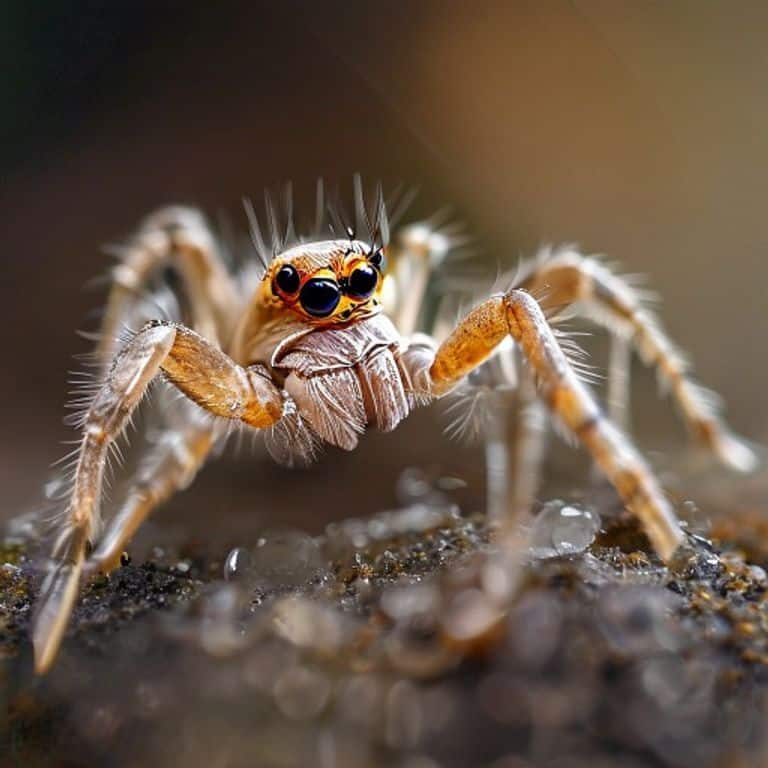
Molting is the single most dangerous and the single most important event in a jumping spider’s life, and the keeper’s job is almost entirely about reading the signs early and then getting out of the way. A captive Phidippus regius goes through roughly seven to ten molts from emergence to its terminal adult molt (source: Por Amor Art), and each one is a hours-long, hydraulic, fragile process where humidity, prey, vibration, and handling can each turn a healthy spider into a dead one. This guide covers what molting actually is at the cuticle and hemolymph level, how to spot pre-molt 3 to 14 days out, the five phases of the molt itself, the species-specific frequency pattern, what to do (and not do) when a molt gets stuck, and the full 48 to 72 hour recovery window before the spider is safe to feed or handle again. If you are still building your enclosure or have not stabilized your humidity, start with our jumping spider enclosure setup guide and only come back here once your husbandry baseline is locked.
What Is Molting and Why Do Jumping Spiders Do It?
Molting (ecdysis) is the process by which a jumping spider sheds its old exoskeleton so it can grow. Unlike vertebrates whose bones grow continuously, arthropods are encased in a rigid external skeleton that cannot expand. The only path to a larger body is to grow a new soft cuticle underneath, split the old one open, pull free, then expand and harden the new exoskeleton at the new size.
The biological machinery is more dramatic than it looks from the outside. A molting spider pumps hemolymph (spider blood) from its abdomen into its cephalothorax, doubling internal hydraulic pressure to force the old cuticle to split along the carapace margin. The same hydraulic system then drives leg extension during extraction and final body expansion before the new cuticle hardens (source: Journal of Experimental Biology). Hardening itself is sclerotization, a process where quinones cross-link cuticular proteins and chitin to stiffen the new exoskeleton, and it is hormonally regulated by ecdysone-family steroids that govern the timing of every phase (source: Britannica).
Every jumping spider molts multiple times across its life. Slings molt fastest because they are growing fastest. Adults of both sexes eventually reach a terminal molt after which no further molting occurs. Male jumping spiders typically reach their terminal molt earlier than females and have shorter post-terminal lifespans, which is why pet jumping spider sex matters for long-term planning. See our jumping spider lifespan guide for the full terminal-molt-and-aging breakdown.
Molting is also the single most vulnerable period in the spider’s life. During and immediately after the shed, the spider is immobile, defenseless, and physically fragile for hours. The new cuticle is soft, the fangs cannot bite, and even small disturbances can be fatal. Understanding what normal molting looks like, what can go wrong, and how to support the spider through each cycle is fundamental to successful jumping spider keeping.
How Often Do Jumping Spiders Molt?
Jumping spiders molt every 5 to 10 days as newborn first instars, every 10 to 20 days through the early sling stages, every 3 to 6 weeks as juveniles, and not at all after the terminal adult molt. Most Phidippus regius individuals complete 7 to 10 total molts from hatching to maturity. Frequency tightens with warmer temperatures and frequent feeding and stretches with cooler temperatures and lighter feeding.
| Life stage | Approximate molt frequency | Notes |
|---|---|---|
| First instar (newborn) | Every 5 to 10 days | Rapid growth phase; molts are frequent and fast |
| Second to fourth instar (sling) | Every 10 to 20 days | Slowing slightly as the spider grows |
| Juvenile (fifth to eighth instar) | Every 3 to 6 weeks | Growth rate declines as the spider approaches maturity |
| Sub-adult (penultimate molt) | 4 to 8 weeks before terminal molt | The spider is nearing adult size |
| Adult (terminal molt complete) | No further molts | The final exoskeleton is permanent for the rest of the spider’s life |
Warmer temperatures within the safe range of 24 to 29 degrees Celsius accelerate growth and shorten the interval between molts, while cooler temperatures and less frequent feeding slow the cycle. Neither extreme is inherently better; the spider’s biology adjusts to available resources, and a slower-growing spider often has a longer post-terminal life. For the full temperature and humidity bracket and how to measure it accurately in a small enclosure, see our jumping spider temperature and humidity guide.
Total molts in a lifetime. Most Phidippus regius individuals undergo 7 to 10 molts from hatching to terminal adult molt, with some keepers reporting roughly 8 molts across a 9 month growth period (source: Por Amor Art). Smaller species typically complete fewer molts because they reach sexual maturity in fewer instars. Males of most species reach their terminal molt sooner than females of the same species, which is why males tend to be smaller as adults.
In our keeper community, we treat the molt log (a simple note of date plus instar plus shed condition) as a baseline husbandry record. A spider that suddenly takes far longer between molts than its prior pattern is often telling us something about temperature, feeding, or hydration before any other symptom shows up.
Pre-Molt Signs: How to Read Your Spider Before the Shed
Pre-molt signals appear 3 to 14 days before the actual shed and let you adjust care (stop handling, ensure humidity, remove uneaten prey) before the spider becomes defenseless. The most reliable signals are food refusal, a darkened plump abdomen, retreat reinforcement, and a multi-day stay inside the hammock. Two or three of these together almost always means a molt is coming.
Recognizing pre-molt early matters because it is the only window where you can prevent the most common molt deaths. Once the spider is in its retreat and the old cuticle starts to lift, your job is hands-off; the work of avoiding dysecdysis happens days earlier.
Food refusal. This is usually the first and most obvious sign. A spider that was eating every 2 to 3 days suddenly ignores or backs away from prey. Pre-molt food refusal is normal and not a cause for concern unless it extends beyond about 14 days without a molt occurring. In adults of larger species, the pre-molt window can stretch significantly longer near the terminal molt. See our jumping spider won’t eat guide for the diagnostic walkthrough.
Darkened abdomen. As the new exoskeleton forms beneath the old one, the abdomen darkens visibly. In species with lighter coloration, like female P. regius, the abdomen shifts from gray-brown to a deeper, more uniform dark tone. The darkening is the new cuticle developing underneath, partially visible through the loosening old layer.
Swollen abdomen. The abdomen often looks larger than usual because hemolymph is accumulating in preparation for the hydraulic pressure spike that splits the old exoskeleton.
Reduced activity and a multi-day hammock stay. The spider becomes less active, hunts and explores less, and spends more time in or near its silk retreat. A continuous 48 hours or more inside the hammock, with little or no glass-front activity, is one of the strongest pre-molt indicators (source: Arachnamoria).
Retreat reinforcement. Many jumping spiders thicken or seal their silk hammock before molting, creating a denser protected chamber. If your spider builds an unusually thick retreat and stops coming out, it is likely preparing to molt inside.
Dull coloration. The spider’s colors may appear washed out as the old exoskeleton loosens from the new one underneath. Once you start seeing this in combination with retreat sealing, the molt is usually only a day or two away.
Reading the abdomen to distinguish pre-molt from illness. This is the single most common confusion among new keepers. Pre-molt signs overlap with sick spider signs (lethargy, food refusal), but the abdomen and retreat behavior usually tell you which one you are looking at. A pre-molt spider has a dark, full abdomen and is sealed into its retreat. A sick spider typically has a normal or shrunken abdomen and may avoid the retreat, or sit listlessly out on the substrate. For a full differential checklist that goes beyond molting (DKS-style symptoms, parasites, mite signs), see the jumping spider health signs guide.
The Molting Process Step by Step
The active molt from first visible cuticle split to full extraction usually takes 15 to 60 minutes, and the full positioning-through-initial-hardening sequence runs 4 to 8 hours. Complete cuticle hardening then takes a further 24 to 48 hours, during which the spider stays in its retreat. Most keepers see only the aftermath, not the molt itself, and that is normal.
Knowing the five phases helps you avoid the most common mistake (intervening too early) and lets you tell at a glance whether a spider on its back is mid-molt, post-molt, or in trouble.
Phase 1: Positioning
The spider positions itself inside its silk retreat, usually hanging from silk threads or lying on its back. Lying on its back is the most common molting position for jumping spiders and is perfectly normal. Do not assume a spider on its back is dead or in distress if the recent behavior, abdomen color, and retreat sealing all point to pre-molt.
Phase 2: Exoskeleton Split
The old exoskeleton (exuvium) splits along the cephalothorax, usually at the front margin between the carapace and the sternum. The split is driven by a hemolymph pressure spike as the spider pumps fluid out of the abdomen into the cephalothorax. Heart rate roughly doubles during this phase, and the cephalothorax briefly increases in apparent volume while the abdomen shrinks. This is the hydraulic mechanism that drives ecdysis across all spiders (source: Journal of Experimental Biology).
Phase 3: Extraction
The spider slowly pulls itself out of the old exoskeleton, freeing legs, pedipalps, chelicerae, and abdomen one section at a time. This is the most dangerous phase. If the new cuticle is too dry, the old one too rigid, or the spider too dehydrated, a leg or the abdomen can become trapped and a stuck molt (dysecdysis) begins.
During extraction the spider is extremely fragile. The new exoskeleton is soft and pliable. Any physical contact, vibration, or sharp light change at this point can tear the new cuticle or cause the spider to seize mid-extraction.
Phase 4: Expansion
Immediately after extraction the spider pumps hemolymph into its legs and body to expand to its new larger size while the cuticle is still soft. This expansion must finish before the new exoskeleton hardens. A spider disturbed during expansion can harden in a deformed or partially folded posture that becomes permanent until the next molt (and in a terminal molt, permanent for life).
Phase 5: Hardening (Sclerotization)
The new exoskeleton hardens gradually over 24 to 48 hours through sclerotization, the cross-linking of cuticular proteins and chitin by quinones (source: Britannica). During this period the spider stays in its retreat, colors intensify as pigments express in the new cuticle, and the chelicerae (fangs) progressively stiffen. The spider will not eat until the fangs are fully hardened, which usually takes 2 to 3 days from extraction.
How to Support Your Spider Through a Molt
The keeper’s job during a molt is to set the right conditions early, then leave the spider completely alone until the new cuticle has fully hardened. Active intervention almost always hurts more than it helps. The structure below splits care into before, during, and after, with handling, feeding, humidity, and prey removal each handled at the right time.
Before the Molt (Pre-Molt Care)
Stop handling. Once pre-molt signs appear, do not handle the spider until the molt is complete and the new exoskeleton has hardened (typically 3 to 5 days post-molt). Handling a pre-molt spider can rupture the loosening old cuticle or stress the spider enough to delay the molt; the same caution applies during the entire hardening window. See the broader timing rules in our jumping spider handling guide.
Remove uneaten prey. Live feeder insects in the enclosure can injure or kill a molting spider. A cricket can chew on a soft-bodied immobile spider mid-molt, and we have seen direct keeper reports of crickets killing molting spiders. Remove all uneaten feeders the moment pre-molt signs appear. Small flightless fruit flies in low density are less risky than crickets, mealworms, or roaches, but the safer default is to remove everything.
Maintain humidity in the upper half of the species range. Adequate humidity is the single most important environmental factor for a clean molt. The moisture helps the old exoskeleton separate cleanly from the new one underneath. For most Phidippus species, raise enclosure humidity into the 60 to 70 percent range during the pre-molt and molt period by lightly misting one side of the enclosure once daily. Do not mist directly into the spider’s retreat or onto its body.
Maintain stable temperature. Keep the enclosure within the normal 24 to 29 degrees Celsius (75 to 84 degrees Fahrenheit) range. Sharp temperature swings during the molt can slow or stall the process and increase dysecdysis risk.
Do not rearrange the enclosure. Leave decorations, structures, and the silk retreat exactly where they are. The spider has positioned itself deliberately, often re-anchoring its hammock to specific surfaces. A rearranged enclosure can force a relocation that wastes hemolymph reserves the spider needs for the actual molt.
During the Molt
Do not intervene. This is the hardest rule for new keepers and the most important one. Do not open the enclosure, do not mist, do not check on the spider with flash photography, do not tap or move the enclosure. Vibrations from the door alone can disrupt the process. The spider needs to complete the molt without any external interference.
How long to wait before checking. If you see the spider on its back and suspect molting has begun, give it a minimum of 6 to 8 hours before opening the enclosure. Most successful molts complete the active extraction within 15 to 60 minutes, but the hardening phase extends for many more hours during which the spider should not be disturbed. A common keeper error is to open the enclosure at the 1 hour mark to check, just as the spider is entering expansion.
After the Molt (Post-Molt Care)
Do not feed for 2 to 3 days. The chelicerae and fangs need to harden before the spider can safely bite and digest prey. Offering food too early risks damaging soft fangs against a live feeder’s exoskeleton. Wait until the spider begins showing hunting interest (tracking prey through the glass, adopting a stalking crouch) before offering one small feeder.
Increase misting slightly. Post-molt spiders often drink more as they replenish hemolymph reserves used during expansion. Provide fresh water droplets on the enclosure wall daily for the first 3 to 5 days after molting.
Do not handle for 3 to 5 days. The new exoskeleton needs time to fully harden. A post-molt spider that appears active and alert may still have a soft cuticle that bruises or dents with finger pressure. Wait until the spider has eaten at least one meal before resuming handling, which is a reliable signal that the fangs and cuticle are functional.
Leave the exuvium (shed skin) in place. The old exoskeleton in the retreat is harmless and can be removed during the next routine enclosure cleaning. Some keepers collect exuvia to track molt history and confirm sex (mature male exuvia show enlarged, boxing-glove-shaped pedipalps). For full visual sexing markers on the exuvium, see our male vs female jumping spider guide.
Molt Failure (Dysecdysis): Causes and Emergency Response
Dysecdysis is a failed or incomplete molt where the spider cannot fully extract itself from the old exoskeleton. It is among the leading causes of death in captive jumping spiders, second only to dehydration and feeder-related injury in our keeper community’s informal cause-of-death log. The good news is that almost all dysecdysis is preventable, and most of the prevention happens in the days before the molt rather than during it.
Causes of Dysecdysis
Insufficient humidity. The most frequent cause by a wide margin. Low humidity allows the old exoskeleton to dry and adhere to the new cuticle, preventing clean separation. This is why holding 60 to 70 percent humidity through the pre-molt and molt window is critical.
Physical disturbance. Vibrations, handling, or opening the enclosure during the active molt can interrupt the process and cause the spider to freeze or panic mid-extraction. A spider that pauses mid-molt for more than a few minutes often cannot resume because hemolymph pressure drops below the threshold needed to keep the cuticle moving outward.
Nutritional deficiency. A spider that has been underfed or fed a nutritionally poor diet may not have the hemolymph volume or cuticle integrity needed for a successful molt. Consistent, varied feeding in the weeks before a molt supports both cuticle formation and the hydraulic reserves the spider draws on during ecdysis (source: Journal of Arachnology).
Dehydration. A chronically dehydrated spider enters the molt with insufficient hemolymph to generate the hydraulic pressure needed to split the old exoskeleton. Dehydrated spiders often pass pre-molt looking apparently normal, then fail at Phase 2 or Phase 3.
Mites or external parasites. Heavy mite loads can physically interfere with the molting process and introduce secondary infection during the vulnerable soft-body phase. Mite-heavy enclosures are also typically over-humid in the wrong way (stagnant rather than ventilated), which compounds the risk.
Previous injury. A spider with a missing or partially regenerated leg, or with prior exoskeleton damage, can struggle to extract the injured area cleanly. Many keepers see one or two molts of mild dysecdysis after a leg-loss event before the spider works the injury out.
What Dysecdysis Looks Like
- The spider is partially out of its old skin but has stopped progressing for more than 4 to 6 hours.
- One or more legs remain trapped in the old exoskeleton while the rest of the body is free.
- The spider appears deformed, twisted, or asymmetric after the molt attempt completes.
- The spider is motionless and encased in old cuticle for an extended period far beyond a normal hardening window.
Emergency Intervention
If you are confident the spider is stuck, the safest intervention is environmental first, not physical. Pulling on a stuck cuticle almost always makes things worse (source: Spoodville), and many apparent dysecdysis cases resolve on their own once humidity rises.
Step 1: Raise humidity immediately. Mist the enclosure (avoiding the spider itself) to bring humidity into the 75 to 85 percent range. Partially cover ventilation holes with damp paper towel if needed. The goal is to soften the old cuticle enough for the spider to resume extraction.
Step 2: Do not pull the old skin off manually. The old and new exoskeletons may still be chemically connected at points, and any pulling can tear the new cuticle, rip legs off, or trigger fatal bleeding. This is the single most common keeper mistake during a stuck molt.
Step 3: Wait and observe. Give the spider 6 to 12 hours in the elevated humidity environment before doing anything further. Many stuck molts resolve once the old cuticle softens enough for the spider to pump again.
Step 4: If no progress after 12 hours, consult an exotic vet experienced with invertebrates. Some vets can carefully assist with stuck molt removal under magnification using fine forceps and a warm, humid working environment, but success rates are variable and depend on how far the molt progressed before stalling. This is a do-not-attempt-at-home boundary: amateur surgical intervention with tweezers in the kitchen almost always kills the spider faster than the dysecdysis itself would have.
Step 5: Accept possible outcomes. A spider that survives a stuck molt may lose one or more legs. Lost legs can regenerate during subsequent molts in juveniles and sub-adults but not after the terminal adult molt. A spider that cannot free itself at all within 24 hours is unlikely to survive, and continued intervention at that point usually only extends suffering.
Molt Patterns by Species
Total lifetime molts and terminal molt timing vary by species, sex, feeding regime, and temperature. Smaller species reach maturity in fewer molts; larger species take more instars. Males generally complete their terminal molt earlier than females of the same species across all the common pet salticids.
| Species | Total lifetime molts | Terminal molt age (approximate) | Notes |
|---|---|---|---|
| Phidippus regius (regal) | 7 to 10 | Males 4 to 6 months, females 6 to 9 months | Largest common pet species; molts are visually obvious |
| Phidippus audax (bold) | 7 to 9 | Males 4 to 5 months, females 6 to 8 months | Similar pattern to regius |
| Hyllus diardi (heavy jumper) | 8 to 11 | Males 6 to 8 months, females 8 to 12 months | Larger species; longer juvenile growth period |
| Hasarius adansoni (Adanson’s) | 6 to 8 | Males 3 to 4 months, females 4 to 6 months | Smaller species; reaches maturity faster |
These ranges are approximate and shaped by temperature, feeding frequency, and individual variation. A well-fed spider in a warm enclosure molts faster than a lightly fed spider in a cooler environment. A slower-growing spider often gains a longer post-terminal lifespan, which is a useful trade-off for keepers who would rather hold onto their spider for an extra year than rush the growth curve. For species-specific husbandry that affects molt timing in the most common pet species, see our Phidippus regius care guide.
Sling rearing follows the same biology compressed into a much shorter timeline, with the first few molts happening in days rather than weeks and the failure modes shifted toward feeder-on-sling predation and tiny enclosure humidity collapse. For the sling-specific molt protocol, see our jumping spider spiderling care guide.
Post-Molt Growth, Color Changes, and Leg Regeneration
After each molt the spider is slightly larger, slightly more colorful, and able to regenerate one or more lost legs (only in pre-terminal molts). The size jump is most dramatic in early instars (slings can nearly double in body length after a molt) and becomes more incremental as the spider approaches adulthood. Colors develop progressively over the 24 to 48 hour hardening window and continue to deepen for several days after.
Color changes to expect:
- Freshly molted spiders appear pale, translucent, and washed out. Colors develop over 24 to 48 hours as the cuticle hardens and pigments express.
- Each molt may reveal subtle color shifts. Juvenile male P. regius, for example, develop progressively darker black coloration and more vivid chelicera iridescence with each molt as they approach sexual maturity.
- The final (terminal) molt produces the adult coloration that remains for the rest of the spider’s life. This is when sex-specific markings become most pronounced (black-and-white striping in male P. regius, the orange-tan adult female pattern, the boxing-glove pedipalps of mature males).
Leg regeneration. If a jumping spider has lost a leg before a molt, the new leg begins to regenerate during the molt and emerges as a smaller, thinner version of the original. Subsequent molts bring it closer to normal size and proportions, and after two or three molts the regenerated leg is usually visually indistinguishable from the others. Regeneration only happens in pre-terminal molts. After the terminal adult molt, lost legs are permanent, which is one reason adult males (with their compressed terminal-molt window) are at higher risk of finishing life missing a leg.
The first feeding after a molt. Most spiders take a single small feeder within 2 to 4 days after extraction, often striking faster and more decisively than usual because hemolymph reserves were spent during expansion. Offer one prey item smaller than the spider’s abdomen and remove anything uneaten within 24 hours. Resume the normal feeding schedule only once the post-molt feeding has been completed cleanly. For the broader instar-by-instar feeding pattern, see the jumping spider care guide.
Frequently Asked Questions
How long does it take a jumping spider to molt?
The active molting process, from the first visible exoskeleton split to full extraction, typically takes 15 to 60 minutes. The full positioning-through-initial-hardening cycle spans 4 to 8 hours, and complete cuticle hardening takes a further 24 to 48 hours, with chelicera hardening (the gate for resuming feeding) usually finishing at the 48 to 72 hour mark. Do not disturb the spider at any point during these phases, even if you only intend to peek; vibrations from the enclosure door can disrupt expansion and trigger a deformed molt.
Is my jumping spider dead or molting?
A molting spider lies on its back (often inside its silk retreat), is motionless, and may appear pale, oddly shaped, or partially encased in a separating exoskeleton. A dead spider also lies motionless with legs typically curled tightly under the body. The key differentiators are location and posture: a molting spider is almost always inside or near its retreat with legs splayed outward in extraction posture, while a dead spider is more often out in the open with fully curled legs and no visible exuvium. If you are unsure, wait 24 hours; a molting spider will move or finish, a dead one will not change.
Should I help my jumping spider molt?
No, under normal circumstances you should never intervene during a molt. The only acceptable intervention is environmental: if the spider is clearly stuck in a partial molt for more than 4 to 6 hours, raise humidity into the 75 to 85 percent range and wait an additional 6 to 12 hours. Never manually pull old exoskeleton off the spider; the old and new cuticles are often still connected, and pulling routinely tears the new cuticle or rips legs off. If the spider is still stuck after the elevated-humidity wait, consult an exotic vet experienced with invertebrates rather than attempting amateur surgery.
How do I know when my jumping spider is done molting?
The spider has completed the molt once it is fully separated from the exuvium and begins to move, even slowly. Full recovery takes 2 to 3 days, during which the spider rests in its retreat, its colors develop, and its cuticle hardens. The clearest behavioral signal that the recovery is complete is the spider resuming hunting interest: tracking prey through the glass, adopting a stalking posture, and accepting and consuming its first post-molt feeder. Handling should wait until after this first successful feeding.
Why did my jumping spider die during molting?
The three most common causes of molt death are insufficient humidity (the old cuticle adheres to the new one and the spider cannot complete extraction), physical disturbance during the active molt (vibration, handling, or opening the enclosure mid-extraction), and pre-existing dehydration that reduces hemolymph pressure below the threshold needed to split the cuticle. Holding stable 60 to 70 percent humidity through pre-molt and molt, removing all feeder insects when pre-molt signs appear, and leaving the spider completely undisturbed for the full 6 to 8 hour wait gives the spider the best chance.
Can adult jumping spiders still molt?
No. Jumping spiders undergo a terminal (final) molt upon reaching sexual maturity, and after this molt the exoskeleton is permanent for the rest of the spider’s life. This is why adult injuries (leg loss, cuticle damage, mite scarring) cannot regenerate or repair the way they can in juveniles. Males reach their terminal molt before females in most species, so adult males are more often the ones missing a leg or showing minor exoskeletal damage that they will carry to the end.
How many times does a jumping spider molt in its life?
Most pet jumping spider species molt 7 to 10 times from hatching to their terminal adult molt, with Phidippus regius typically completing roughly 8 molts across a 9 month growth window. The exact number varies by species, sex, feeding regime, and ambient temperature; smaller species like Hasarius adansoni mature in fewer instars, while larger species like Hyllus diardi may need 8 to 11. Males typically undergo fewer total molts than females of the same species and reach their terminal molt sooner.
Why is my spider lying on its back?
A jumping spider lying on its back is most often molting, and a back-down posture inside or near a sealed silk retreat with a recently dark and plump abdomen is the classic molt presentation, not a death pose. Other possible explanations include a momentary defensive thanatosis (playing dead) after a startle, or a chemical or temperature emergency, but these are rare in a stable enclosure. The safest default if your spider goes on its back inside its hammock is to assume molt, leave the enclosure undisturbed for 6 to 8 hours, and check only after that window has fully closed.
Related guides
This article was researched and written by the ExoPetGuides editorial team with AI-assisted drafting. All husbandry parameters, molt-cycle stages, and dysecdysis intervention steps were independently verified against peer-reviewed arachnological literature, recognized husbandry authorities, and experienced keeper community sources. ExoPetGuides does not sell spider supplies and has no affiliate relationship with any breeder, platform, or supplier named in this guide.
This guide provides general husbandry information for keepers managing jumping spider molting. It is not a substitute for professional veterinary advice. If your jumping spider is experiencing a stuck molt that does not resolve with elevated humidity, or shows persistent post-molt complications, consult a qualified exotic-animal veterinarian experienced with invertebrates.