


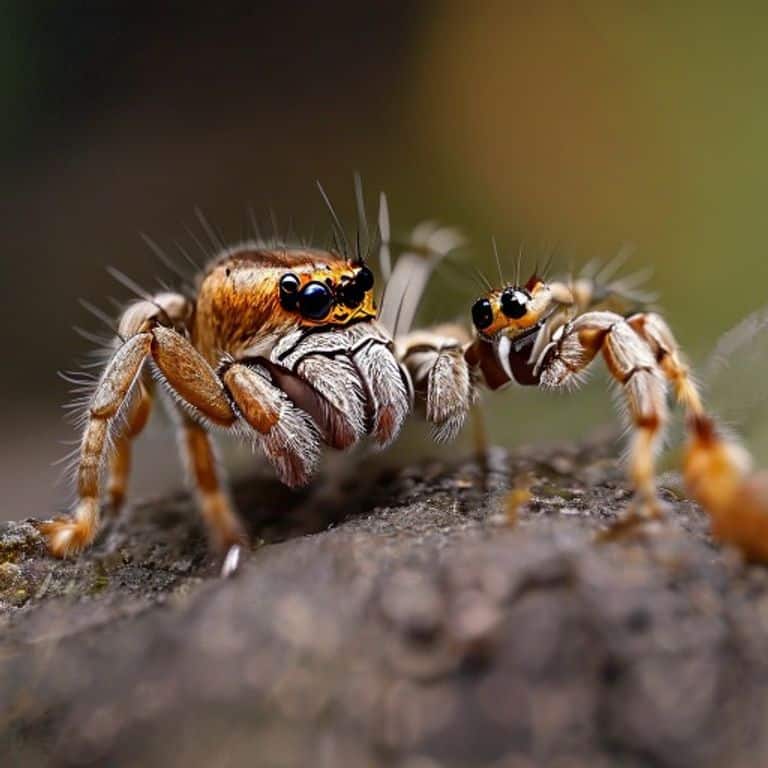
Most jumping spider deaths in captivity are preventable, and the keepers who catch problems early share one habit: they know exactly what a healthy spider looks like, so anything that drifts off the baseline gets noticed within a day or two rather than after a week of decline. This guide gives our keeper community’s working checklist for healthy markers, the eight most common health problems we see in Phidippus regius and other pet salticids, the behavioral red flags that often appear before any visible symptom, the environmental causes behind roughly 80 percent of cases, and the threshold at which a spider needs an exotic-invertebrate veterinarian rather than husbandry adjustment. The animal is small, the welfare window is short, and home treatment options are limited by physiology, so early detection matters more in arachnid keeping than in almost any other pet hobby.
What does a healthy jumping spider look like?
A healthy captive jumping spider has a plump, smooth abdomen, all eight legs intact and extended, clear and responsive primary eyes, full coloration matching the species standard, and a maintained silk retreat. Behaviorally it patrols the enclosure during daytime, hunts within minutes of prey introduction, drinks from misted droplets, and tracks movement with visible head-tilts. Any deviation from that baseline is the first signal something needs attention.
The first time keepers try to assess a spider’s health, the most common mistake is reading the spider against a stock photo rather than against the same spider three days ago. Individual variation is wide. One Phidippus regius female might patrol for hours; another from the same clutch might spend more time tucked into her retreat. The diagnostic question is not “does my spider look like that one online” but “has anything about this spider changed in the last week?” A daily 30-second visual pass during feeding or misting builds the baseline.
Physical indicators of good health:
- Plump, rounded abdomen. The opisthosoma should appear full but not distended. In well-fed Phidippus regius, the abdomen is smooth and slightly glossy with no wrinkling, creasing, or shrinkage relative to the cephalothorax. A roughly 1:1 abdomen-to-cephalothorax size ratio is the healthy adult target.
- Clear, responsive primary eyes. The anterior median eyes (AME) should be dark, reflective, and visibly tracking. The spider tilts its cephalothorax to keep moving objects centered in those forward-facing eyes — the same acute visual system documented in detail in salticid neurobiology research, which gives jumping spiders the sharpest vision among invertebrates relative to body size (source: Current Biology).
- Full, intact legs. All eight legs present and extended. Jumping spiders can regenerate lost legs across successive molts, but missing or shortened legs in an adult signal past injury or dysecdysis (stuck molt) history.
- Clean, well-maintained silk retreat. A healthy spider builds, reinforces, and reuses its silk hammock. The retreat should look structured and recently used, not tattered, abandoned, or visibly contaminated with prey debris or mold.
- Normal coloration. Colors should match the species standard. Phidippus regius females are typically gray-brown with cream facial markings; males are black-bodied with iridescent green chelicerae. Fading, unusual darkening, or patches of discoloration on the body warrant a closer look.
Behavioral indicators of good health:
- Active enclosure patrol during daytime hours.
- Prompt hunting response when appropriately sized prey is introduced. A healthy spider detects, stalks, and pounces within a few minutes.
- Regular drinking from misted droplets on enclosure walls and decor.
- Head-tilting and visual tracking when movement passes near the enclosure.
- Consistent silk production, including draglines during movement and retreat maintenance.
For the baseline husbandry parameters that produce these healthy markers, see our jumping spider care guide. The single most useful daily-monitoring habit is checking the abdomen first: condition there tells you more about hydration, feeding, and pre-molt status than any other single indicator.
What are the most common jumping spider health problems?
The eight most common health problems in captive jumping spiders are dehydration, dysecdysis (failed molt), mite infestation, bacterial and fungal infections, internal nematode parasites, pesticide-related neurological symptoms (often labeled DKS), traumatic injury, and age-related decline. Roughly four out of five cases trace back to enclosure environment rather than disease, and dehydration alone accounts for the largest single share.
Captive-bred jumping spiders from reputable breeders rarely arrive with infectious disease or parasites because the captive-feeder pipeline is largely sterile compared to wild habitat. Where keepers run into trouble is environmental: humidity drift, ventilation problems, contaminated wild feeders, pesticide exposure from household sources, and unstable temperatures during seasonal transitions. Once an environmental driver is removed, most early-stage problems resolve on their own. The conditions that genuinely require veterinary input are the small minority, and we cover the threshold for vet referral in a later section.
Dehydration
The most common health problem in captive jumping spiders. Dehydration develops within days in dry enclosures because spiders have a high surface-area-to-volume ratio and respire passively through book lungs and tracheal openings that lose water with every breath. The single book-lung pair plus tracheal system arrangement in salticids is more water-efficient than in larger spiders, but it still demands ambient humidity within the species range to function.
Signs:
- Shrunken, wrinkled abdomen (the most reliable visual indicator).
- Lethargy and reduced movement.
- Reluctance or inability to hunt, even when prey is in clear sight.
- Legs curling inward (advanced dehydration; indicates critically low hemolymph volume).
- Inability to jump or repeated short, mistimed jumps.
The curled-legs symptom has a specific mechanical explanation that matters for triage. Jumping spiders extend their legs hydraulically, pumping hemolymph (the spider equivalent of blood) into leg segments to straighten joints; muscles handle the flexion side. When hemolymph volume drops too low to maintain pressure, legs default to the flexed position and tuck under the body. Severe leg-curl plus a shrunken abdomen is a near-certain dehydration call, even before any other symptom appears.
Causes: Insufficient misting, low ambient humidity, excessive ventilation, enclosure placed near a heat source or air conditioning vent, dry winter heating, recent enclosure move into a drier room.
Action: Increase misting frequency to once or twice daily. Place small water droplets directly in front of the spider on the enclosure wall and on a nearby leaf or vine. If the spider is unresponsive, place a damp cotton ball touching the spider’s front legs and pedipalps for passive moisture absorption; mild cases recover within 12 to 24 hours. See our jumping spider hydration guide for the full emergency protocol, including the q-tip droplet method some keepers use for unresponsive spiders.
Dysecdysis (stuck or failed molt)
Molting failure is the second most common cause of death in captive jumping spiders and the leading cause of death in juveniles past the cluster phase. It happens when the old exoskeleton does not separate cleanly from the new one, trapping the spider partially inside the old cuticle. The triggers are nearly always low humidity during the molt itself, physical disturbance of the molt hammock, or pre-molt nutritional deficits.
Signs:
- Spider appears stuck halfway out of its old exoskeleton.
- Deformed or misshapen body after molt attempt; one or more legs visibly retained inside the old skin.
- Spider is motionless and partially encased in shed skin for more than 24 hours.
- Curled legs immediately after a molt that does not extend within 24 to 48 hours.
- Missing or malformed legs after molt completion.
Causes: Insufficient humidity during the pre-molt and molt window, physical disturbance of the silk hammock, nutritional deficiency that weakened the new cuticle, advanced age (terminal molt is higher-risk than earlier molts).
Action: If a spider is actively stuck mid-molt, do not pull the old skin off manually — the new cuticle underneath is soft and tears easily, and intervention frequently kills spiders that might have completed the molt on their own. Raise humidity in the enclosure to 70 to 75 percent by misting more heavily and partially covering ventilation openings; the added moisture often softens the old cuticle enough for the spider to complete the process. Recovery windows of 12 to 24 hours are normal, longer windows are critical and warrant a vet consult. For pre-molt signs, post-molt timing, and the full intervention protocol, see our jumping spider molting guide.
Mites
External mites appear as tiny moving dots (white, tan, or reddish) on the spider’s body, legs, around prey remains, or in the substrate. Most grain mites that ride in on feeder cultures are not parasitic on jumping spiders themselves; they thrive on uneaten prey and decaying organics. Heavy infestations still cause real welfare problems by stressing the spider, irritating its respiratory openings, and creating bacterial and fungal vectors.
Signs:
- Visible tiny dots moving on the spider’s body, around the book-lung openings on the underside of the abdomen, or inside the enclosure.
- Spider repeatedly rubbing its legs against surfaces (a grooming response to irritation).
- Reduced appetite and activity, especially if mite numbers are high.
- Deteriorating body condition despite adequate feeding.
Causes: Contaminated substrate (especially coco coir from bagged sources without sterilization), wild-caught feeders, feeder cultures harboring grain mites, cross-contamination from neighboring enclosures, persistent over-misting that creates standing damp conditions.
Action: Isolate the affected spider in a clean temporary enclosure with paper-towel substrate. Discard all substrate, decor, and feeder remains from the original enclosure and sterilize the container with hot water and a 50/50 white vinegar rinse (no soap or commercial cleaner residue). Replace with fresh, dry substrate, and review feeder sourcing to eliminate the mite reservoir. For the full mite identification and treatment workflow, see our jumping spider parasites and mites guide.
Bacterial and fungal infections
Infections in jumping spiders typically present as discoloration, lesions, or unusual growths on the exoskeleton or abdomen. They are uncommon in cleanly maintained enclosures and are almost always downstream of either a breached exoskeleton (injury, failed molt) or chronically saturated substrate that supports pathogen growth.
Signs:
- Dark spots, patches, or lesions that are not normal species markings.
- White or yellow fuzzy growths on the body, legs, or around the book-lung openings (fungal).
- Abdomen discoloration (unusual darkening, reddening, or mottling not associated with pre-molt).
- Fluid leaking from the abdomen or leg joints (hemolymph seepage indicates compromised cuticle integrity).
- Foul odor from the enclosure (uncommon, indicates severe bacterial growth).
Causes: Excessive sustained humidity, poor ventilation, contaminated substrate, injury that breached the exoskeleton and allowed pathogen entry, wounds left untreated after fights with prey (rare in captive setups but documented in salticid infection literature from the broader invertebrate pathology field (source: Journal of Invertebrate Pathology)).
Action: Isolate the spider immediately. Drop humidity to the lower end of the species range (around 50 percent for Phidippus) to slow pathogen growth. Increase cross-ventilation. Clean the enclosure thoroughly per our enclosure cleaning guide. If lesions are spreading, fluid is leaking, or the spider is deteriorating, consult an exotic-invertebrate vet. Treatment options for arachnid infections are inherently limited by the spider’s small body size, and early intervention gives the best prognosis.
Nematode parasites
Internal nematode (roundworm) parasites are occasionally seen in wild-caught jumping spiders or in spiders fed wild-collected insects. Captive-bred spiders fed from commercial feeder cultures rarely encounter them. When present, the prognosis is poor: there are no approved arachnid anthelmintics, and the parasite frequently kills the host on emergence regardless of intervention.
Signs:
- Distended abdomen with no corresponding increase in feeding or pre-molt darkening.
- Worm-like organisms protruding from the abdomen, spinnerets, or mouthparts.
- Rapid weight loss despite continued eating.
- Lethargy and progressive weakness; some keepers report infected spiders moving toward water sources in the days before nematode emergence, a behavior change documented across multiple spider host families (source: Journal of Arachnology).
Causes: Ingestion of prey harboring nematode larvae, most commonly wild-caught feeder insects or paratenic hosts. Mermithid nematode life cycles depend on the parasite emerging from the spider to reproduce, which is why parasitized spiders rarely survive.
Action: Internal parasites in jumping spiders are generally not treatable. Prevention through captive-bred sourcing and commercially cultured feeders is the primary defense. If nematodes are visible, isolate the spider and contact a vet for prognosis and humane-handling guidance, but plan for likely loss.
Pesticide and chemical exposure (DKS-pattern symptoms)
The most preventable health problem in the hobby and one of the most heartbreaking. Jumping spiders are dramatically more sensitive to household pesticides, flea and tick treatments, fogging products, and even residue from cleaning chemicals than vertebrate pets. The symptom pattern shows up in invertebrate keeping forums as DKS (dyskinetic syndrome) and reflects neurological damage rather than a single disease.
Signs:
- Sudden onset of jerky, twitchy, or uncoordinated movements.
- Inability to walk in a straight line; lifting legs above the carapace.
- Spinning in circles or repeatedly falling over.
- Total food refusal alongside the motor symptoms.
- Symptoms appearing within hours to days of a recent room treatment, new substrate batch, or new feeder culture.
Causes: Direct or indirect pesticide exposure. Common sources include flea or tick spot-on treatments on cats and dogs in the same home, household ant or roach baits, fogging products, perfume and aerosol residue near the enclosure, scented candles, freshly painted walls, and feeder insects sourced from gardens or homes that used pesticides. Tap-water contaminants are a rarer driver but documented when chloramine concentrations spike.
Action: Move the enclosure to a chemical-free room immediately. Replace all substrate and decor with material from a different source. Switch feeders to a different commercial culture for the next several months. Increase misting with dechlorinated water to support hydration during recovery. Pesticide exposure has no antidote in arachnid medicine; if a spider survives the first 72 hours after exposure ends, recovery over several weeks is possible, but severe cases are usually fatal regardless of intervention. Document the exposure source so the same mistake does not happen with future spiders.
Traumatic injury
Cricket and roach feeders can bite back. Spiders that fall during handling can rupture the abdomen on impact. Stuck-in-substrate accidents and lid-pinch injuries during enclosure maintenance are also common. Trauma is often underdiagnosed because the injury can look like a behavioral change rather than a wound.
Signs:
- Visible bite marks, scoring, or punctures on the body or legs.
- Dragging or non-functional leg.
- Hemolymph fluid leaking at a joint or on the abdomen.
- Sudden onset of curled legs after a fall or handling incident.
- Spider unable to right itself or hold position on a vertical surface.
Causes: Cricket or roach feeders left in the enclosure overnight, falls from height during handling, accidental crushing during lid closure, sharp decor edges, fights with other spiders if cohabitation was attempted (jumping spiders are strictly solitary and must never be housed together).
Action: Remove the spider from the source of injury. Reduce enclosure clutter so the spider can rest without climbing. Keep humidity at the species’ standard range. Small punctures often seal on their own if hemolymph leakage is minimal; a tiny dab of liquid bandage (cyanoacrylate-based, applied with a toothpick by a keeper experienced with the technique) is sometimes used in the hobby for visible breaches, though we recommend a vet consult before attempting it. Never leave a cricket or roach in the enclosure overnight; either feed with tongs in your presence or remove uneaten feeders within an hour.
Age-related decline
Most pet jumping spider species live one to three years, with females typically outliving males by six to twelve months. Recognizing the natural end-of-life pattern matters because it prevents emergency interventions on a spider that is dying of old age rather than illness. The transition is gradual; if symptoms appear over days rather than weeks, illness is the more likely driver. For full lifespan biology by species and the husbandry choices that extend lifespan, see our jumping spider lifespan guide.
Signs of age-related decline (not illness):
- Gradual reduction in hunting drive and prey interest over weeks.
- Slower, less precise jumping and increased misjudged leaps.
- Longer rest periods in the retreat and shorter daily activity windows.
- Thinning of the legs, mild abdomen reduction, and faded or dull coloration compared to younger adults.
- Reduced silk production and a less-maintained retreat.
End-of-life care is supportive: maintain hydration, offer easy-to-catch prey (pre-killed or slow-moving), keep the enclosure quiet, and accept that no intervention reverses senescence. A previously healthy spider that declines rapidly over days, by contrast, is more likely to be ill and may warrant a vet consult.
What are the behavioral red flags before visible illness?
Behavioral changes often appear days before any visible physical symptom. The most diagnostic early shifts are food refusal in a non-pre-molt spider, prolonged retreat time, uncoordinated movement, inability to jump, frequent regurgitation, disorganized silk-spinning, and dragging legs. Each pattern maps to a different short-list of likely causes, and reading the behavior correctly often saves the diagnostic workup later.
The challenge with jumping spiders specifically is that their default behavior already includes long retreats and quiet periods, so distinguishing “normal quiet” from “something is wrong” takes a baseline. The table below maps the seven most common behavioral red flags to their likely causes and urgency level. We built it from our keeper community’s most-asked troubleshooting questions and cross-checked the welfare calls against species-authority resources like the captive-care work at The Tarantula Collective (source: The Tarantula Collective) and the hobby-keeper observations at My Pet Jumping Spider (source: My Pet Jumping Spider).
| Behavior change | Possible causes | Urgency |
|---|---|---|
| Food refusal for more than 7 days (not pre-molt) | Dehydration, temperature too low or too high, illness, stress, recent enclosure change | Moderate – check environment first; vet consult if no improvement in 3 to 5 days past 14 total |
| Excessive time in retreat (never emerging during daytime) | Illness, stress, pre-molt, enclosure too exposed or too brightly lit | Low to moderate – rule out pre-molt first; check lighting and enclosure placement |
| Uncoordinated movement or stumbling | Pesticide exposure, severe dehydration, neurological injury | High – isolate, remove from chemical exposure source, vet consult |
| Inability to jump or repeatedly falling short | Dehydration, leg injury, advanced age, post-molt soft cuticle, neurological issue | Moderate to high – check hydration first; if well-hydrated and not recently molted, consult vet |
| Frequent regurgitation after eating | Prey too large, internal obstruction, pesticide-contaminated prey, illness | Moderate – switch to smaller and different-source prey; vet if it continues |
| Spinning excessive, disorganized silk (not retreat-building) | Stress, disorientation, chemical exposure, neurological issue | Moderate – check recent enclosure changes, room chemicals, feeder sourcing |
| Dragging legs or curled legs | Severe dehydration, leg injury, partial paralysis, post-molt failure | High – emergency hydration check; if no improvement in 24 hours, vet consult |
The single most useful diagnostic step before assuming illness is to verify enclosure parameters first — temperature, humidity, ventilation, recent chemical exposure. The next section walks through that environmental checklist in order.
How do I check the enclosure when my spider seems unwell?
When a jumping spider shows any worrying symptom, the first response is an environmental audit, not a vet appointment. Verify temperature is 24 to 29 degrees Celsius (75 to 85 degrees Fahrenheit), humidity is 50 to 60 percent for most species, ventilation is adequate on at least two sides, substrate is clean and dry on top, lighting cycle is roughly 12 hours light and 12 hours dark, and nothing in the room has recently changed (new chemicals, paint, fragrances, or feeder source). The majority of cases resolve once environmental drift is corrected.
This is the single most useful triage habit a keeper can build. From our keeper community’s troubleshooting tickets, roughly 80 percent of “my spider is acting strange” threads turn out to be environmental rather than disease-driven, and most resolve within 48 to 72 hours of correcting the parameter. The remaining 20 percent that need true health intervention become much easier to triage once environment is cleared.
Temperature. Target 24 to 29 degrees Celsius (75 to 85 degrees Fahrenheit) for most pet species. Below 18 degrees Celsius (about 65 degrees Fahrenheit), metabolism drops and the spider becomes lethargic, sometimes mimicking illness. Above 32 degrees Celsius (about 90 degrees Fahrenheit), heat stress can be fatal within hours. Measure with a digital thermometer inside the enclosure, not an ambient room reading; enclosures near a window or heat mat can run several degrees off the room. Hyllus diardi and other subtropical species need the upper end of this range plus higher humidity. See our temperature and humidity guide for full species-specific parameters.
Humidity. 50 to 60 percent ambient for most Phidippus species, 60 to 70 percent for Hyllus diardi. Use a small digital hygrometer inside the enclosure. If sustained humidity is below 40 percent, increase misting frequency and consider reducing ventilation slightly; if sustained above 70 percent, increase ventilation to prevent mold, bacterial growth, and book-lung respiratory stress. Book lungs lose water with every breath, which is why even small humidity drops produce visible dehydration symptoms within days in salticids.
Ventilation. Cross-ventilation (openings on at least two opposite sides of the enclosure) prevents stagnant, humid air pockets. Poor ventilation is the second most common driver of fungal and bacterial problems after over-misting. Test by holding a tissue near the openings; if it does not move at all in response to ambient air, ventilation is too low.
Substrate condition. Check for mold (white fuzz on substrate surface), mite movement (tiny pale dots), or excessive moisture (pooled water, saturated substrate). Replace substrate if any of those appear. Even when the substrate looks fine, replacing the top layer every four to eight weeks prevents accumulating bacterial load. Full maintenance protocols (substrate replacement cycle, safe cleaning products, spot-clean vs deep-clean schedule) are covered in the enclosure cleaning guide linked earlier in this article.
Lighting. Jumping spiders need a regular photoperiod, approximately 12 hours light and 12 hours dark, to maintain normal activity cycles. A spider kept in perpetual darkness or under 24-hour lighting displays abnormal behavior that mimics illness, particularly excessive retreat time. UVB lighting is not required for the species in the hobby, but a 5000K to 6500K daylight LED used as ambient room lighting supports normal hunting behavior. See our jumping spider lighting guide for the full setup.
Recent changes. Has anything in the room changed in the past week? New substrate batch, new decoration, enclosure relocation, new feeder type, room renovation (paint fumes, cleaning chemical fumes, new air freshener, scented candles), nearby pesticide use, flea or tick treatment on a household cat or dog? Environmental and chemical changes are the single most common trigger for sudden health deterioration in spiders. The exposure window can be as short as a few hours for the most pesticide-sensitive symptom patterns.
When do you need to consult a veterinarian?
Consult an exotic-invertebrate veterinarian when a spider has not eaten for more than 14 days outside of pre-molt, when visible lesions or fungal growth are present, when a molt has been stuck for more than 12 hours despite humidity correction, when nematodes or other internal parasites are visible, when neurological symptoms (uncoordinated movement, seizure-like behavior, partial paralysis) appear, or when the spider continues to decline after all environmental parameters have been corrected. Most husbandry-driven cases never reach this threshold.
Exotic veterinary care for jumping spiders is limited but growing. Not all exotic vets work with invertebrates, and arachnid medicine is a niche even within invertebrate practice. The realistic goal of a vet visit is usually diagnostic clarity (parasite identification, infection assessment, prognosis call) and supportive-care planning rather than curative treatment, since the formulary for arachnids is small and most drugs used in vertebrate medicine have no validated arachnid dosing.
Finding an invertebrate vet. The Association of Reptile and Amphibian Veterinarians maintains a Find-a-Vet directory that lists exotic veterinarians by region; some of the listed practitioners treat invertebrates even though the directory is primarily reptile and amphibian focused (source: ARAV). Call the practice in advance to confirm arachnid experience before booking. Local exotic-animal hospitals and university veterinary teaching programs are the other reliable starting points; teaching programs often have a fish, amphibian, and invertebrate service that can handle salticid cases.
What to bring to a vet visit. Photograph or video the symptoms, especially behavioral red flags that may not be present during the appointment. Note recent husbandry parameters (temperature, humidity, last molt date, last feeding, last enclosure change). Bring a written feeder list with sources. Transport the spider in its enclosure or a small ventilated deli cup with a piece of substrate and a misted paper towel. Keep transport temperature stable; do not chill the spider en route.
Be realistic about prognosis. Jumping spiders have short lifespans (one to three years for most species), and veterinary interventions are inherently limited by body size and arachnid physiology. Some conditions (advanced internal parasites, severe dysecdysis after prolonged stuck molts, systemic infections, severe pesticide exposure) carry poor prognoses regardless of treatment. The most experienced exotic vets we work with in our keeper community are direct about this with first-time invertebrate clients, and we encourage the same expectation-setting before the appointment. Prevention through husbandry, captive-bred sourcing, and chemical-free home environment is consistently more effective than treatment.
Weekly health monitoring checklist
Run a brief visual check daily and a thorough checklist pass weekly. Daily checks catch acute changes (curled legs, missing prey, retreat damage); weekly checks catch slower drifts (gradual abdomen reduction, faint discoloration, mild behavioral change). Keepers who run both routines catch problems early enough for husbandry correction to resolve them roughly four times out of five.
Daily 30-second pass (combine with misting or feeding):
- Is the spider in its expected position or moving?
- Does the abdomen look normal compared to yesterday?
- Are all legs visible and extended?
- Is the retreat intact?
- Any visible moisture, mold, or feeder remains in the enclosure that need clearing?
Weekly full health check:
- Abdomen appears plump and rounded (not shrunken or wrinkled).
- Spider is active during daytime and patrols the enclosure within a typical hour.
- Spider eats when prey is offered (or is in confirmed pre-molt with a darkened, swollen abdomen and sealed retreat).
- No visible mites on the spider or enclosure surfaces.
- No unusual spots, lesions, or growths on the body.
- Legs are intact and functional; no dragging or curling.
- Silk retreat is maintained and in good condition.
- Enclosure temperature is 24 to 29 degrees Celsius (75 to 85 degrees Fahrenheit).
- Enclosure humidity is 50 to 60 percent (or species-appropriate range).
- No mold visible on substrate or decorations.
- Spider responds to visual stimuli (tracks slow finger or pen movement at the glass).
- No recent room-chemical exposure (paint, pesticide, fragrance, flea treatment).
If more than two items on the weekly checklist fail in the same pass, take action. Correct environmental parameters first and reassess after three to five days. If the spider does not improve, escalate to a vet consult using the criteria in the previous section. Keepers who experience their first serious health event sometimes overshoot the response, panic-handling a spider that needed only a humidity correction; the checklist’s job is to keep the response proportional.
Frequently asked questions
How do I know if my jumping spider is dying?
A dying jumping spider typically shows multiple simultaneous symptoms: legs curled tightly under the body, no response to stimuli, refusal to eat or drink for extended periods, an immobile posture outside the silk retreat, and sometimes flipping onto its back. The death position in most salticid species is on the back or side with legs curled inward, which is why a healthy spider in pre-molt or post-molt rest is occasionally mistaken for a dying one. If the spider is still alive but unresponsive, attempt emergency hydration by placing mist droplets near the mouth and a damp cotton ball touching the front legs. If response does not return within 24 hours, the prognosis is poor and a vet consult is reasonable for confirmation rather than rescue.
Why is my jumping spider not eating?
The most common reasons for food refusal in a jumping spider are pre-molt fasting (the spider stops eating five to fourteen days before a molt), dehydration, and incorrect enclosure temperature. Check the abdomen first: a darkened, swollen abdomen and a sealed silk hammock suggest pre-molt, while a shrunken, wrinkled abdomen suggests dehydration. If neither applies, verify enclosure temperature is 24 to 29 degrees Celsius (75 to 85 degrees Fahrenheit) and humidity is 50 to 60 percent. If parameters are correct and refusal continues past 14 days, consult a vet. Our jumping spider not eating guide covers the full troubleshooting tree, including the smaller reasons (prey too large, recent enclosure move, room chemicals).
What does a dehydrated jumping spider look like?
A dehydrated spider has a visibly shrunken, wrinkled, or deflated abdomen. The surface may appear creased or puckered rather than smooth and rounded, and the abdomen-to-cephalothorax size ratio drifts well below the healthy 1:1 baseline. In advanced dehydration, the legs begin curling inward because hemolymph volume is too low to maintain the hydraulic pressure that extends leg joints. A spider with both a shrunken abdomen and curled legs is in advanced dehydration and needs immediate intervention; mild cases show only abdomen shrinkage and respond to a single misting cycle within 24 hours.
Can jumping spiders recover from illness?
Recovery depends on the condition and how early it is caught. Dehydration is fully reversible with prompt misting and environmental correction. Mild mite infestations resolve with enclosure sterilization and feeder source correction. Stuck molts sometimes complete with humidity support if intervention is timely. Bacterial and fungal infections have variable outcomes depending on stage and species. Internal nematode parasites and severe pesticide exposure carry poor prognoses regardless of treatment. Prevention through proper husbandry, captive-bred sourcing, and chemical-free home environment is significantly more effective than treatment for every condition on this list, which is why early visual monitoring matters as much as it does.
How often should I check my jumping spider’s health?
A brief visual check every day (abdomen condition, activity level, retreat status, leg position) is sufficient for routine monitoring and takes under a minute. A more thorough weekly pass using the full checklist in this guide catches slower drifts that a daily glance can miss. Keepers who run both routines catch most problems early enough for husbandry correction to resolve them without veterinary intervention. The checklist also functions as a baseline log: keeping a brief written note each week makes any deviation easier to spot the moment it appears.
Is my jumping spider sick or molting?
Pre-molt and illness share overlapping signs — reduced activity, food refusal, hiding — which is why misreading one for the other is among the most common mistakes new keepers make. The key differentiator is the abdomen. A pre-molt spider has a darkened, swollen abdomen as the new exoskeleton forms underneath the old one, and the spider seals or reinforces its silk retreat into a thick hammock. A sick spider typically has a normal or shrunken abdomen and may avoid its retreat rather than fortifying it. If you see hammock-building behavior plus abdomen darkening and swelling, the spider is almost certainly in pre-molt and should be left alone; intervention during pre-molt is one of the most common causes of stuck molts. The pre-molt timeline, post-molt timing, and the full intervention protocol are covered in our molting guide linked earlier in this article.
Why are my jumping spider’s legs curled?
Curled legs in a jumping spider almost always trace back to one of three causes: severe dehydration (most common), a recent failed or partial molt, or pesticide and chemical exposure. Jumping spiders extend their legs hydraulically using hemolymph pressure, so any condition that drops hemolymph volume or impairs the nervous system that coordinates extension produces the curled-leg signature. Start with hydration: a damp cotton ball touching the spider’s front legs for 30 to 60 minutes plus misting on the enclosure walls often resolves mild cases within 24 hours. If the spider has just molted and curled legs persisted past 24 to 48 hours, the molt was likely incomplete. If the symptom appeared after a recent room chemical change, treat as pesticide exposure: move the enclosure to a clean room and accept that pesticide cases have no antidote. A spider whose legs remain curled after both hydration and chemical removal warrants an exotic-invertebrate vet consult.
What is DKS in jumping spiders?
DKS, short for dyskinetic syndrome, is a symptom pattern rather than a single disease: jerky, twitchy, or uncoordinated movement, often combined with food refusal and an inability to walk straight. In the invertebrate hobby it is overwhelmingly associated with pesticide and chemical exposure, including flea and tick treatments on household pets, household ant or roach baits, fogging products, and aerosols or scented candles used near the enclosure. There is no antidote in arachnid medicine. The intervention is to remove the spider from the chemical source, replace substrate and feeder culture, support hydration with dechlorinated water, and accept that severe cases are usually fatal. Mild and moderate cases sometimes recover over several weeks if exposure ends quickly. DKS pattern symptoms in a jumping spider warrant an immediate audit of every chemical product used in the room over the past two weeks.
This article was researched and written by the ExoPetGuides editorial team with AI-assisted drafting. All husbandry parameters, health-condition definitions, and veterinary references were independently verified against peer-reviewed arachnology literature, recognized husbandry authorities, and the keeper-community sources cited inline. ExoPetGuides does not sell spider supplies, does not provide veterinary diagnosis, and has no affiliate relationship with any breeder, platform, or supplier named in this guide. Last reviewed 2026-05-15.
This guide provides general health information for keepers of pet jumping spiders. It is not a substitute for professional veterinary advice. If your jumping spider shows persistent or severe symptoms that do not resolve after correcting enclosure parameters, consult a qualified exotic-animal veterinarian experienced with invertebrates. Do not attempt prescription medication, surgical intervention, or unsupported home treatments on an arachnid — the formulary for invertebrate medicine is narrow and self-medication frequently causes more harm than the original condition.