


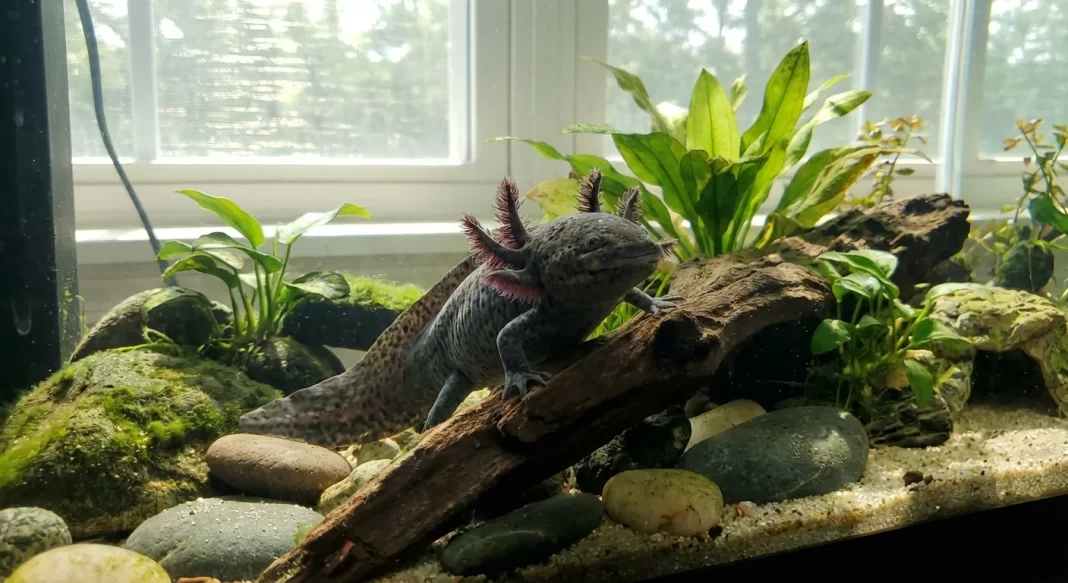
The first 30 to 60 minutes of an axolotl emergency are where keeper action matters most. Have the emergency kit assembled before the event. Run the 5-step immediate-response protocol. Route to the correct sub-protocol via the emergency-type decision tree. Avoid the four common compounding errors. Escalate to the vet via clear thresholds.
What belongs in an axolotl emergency first-aid kit?
Every axolotl keeper should have a dedicated container of emergency supplies stored within reach of the tank. The kit centers on tubbing supplies, including a food-grade clean tub, Seachem Prime water conditioner, a liquid-reagent test kit, a digital thermometer with probe, a turkey baster, Indian almond leaves, clean towels, and written exotic-vet contact information.
The goal is not to stockpile medications. Most axolotl emergencies are water-quality emergencies, and the supplies that matter most are the ones that let you get the animal into clean, safe, temperature-appropriate water immediately. The kit inventory below combines into a single grab-in-under-a-minute container. The axolotl care guide covers the broader husbandry framework that minimizes emergency frequency in the first place.
| Item | Specification | Purpose | Retailer context |
|---|---|---|---|
| Food-grade clean tub | 6-quart for juveniles under 6 inches; 10-12 quart for adults | Tubbing the axolotl into safe water during an emergency | Standard kitchen-storage retailer |
| Water conditioner (Seachem Prime or equivalent) | Neutralizes chlorine, chloramine, ammonia, heavy metals in single dose | Dechlorinator + ammonia-binder during acute spikes; can dose up to 5x normal for temporary binding | Aquatic-supply retailer |
| Liquid-reagent test kit | API Freshwater Master Test Kit measures ammonia, nitrite, nitrate, pH | Diagnose cause of emergency; test strips drift out of calibration and produce false reassurance | Aquatic-supply retailer |
| Digital thermometer | Probe-based reading in seconds | Accurate temperature reading; stick-on strips lag actual water temperature | Aquatic-supply or general electronics retailer |
| Turkey baster or large syringe | 50-100 mL capacity | Spot-clean waste from tub without full water change; gentle axolotl-directing during transfer | Kitchen-supply retailer |
| Indian almond leaves (Catappa) | Dried whole leaves | Mild antifungal and antibacterial tannin release during tubbing | Aquatic-supply retailer |
| Clean lint-free towels | Soft, no fabric softener residue | Cushion for visual examination; tub insulation during outages | General-purpose retailer |
| Written exotic-vet contact info | Name, phone, address, after-hours line on waterproof card | Avoid searching during emergency | Print and laminate |
Clean tub (6 to 12 quart)
A food-grade plastic storage tub is the foundation of axolotl emergency response. When something goes wrong in the main tank, the first step is almost always removing the axolotl to a clean container with fresh dechlorinated water. This process is called tubbing, and it is the most widely used first-response intervention among axolotl keepers. For juveniles under 6 inches, a 6-quart tub works. For subadults and adults, use a 10 to 12-quart tub. The axolotl should be able to turn around without pressing against the walls. Keep this tub clean, empty, and stored where you can grab it in under a minute. Do not repurpose a container that held cleaning chemicals, paint, or food with strong residues.
Water conditioner (Seachem Prime or equivalent)
Seachem Prime is the standard dechlorinator used by axolotl keepers because it neutralizes chlorine, chloramine, ammonia, and heavy metals in a single dose. During an ammonia spike, Prime’s ammonia-binding capacity buys time while you perform water changes. Dose at 2 drops per gallon for routine dechlorination. During an active ammonia emergency, you can dose up to 5 times the normal amount for temporary ammonia binding without harming the axolotl, per the manufacturer’s guidelines. Keep a bottle in your emergency kit even if you already have one at your water-change station. In an emergency, you do not want to search. The dechlorinator guide covers Prime dosing in detail.
Water test kit (API Freshwater Master Test Kit)
A liquid-reagent test kit that measures ammonia, nitrite, nitrate, and pH is essential for diagnosing the cause of an emergency. Test strips exist but are less accurate than liquid-reagent kits and do not reliably detect low ammonia levels that are still harmful to axolotls. The API Freshwater Master Test Kit is the most widely recommended option in the axolotl keeping community because it uses liquid reagents with higher accuracy than strips. During an emergency, testing the tank water before and after intervention tells you whether the problem is chemical (ammonia, nitrite) or environmental (temperature, pH crash). This information also becomes critical if you need to consult a veterinarian. The water testing guide covers the liquid-reagent protocol in detail.
Digital thermometer
Temperature is involved in nearly every axolotl emergency. The optimum temperature for axolotls is 16 to 18 degrees Celsius (source: Axolotl.org captive requirements), with a 12-to-20-degree Celsius comfort band for typical keeping (source: AxolotlCentral care guide). Heat spikes above 22 degrees Celsius stress the axolotl’s immune system and reduce dissolved oxygen, and temperatures above 24 degrees Celsius can be fatal (per AxolotlCentral care guide). A digital thermometer with a probe gives you an accurate reading in seconds. Do not rely on stick-on thermometer strips during an emergency because they lag behind actual water temperature by several degrees. The temperature guide covers monitoring methodology.
Turkey baster or large syringe
A turkey baster lets you spot-clean waste and uneaten food from a tub without performing a full water change. In a small emergency tub with no filter, a single piece of waste can produce a measurable ammonia spike within hours. A baster also works for gently directing an axolotl during transfer if it is resistant to netting.
Indian almond leaves (Catappa leaves)
Indian almond leaves release tannins into the water that have mild antifungal and antibacterial properties. They are a low-risk supportive addition during tubbing and are standard practice among experienced axolotl keepers and breeders. Place one small leaf or a quarter of a large leaf in the emergency tub and replace it at each water change. Indian almond leaves are not a treatment for active infections, but they create conditions that support healing alongside clean water.
Clean towels
Soft, lint-free towels serve two purposes. They cushion the surface if you need to briefly hold the axolotl out of water during a visual examination, and they insulate the emergency tub during a power outage or transport. Avoid towels washed with fabric softener or dryer sheets because chemical residues can leach into water that contacts the fabric.
Written exotic-vet contact information
Write your exotic veterinarian’s name, phone number, address, and after-hours emergency line on a waterproof card and keep it with your emergency kit. During a genuine emergency, you do not want to rely on finding the number in your phone. If you do not yet have an exotic vet, the Association of Reptile and Amphibian Veterinarians maintains a searchable directory (source: ARAV Find-A-Vet directory). Not every general-practice veterinarian has experience with amphibians, and an axolotl requires a vet who specifically treats exotic species or amphibians.
What is the symptom-triage matrix?
The symptom-triage matrix categorizes acute presentations by severity. Mild symptoms (brief surface gulping under 30 minutes, single-day appetite skip) need monitoring and water testing. Moderate symptoms (sustained gill curl, refused food beyond 48 hours, red gills) need immediate intervention. Severe symptoms (visible bleeding, persistent floating, fungal coverage exceeding 30 percent body) need immediate veterinary care.
The matrix below maps the acute presentations keepers most commonly observe to a severity tier, a first-response action, and an escalation threshold. Use it as a quick reference during an event. Per Axolotl.org, forward-turned gills are typical of an axolotl stressed by flowing water (source: Axolotl.org health), and animals losing appetite and becoming covered in white or grey patches of bacteria indicates Columnaris bacterial infection (per Axolotl.org health).
| Symptom | Severity tier | First response | Escalation threshold |
|---|---|---|---|
| Brief surface gulping under 30 minutes | Mild | Monitor; test water | Persists past 1 hour with elevated ammonia |
| Single-day appetite skip | Mild | Test water; check temperature | Persists past 3 days |
| Forward-curled gills sustained | Moderate | Check filter flow; reduce flow; test water | Persists past 24 hours |
| Refused food beyond 48 hours | Moderate | Test water; check temperature | Vet within 48 hours if parameters clear |
| Sustained surface gulping past 30 minutes | Moderate | Tub in dechlorinated 60-64F water; test main tank | Vet within 24 hours if low dissolved oxygen confirmed |
| Glass surfing lasting hours | Moderate | Test water; check recent tank changes | Vet within 48 hours if parameters clear |
| Red or inflamed gills | Moderate | 50% water change + Prime dose at 5x | Vet within 24 hours if no improvement |
| White cotton growths under 30% body | Moderate | Tub in 60-64F cool dechlor + Indian almond leaf | 5-7 days observation; vet if spreading |
| Visible bleeding or open wounds | Severe | Tub in 60-64F dechlor + Indian almond leaf | Vet immediately |
| Persistent floating with bloated abdomen | Severe | Fast + tub in 60-64F dechlor | Vet within 48 hours if no resolution |
| Complete unresponsiveness | Severe | Tub in fresh dechlor at same temperature | Vet immediately |
| Fungal coverage exceeding 30% body | Severe | Tub + 100% changes every 12 hours | Vet immediately |
The health red flags guide covers the broader chronic-symptom catalog distinguishing acute (this checklist) from chronic presentations.
What is the 5-step immediate-response protocol?
Run these five steps in order. Measure water temperature and drop gradually if above 20 degrees Celsius. Run a full liquid-reagent test for ammonia nitrite nitrate pH within 10 minutes. If ammonia tests above 0.25 ppm dose Prime at up to 5 times normal while planning a 50 percent water change. Tub if the tank cannot stabilize within 30 minutes.
The 5-step protocol applies to nearly every acute emergency. It works because it addresses the most common compounding factors (temperature, water quality, oxygen) before assuming a specific diagnosis. The decision tree in the next section routes to scenario-specific sub-protocols once the immediate response is underway.
Across axolotl-keeper rescue networks responding to acute emergencies, the single intervention that prevents the most deaths is getting the animal into clean dechlorinated water at the correct temperature within the first 30 minutes. Everything else is secondary to that step. Keepers who lose animals to treatable problems are almost never the ones who lacked knowledge. They are the ones who lacked a prepared setup and had to improvise under pressure.
Step 1: Measure water temperature with digital thermometer and gradually drop if above 20 degrees Celsius. Place the probe at mid-water-column height. If the reading is above 20 degrees Celsius, float sealed frozen water bottles in the tank to lower temperature gradually. Do not add ice directly to the water because rapid temperature drops stress the axolotl as much as the heat. Target reduction is no more than 2 degrees Fahrenheit per hour, which is roughly 1 degree Celsius per hour. Per Axolotl.org, lower temperatures in the 5-to-15-degree Celsius range serve as a general panacea for axolotls (per Axolotl.org health), so cool dechlor water is the safe destination.
Step 2: Run a full liquid-reagent test for ammonia, nitrite, nitrate, and pH within 10 minutes. Use the API Freshwater Master Test Kit or equivalent liquid-reagent kit. Per Ethical Axolotls, any observable amount of nitrite may cause severe stress, with the recommended response being tubbing the axolotl in 3+ gallons of cold, dechlorinated water (source: Ethical Axolotls parameters). Record the readings. The test takes 5 to 10 minutes for ammonia and longer for nitrate.
Step 3: If ammonia tests above 0.25 ppm dose Prime at up to 5 times normal while planning a 50 percent water change. Dose Prime at up to 5 times the normal rate (typically 5 drops per gallon instead of 1). This temporarily binds remaining ammonia for approximately 24 hours. Then perform an immediate 50 percent water change using dechlorinated temperature-matched water. The water change schedule covers the emergency change procedure. Re-test after the change. If ammonia is still above 0.25 ppm, perform another 50 percent change.
Step 4: If the tank cannot stabilize within 30 minutes, tub the axolotl in fresh dechlorinated 60-64F water. Move the axolotl to a separate container with fresh dechlorinated water at 60 to 64 degrees Fahrenheit, which is 15.5 to 17.8 degrees Celsius. The temperature should be matched to the main tank to avoid additional shock unless the main tank is the source of the heat emergency. Per Axolotl.org, a few weeks in cool water is often helpful to speed recovery during and after treatment (per Axolotl.org health). Add an Indian almond leaf for mild antifungal tannin release.
Step 5: Document the timeline with timestamps photos and parameter readings. Write down the time symptoms were first observed, the time of each intervention, and the parameter readings before and after each intervention. Photograph the axolotl from above and from the side. Photograph any visible symptoms (gill curl, color change, white growths, wounds). This documentation becomes critical if you need to escalate to a vet, since the chronological data narrows the diagnostic possibilities significantly.
How do you route the emergency to the right sub-protocol?
Route the emergency to the correct sub-protocol via four types. Water-quality emergency triggers when ammonia or nitrite reads above zero. Heat emergency triggers when water reads above 22 degrees Celsius. Injury emergency triggers on visible wounds. Disease emergency triggers on white cotton growths or red streaks. Each type has its own first-response sequence and vet-threshold.
The emergency-type decision tree below resolves the symptom set into one of four sub-protocols. If multiple types apply (heat emergency with secondary ammonia spike from increased bioload), run the immediate-response 5-step protocol first, then route to the highest-severity sub-protocol.
| Emergency type | Signs | First response | Vet threshold |
|---|---|---|---|
| Water-quality emergency | Ammonia or nitrite reading above zero; red or inflamed gills; excessive mucus; lethargy; appetite loss | 50% water change + Prime 5x dose + identify cause (overfeeding, dead tank-mate, uncycled tank, filter failure, overstocking) | Within 24 hours if no improvement |
| Heat emergency | Water above 22C; frantic swimming; surface gulping; loss of appetite; gill filaments forward; lethargy in advanced stages | Float frozen sealed water bottles + fan across surface + tub in pre-cooled 60-64F dechlor if temperature above 24C with severe distress | Within 48 hours if no stable cooling achieved |
| Injury emergency | Visible wounds; missing limb tips or gill stalks; torn tail fin; abrasions | Tub in 60-64F dechlor + Indian almond leaf + 100% daily water changes; no topical antiseptics | Vet immediately for severe wounds; within 24 hours for moderate |
| Disease emergency | White cotton fungal growths; red streaks bacterial; persistent floating with bloating; multi-symptom presentation | Tub in 60-64F cool dechlor + 100% changes every 12 hours + 5-7 day observation | Vet immediately if coverage exceeds 30% body or no improvement at 5-7 days |
Water-quality emergency
Water-quality emergencies are the most common axolotl emergency type. The first response is a 50 percent water change with dechlorinated temperature-matched water and a Prime dose at up to 5 times normal to bind remaining ammonia. Test again after the change. If ammonia is still above 0.25 ppm, perform another 50 percent change. Identify the cause from this short list: overfeeding (uneaten food decomposing), dead tank-mate (decomposition spike), uncycled tank (biological filter not established), filter failure (no biological processing), overstocking (bioload exceeds filtration capacity). The ammonia burn guide covers the recovery timeline for gill and skin damage after exposure. The tank cycling guide covers nitrogen cycle establishment for uncycled-tank scenarios.
Heat emergency
Heat emergencies trigger above 22 degrees Celsius and become life-threatening above 24 degrees Celsius. Float sealed frozen water bottles in the tank to lower temperature gradually. Do not add ice directly. Point a fan across the water surface to increase evaporative cooling. If the temperature is above 24 degrees Celsius and the axolotl is showing severe distress (floating, unresponsive, gasping), tub in a separate container with fresh dechlorinated water pre-cooled to 60 to 64 degrees Fahrenheit. The hot weather setup covers extended cooling strategies and equipment options for chronic warm-climate setups. The temperature guide covers the broader temperature framework.
Injury emergency
Injury emergencies require clean water as the primary treatment. Tub the injured axolotl in clean dechlorinated water at 60 to 64 degrees Fahrenheit. Clean water is itself a treatment for minor injuries because it prevents secondary bacterial and fungal infection at the wound site. Add one Indian almond leaf for mild antibacterial and antifungal support. Perform 100 percent water changes daily, or twice daily if the wound is open. Do not apply topical antiseptics, hydrogen peroxide, or medications to the wound unless directed by a veterinarian. Axolotl skin is permeable, and substances that are safe for fish or reptiles can cause chemical burns on amphibian tissue. Monitor for secondary infection: white fuzzy growth indicates fungal, red inflammation spreading from the wound site indicates bacterial. Axolotls regenerate limbs, gills, tail tissue, and even portions of organs. The health red flags guide covers the broader chronic-symptom catalog including injury recovery patterns.
Disease emergency
Disease emergencies present as white cottony fungal growths on gills, skin, tail, or limb tips, or as red streaks indicating bacterial infection. Per Axolotl.org, animals tend to lose their appetite and become sluggish, and then become covered in white or grey patches of bacteria, indicating Columnaris bacterial infection (per Axolotl.org health). Tub the axolotl in a clean container with fresh dechlorinated water at 60 to 64 degrees Fahrenheit. Add one Indian almond leaf for mild antifungal support. Perform 100 percent water changes in the tub every 24 hours. For active fungal growth, increase to every 12 hours. Observe for 5 to 7 days. Many mild fungal infections resolve with clean cool water alone. If fungus has not improved or has spread after 5 to 7 days, methylene blue bath may be appropriate, but only with veterinary consultation. If fungus covers more than 30 percent of the body or the gills are severely decomposed, consult an exotic veterinarian immediately. The cloudy water fix guide covers bacterial-bloom-as-cloudy-water differential when fungal-vs-bacterial presentation overlaps, and the same guide covers fungal identification in more depth. Substrate-related impaction emergency response is covered in the substrate guide.
What do you do for symptom-specific scenarios?
Specific symptoms point to specific causes. Forward-curled gills point to flow or heat stress. Color change to pale tones points to chronic stress. Refused food beyond 48 hours points to water quality first then temperature. Surface gulping points to low dissolved oxygen. Glass surfing points to general stress. Lethargy is a multi-cause differential.
The mapping below resolves common symptom presentations to the most likely underlying cause and the first-response action.
Forward-curled gills indicate either flow stress from filter intake placement or heat stress. Check filter flow first by visually observing the intake current near the resting site. If the intake is too close to the axolotl’s typical resting area, reduce the flow or reposition the intake. If flow is normal, test temperature next. Per Axolotl.org, this golden albino’s forward-turned gills are typical of an axolotl stressed by flowing water (per Axolotl.org health), confirming flow stress as the dominant cause.
Color change to pale or washed-out tones indicates chronic stress accumulating over days to weeks. The differential includes water quality (test ammonia + nitrite + nitrate + pH), temperature (sustained above 20 degrees Celsius), tank-mate harassment (covered in the tank-mates guide), or chronic disease (covered in health red flags guide). Color change is rarely acute. If pale tones appear within hours, suspect acute stress; if over days, suspect chronic stress.
Refused food beyond 48 hours has water quality as its first differential. Test ammonia, nitrite, nitrate, and pH. If parameters clear, check temperature next. If temperature is in the 16-to-18-degree optimum, consider food type. Spitting at a particular food often resolves with a switch to nightcrawler earthworm. The feeding schedule by age covers diet selection during recovery.
Surface gulping indicates low dissolved oxygen, which is typically caused by either elevated temperature (warmer water holds less oxygen) or organic decay consuming oxygen. Test temperature first, then check for visible decaying matter on the substrate. Increase surface agitation with a fan or air stone to raise dissolved oxygen.
Glass surfing (repeatedly swimming along the tank glass) indicates general stress and is rarely diagnostic on its own. The differential includes recent tank changes (new substrate, new tank-mate, new equipment), water quality, temperature, or response to flow stress. Test water and check for recent changes.
Lethargy beyond normal resting behavior is the most common multi-cause symptom. The differential is water quality, temperature, injury, disease, or chronic stress. Test water first, then check temperature, then visual inspection for injury or disease. Lethargy with appetite loss persisting past 48 hours warrants escalation to vet evaluation.
When should you call an exotic veterinarian?
Three thresholds trigger vet escalation. Within 24 hours if no improvement after immediate-response and full water-quality stabilization. Within 48 hours if symptoms continue with stable parameters indicating non-water-quality cause. Immediately for visible bleeding, open wounds, severe buoyancy problems, complete unresponsiveness, or fungal coverage exceeding 30 percent body. ARAV’s directory locates qualified exotic vets.
The vet-escalation thresholds are calibrated to avoid both delayed escalation (which compounds damage) and premature escalation (which wastes the vet visit on a problem keeper intervention would have resolved).
The 24-hour threshold applies when the immediate-response protocol has run, water quality is stable, but symptoms persist. The diagnostic possibility set narrows to chronic infection, parasites, internal injury, or metabolic disorder. The 48-hour threshold applies when symptoms continue with stable parameters indicating the cause is not water-quality-driven. The immediate threshold applies to specific presentations that cannot wait for a 24-to-48-hour observation window.
Per the ARAV directory, qualified exotic veterinarians are located via the searchable member-directory access (per ARAV Find-A-Vet directory). Not every general-practice veterinarian has experience with amphibians, and an axolotl requires a vet who specifically treats exotic species or amphibians. Identify an exotic vet before an emergency happens and add their contact information to your emergency kit. The axolotl care SOP covers the broader proactive-vet-identification habit. The health red flags guide covers the broader threshold framework for chronic vs acute escalation decisions.
What should you NOT do during an axolotl emergency?
Four actions cause more harm than help during axolotl emergencies. No ice cubes directly in the tank because thermal shock kills as readily as heat stress. No medication without diagnosis because antibiotics stress the kidneys and liver and mask symptoms a vet would need. No food removal unless impaction is confirmed. No isolation tub without dechlorinator.
The most common compounding error in rescue-network intake is medication-without-diagnosis. Keepers reach for Kanaplex or methylene blue before confirming the underlying cause, the antibiotic stresses the kidneys and liver, the mucus layer disrupts, and the original symptom either persists or is masked by the medication side-effects. The pattern repeats across years of intake data and consistently extends the recovery time.
The never-do-list consolidated below.
| Action | Why it is dangerous | Correct alternative |
|---|---|---|
| Adding ice cubes directly to tank | Thermal shock from rapid temperature drop is as harmful as the heat stress being treated; can trigger fatal stress response | Float sealed frozen water bottles for gradual cooling; target reduction max 1 degree Celsius per hour |
| Medicating without diagnosis | Antibiotics stress kidneys and liver; disrupt protective mucus layer; mask symptoms vet would need for differential | Test water first; tub in clean dechlor; observe 24-48 hours; vet escalation with documentation if no improvement |
| Removing food during early stress | Fasting is for confirmed impaction or post-acute recovery, not general appetite suppression; healthy fasting limit is 7 days | Test water and temperature first; if parameters clear, try food switch to nightcrawler earthworm |
| Using tap water in isolation tub without dechlorinator | Chlorine and chloramine cause immediate gill and skin damage; tap water in panic compounds the original emergency | Keep pre-dechlorinated water stored at all times; minimum 5 gallons in clean container |
No ice cubes directly in tank
Ice cubes added directly to tank water cause rapid local temperature drops that trigger thermal shock. The axolotl’s stress response from a sudden 5-to-10-degree temperature drop is comparable to the stress from the heat emergency being treated. Float sealed frozen water bottles instead. The bottles cool the water gradually without direct ice-to-water contact. Target reduction is no more than 1 degree Celsius per hour to avoid shock.
No medication without diagnosis
Antibiotics like Kanaplex (kanamycin) and Metroplex (metronidazole) are available over the counter for aquarium use, but administering them without a diagnosis is harmful. Random antibiotic use stresses the axolotl’s kidneys and liver, disrupts the skin’s protective mucus layer, and can mask symptoms a veterinarian would use for diagnosis. Methylene blue is an antifungal dye, not a preventive measure. Methylene blue irritates healthy tissue and should not be used as a preventive measure or without a clear fungal diagnosis. Use medications only when a veterinarian has specifically prescribed them for your animal and has given you dosing instructions for the specific condition being treated. The dechlorinator guide covers the safe-product framework for Prime as the one always-on-hand product.
No food removal during early stress
Stop feeding only when impaction is confirmed or after acute stress has been ongoing for more than 24 hours. General appetite suppression is a symptom to investigate, not a condition to fast. A healthy adult axolotl can safely fast for 7 to 14 days, but extended fasting beyond 7 days requires veterinary guidance. Reach for the test kit before reaching for the food jar.
No isolation tub without dechlorinator
The isolation tub must use dechlorinated water at every step. Tap water contains chlorine and chloramine, both of which damage axolotl gills and skin on contact. Using tap water in panic because you ran out of dechlorinated water compounds the original emergency. Always keep at least 5 gallons of pre-dechlorinated water stored in a clean container ready for emergency use.
What is the 7 to 14 day recovery monitoring window?
The 7 to 14 day recovery window requires daily parameter testing and twice-daily visual inspection of gill condition skin color and behavior. Feeding reintroduces gradually after 48 to 72 hours symptom-free with monitoring for food acceptance versus spitting. Log all readings and observations to support vet follow-up if symptoms reappear.
The recovery window is the post-acute period where the axolotl returns to normal function but remains at higher risk for relapse or secondary complications. The discipline is daily parameter testing and visual inspection.
| Day range | Checks | Decision point |
|---|---|---|
| Day 1-3 (acute response) | Test water every 12-24 hours; visual inspect gill condition and color every 6-12 hours; no feeding | If symptoms worsen, escalate to vet; if stable, continue to recovery phase |
| Day 4-7 (early recovery) | Test water daily; visual inspect twice daily; gradual food reintroduction at day 4-5 with small portions | If food refused or symptoms reappear, return to acute response; if feeding resumes normally, continue |
| Day 8-14 (stabilization) | Test water every 2-3 days; visual inspect daily; feeding cadence returning to normal | If 14 days symptom-free, considered recovered; resume routine husbandry |
Gradual food reintroduction starts at day 4 or 5 with small portions of the axolotl’s preferred food (typically earthworm). Watch for swallowing versus spitting. Spitting after acute recovery may indicate continued discomfort or an unresolved underlying issue. The water testing guide covers the daily parameter protocol. The feeding schedule by age covers cadence during recovery.
Log every reading and observation. The log supports vet follow-up if symptoms reappear in the 14-day window, since the chronological data demonstrates whether the relapse is sudden or gradual.
What should you prepare before a vet visit?
Prepare before leaving the house. Bring 100 mL of tank water for the vet to test. Bring the parameter log showing 2 or more weeks of history. Capture photos and video of symptoms before transport-stress alters presentation. Write down feeding history and medication history. Transport in a clean lidded container of tank water with towel insulation.
When an emergency exceeds what you can manage at home, the next step is an exotic veterinarian. Preparing before you leave the house saves time at the clinic and gives the vet the information they need to start diagnosis immediately.
Water sample
Bring a small container of approximately 100 mL or half a cup of water from the main tank. The vet or their technician can test it for ammonia, nitrite, nitrate, pH, and potentially hardness. Water quality is the first thing an experienced exotic vet investigates when presented with a sick amphibian, because the majority of axolotl health problems trace back to water conditions. The water parameters guide covers the parameter framework the vet will reference.
Recent water parameters log
Bring your log showing at least the past 2 weeks of ammonia, nitrite, nitrate, pH, and temperature readings. This history shows the vet whether the current problem developed gradually or suddenly, which narrows the diagnostic possibilities significantly.
Photos and video of symptoms
Photograph or video the symptoms before you leave. Axolotls are stress-responsive animals, and the symptoms you observe at home (gill curl, floating behavior, fungal patches, skin discoloration) may look different at the clinic after the stress of transport. Having documentation of what the animal looked like in its tank gives the vet a baseline comparison. Video is particularly valuable for behavioral symptoms (erratic swimming, surface gulping, inability to stay on the bottom, abnormal posture) which are difficult to describe verbally with enough precision for a clinical assessment.
Feeding history
Write down what you feed, how much, and how often. Include the last feeding date. If the axolotl has refused food, note when the refusal started and what was offered. Feeding history helps the vet assess nutritional status and rule out or suspect impaction from specific food types.
Medication history
If you have administered any treatments (salt baths, methylene blue, Indian almond leaves, Seachem Prime at elevated doses, or any other product), write down the product name, dose, frequency, and dates. This prevents the vet from prescribing something that interacts with a treatment you already applied, and it tells them what has already been tried without success.
Transport container and technique
Transport the axolotl in a clean, lidded container filled with water from the main tank. Using tank water rather than fresh water avoids adding a parameter change on top of the existing health stress. Keep the container insulated with towels to maintain stable temperature during transit. If the trip exceeds 30 minutes and room temperature is above 70 degrees Fahrenheit, place a sealed ice pack against the outside of the container wrapped in a towel to slow heat gain. Do not add ice directly to the transport water. Avoid feeding for 24 hours before transport to reduce the risk of regurgitation during the trip.
Common axolotl emergency-response mistakes
The most common emergency-response mistakes share patterns. Reaching for medication before testing water quality. Ice-cube cooling that causes thermal shock. Extended fasting beyond 7 days without vet guidance. Using tap water in panic without conditioner. Waiting until severe symptoms appear before running the first test.
Medication before water test
The single most common compounding error. Keepers reach for Kanaplex or methylene blue when the underlying cause is an ammonia spike that would resolve with a 50 percent water change and a Prime dose. Always test first. Medication is a downstream intervention, not a first response.
Ice cubes for heat emergency
Adding ice cubes directly to tank water triggers thermal shock. The rapid temperature drop kills as readily as the heat stress. Use sealed frozen water bottles floated in the tank for gradual cooling instead.
Extended fasting beyond 7 days
A healthy adult axolotl can safely fast for 7 to 14 days, but extended fasting beyond 7 days requires veterinary guidance. Keepers who fast longer assuming “it will resolve” miss diagnostic windows where vet intervention would have changed the outcome.
Tap water in panic without conditioner
In an emergency, keepers reach for water that is immediately available, which often means tap water without dechlorinator. Chlorine and chloramine damage gills and skin on contact. Always keep at least 5 gallons of pre-dechlorinated water stored in a clean container for emergency use. The water change schedule covers the storage practice as part of routine husbandry.
Waiting for severe symptoms
The keeper observes mild forward-curled gills and waits to see if it resolves. By the time the gill curl is sustained, secondary ammonia or temperature issues have compounded. Run the immediate-response 5-step protocol on first observation, not after escalation. The cost of running the protocol on a false alarm is 15 minutes. The cost of waiting can be irreversible damage.
Frequently asked questions
These are the questions keepers most often ask about axolotl emergency response. The answers assume the 16-to-18-degree-Celsius temperature optimum, the 5-step immediate-response protocol, and the broader emergency-kit and vet-escalation framework covered above. For chronic symptom recognition outside the acute emergency window, the health red flags guide covers the symptom catalog.
How often should I check my emergency kit supplies?
Inspect your emergency kit every 3 months. Check that the water conditioner bottle is not expired or empty, the test kit reagents have not passed their expiration date (API Master Test Kit reagents typically expire 3 years after opening), and the clean tub is still clean and free of dust or chemical contamination. Replace Indian almond leaves if they have become moldy or brittle in storage. Methylene blue has a long shelf life but should be stored in a cool dark place to prevent degradation. The 3-month inspection cadence catches most degradation before an actual emergency.
Can I use tap water in an emergency if I run out of dechlorinated water?
No. Tap water contains chlorine or chloramine, both of which damage axolotl gills and skin on contact. In an absolute emergency where you have no dechlorinated water and no water conditioner, let tap water sit in an open container for 24 hours to allow chlorine to off-gas. This does not remove chloramine, which requires a chemical dechlorinator. The better practice is to always keep at least 5 gallons of pre-dechlorinated water stored and ready. Stored dechlorinated water remains stable for weeks if kept in a clean covered container.
What if I cannot find an exotic vet who treats axolotls?
Search the ARAV directory for amphibian-experienced veterinarians in your area. If no local options exist, some exotic veterinary clinics offer telemedicine consultations where you can share photos, video, and water parameters remotely. University veterinary teaching hospitals with exotic animal departments are another option, as they typically accept amphibian patients. Identify this vet before an emergency happens and add their information to your kit. Proactive identification matters because most exotic vets require pre-registration before they will see a new patient.
Should I keep antibiotics in my emergency kit?
No. Antibiotics like Kanaplex (kanamycin) and Metroplex (metronidazole) are available over the counter for aquarium use, but administering them without a diagnosis is harmful. Random antibiotic use stresses the axolotl’s kidneys and liver, disrupts the skin’s protective mucus layer, and can mask symptoms a veterinarian would use for diagnosis. Keep these medications only if a veterinarian has specifically prescribed them for your animal and has given you dosing instructions for the specific condition being treated.
How long can an axolotl survive without filtration during a power outage?
A healthy adult axolotl in a properly stocked tank (not overcrowded, not recently fed) can tolerate 12 to 24 hours without filtration if the water was clean before the outage. Beyond 24 hours, ammonia accumulation becomes the primary risk. Manual water surface agitation every 2 to 3 hours helps maintain oxygen levels. If the outage extends beyond 24 hours, partial water changes with pre-dechlorinated stored water become necessary. The tank cycling guide covers cycle-crash recovery after extended outages, since the biological filter bacteria may have partially died during the loss of filtration.
- Axolotl care guide: complete husbandry hub for new keepers
- Axolotl cloudy water fix: bacterial-bloom emergency cross-reference and fungal-presentation differential
- Axolotl health red flags: chronic-symptom catalog distinguishing acute from chronic presentations
- Axolotl water parameters: parameter target framework
- Axolotl water testing guide: liquid-reagent test kit protocol
- Axolotl ammonia burn guide: ammonia-spike recovery timeline
- Axolotl temperature guide: thermal biology framework and heat-emergency thresholds
- Axolotl water change schedule: 50% emergency water change procedure
- Axolotl dechlorinator guide: Prime dosing detail
- Axolotl hot weather setup: extended cooling strategies for chronic warm-climate emergencies
- Axolotl tank cycling guide: cycle-crash recovery after power outage
- Axolotl substrate guide: impaction emergency response
- Axolotl size and growth: juvenile vs adult emergency thresholds
- Axolotl feeding schedule by age: feeding during recovery
- Axolotls tank mates guide: tank-mate-injury emergency response
By the ExoPetGuides editorial team (AI-assisted drafting; human-reviewed), reviewed by an exotic-animal veterinarian
Updated 2026-05-20
Primary sources: Axolotl.org health, Axolotl.org captive requirements, AxolotlCentral care guide, Ethical Axolotls parameters, ARAV Find-A-Vet directory
Disclaimer: This content is for educational purposes only and is not a substitute for professional veterinary advice. Always consult a qualified veterinarian, ideally an exotic-animal specialist, for any health concern about your pet. Care recommendations may vary based on species, individual animal, and local regulations.