

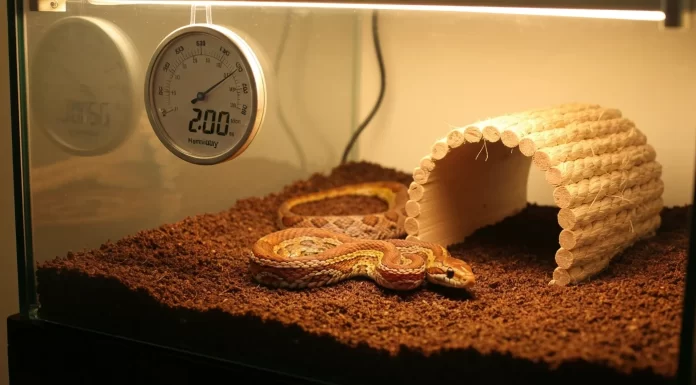
Corn snakes need 40–60% humidity at all times. During a shed cycle, raise it to 60–70% to support clean skin removal. Measure with a...
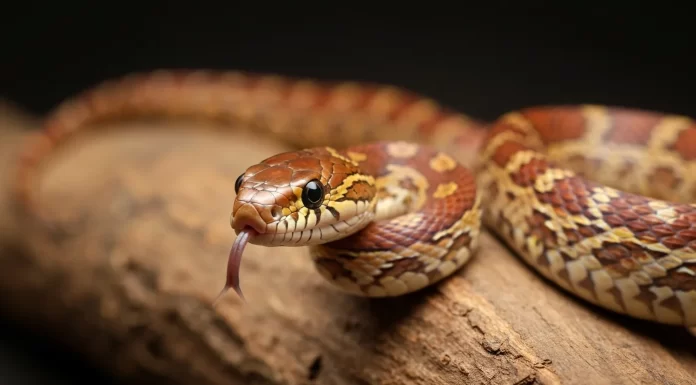
Corn snakes communicate through body language you can learn to read. Tongue flicking is normal information-gathering. Burrowing and exploration are healthy behaviors. Stress signals...
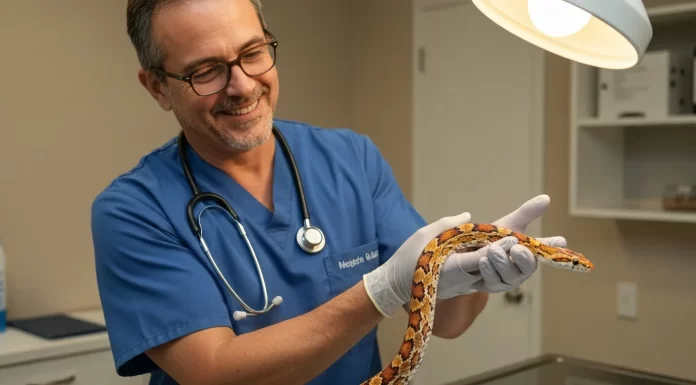
Common corn snake health problems include respiratory infection, scale rot, mites, and mouth rot. Most develop from husbandry failures — wrong temperature, wet substrate,...
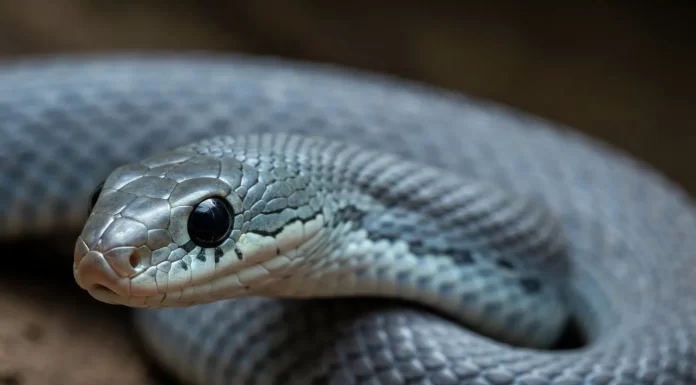
Corn snakes shed every 4–6 weeks as juveniles and every 6–8 weeks as adults. Pre-shed signs include cloudy eyes and dull color. Maintain 60–70%...
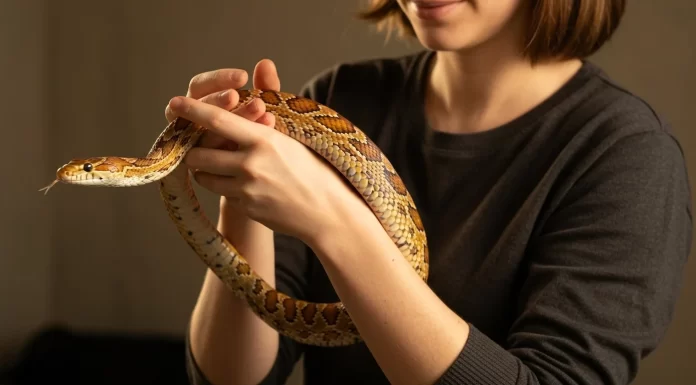
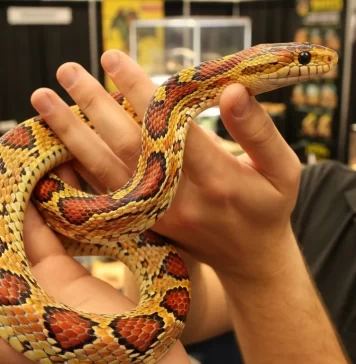
Corn snakes are docile and handle well once acclimated. Wait 2 weeks and at least 2 confirmed meals before starting sessions. Handle 2–3 times...
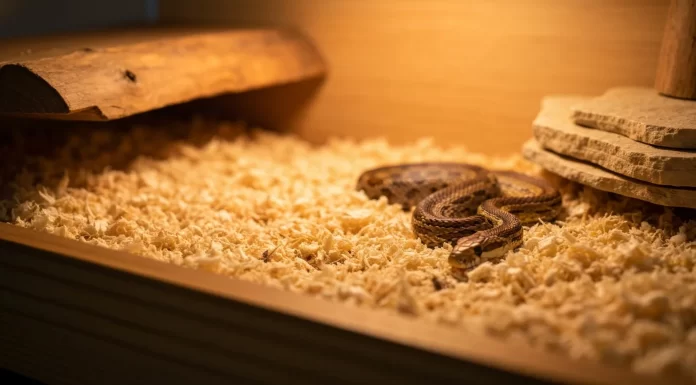
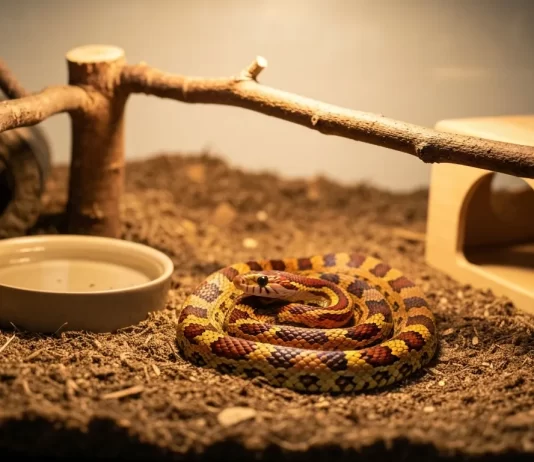
The best substrates for corn snakes are aspen shavings, coconut fiber, cypress mulch, and paper-based bedding. All allow burrowing and are easy to clean....
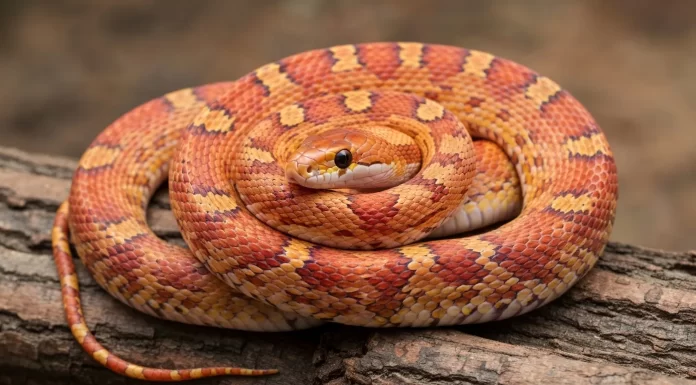
Corn snakes live 15–20 years in captivity with proper care — significantly longer than their 6–8 year wild lifespan. They reach adult size (4–5...
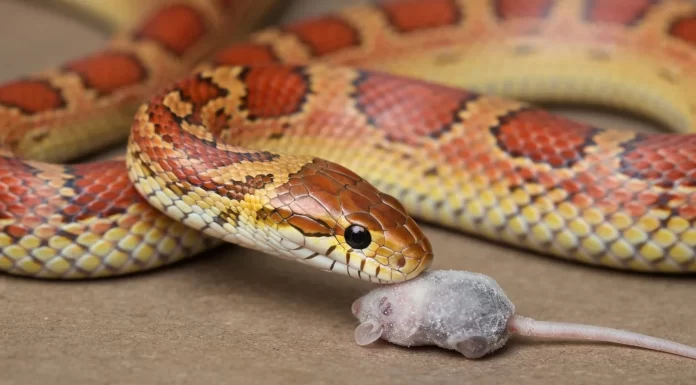
Corn snakes eat frozen-thawed mice sized no wider than their midbody girth. Hatchlings and juveniles eat every 5–7 days; adults eat every 14–21 days....
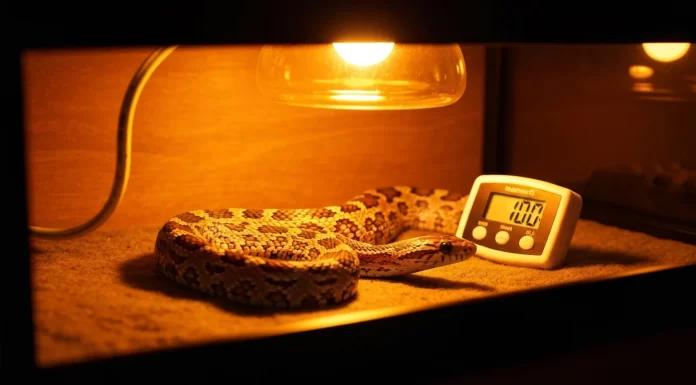
Temperature is the most important environmental variable in a corn snake enclosure, and the one that causes the most problems when it’s wrong. Too...
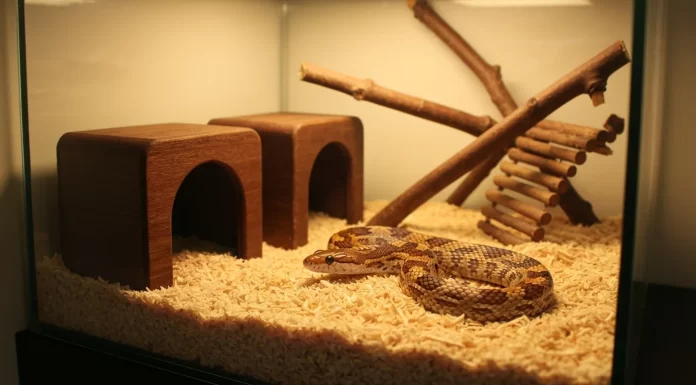
If you’re getting a corn snake for the first time, the enclosure decision is the one that shapes everything else. Get the size wrong...