


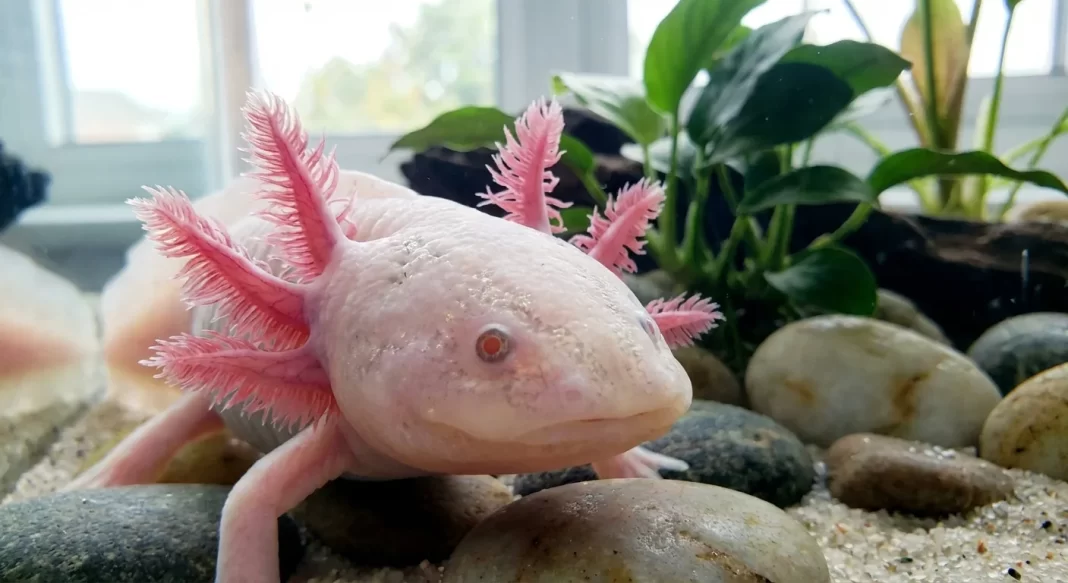
Axolotl ownership is legal in most of the United States, but four states and the District of Columbia ban possession outright, two states require import permits, one state now requires registration of existing animals, and a 2025 federal Lacey Act change affects interstate transport and importation. This guide covers every jurisdiction where restrictions apply, explains the biological and conservation reasons behind each restriction, walks through the permit process where applicable, and flags the local and municipal regulations that catch owners by surprise even in states where axolotls are technically legal.
Where axolotls are illegal to own in the United States
Four states and the District of Columbia prohibit private possession of axolotls. The bans are not arbitrary. Each jurisdiction has specific ecological justifications rooted in native amphibian conservation.
California bans all species in the genus Ambystoma, including axolotls, under its "detrimental animals" classification. The California Department of Fish and Wildlife considers axolotls a direct ecological threat because California hosts the federally listed California tiger salamander (Ambystoma californiense). A released axolotl could compete with native salamander populations for food and habitat, and the theoretical risk of hybridization between Ambystoma mexicanum and native Ambystoma species, while extremely difficult to achieve in practice, is a regulatory concern that California treats as non-negotiable https://www.popsci.com/environment/can-you-own-axolotl/. Penalties for possession include confiscation and fines.
Maine classifies axolotls as restricted wildlife under similar reasoning to California. Maine’s native amphibian populations include several salamander species that the state considers vulnerable to displacement or disease transmission from non-native amphibians.
New Jersey prohibits axolotl ownership primarily to prevent crossbreeding risks with native tiger salamanders (Ambystoma tigrinum) present in the state. New Jersey’s regulatory framework treats the entire Ambystoma genus as a wildlife management concern https://fantaxies.com/blogs/news/axolotls-legal-illegal-usa-states-the-complete-list.
District of Columbia bans axolotl possession under its exotic animal regulations.
The endangered status guide covers the broader conservation context behind these regulatory decisions.
If you live in any of these jurisdictions, there is no legal path to private axolotl ownership. No permit, breeder license, or educational exemption overrides the ban for private keepers. Attempting to purchase and ship an axolotl into a banned state exposes both the buyer and the seller to legal liability.
States that require permits for axolotl ownership
Two states allow axolotl ownership only with proper permits.
New Mexico requires an importation permit for axolotls. The permit process involves documentation including veterinary health certificates and, depending on the source, facility inspection certificates. Sellers shipping into New Mexico must provide proof of compliance with federal and state wildlife regulations. The New Mexico Department of Game and Fish administers the permit process https://fantaxies.com/blogs/news/axolotls-legal-illegal-usa-states-the-complete-list.
Hawaii requires a valid Department of Agriculture import permit for any axolotl entering the state. Hawaii’s island ecosystem is exceptionally vulnerable to invasive species, and the permit process reflects that sensitivity. Violations of Hawaii’s import laws carry severe penalties: fines up to $500,000 and up to three years of imprisonment. This is not a formality. Hawaii’s enforcement of exotic animal import restrictions is among the strictest in the country https://fantaxies.com/blogs/news/axolotls-legal-illegal-usa-states-the-complete-list.
If you live in New Mexico or Hawaii and want an axolotl, obtain your permit before purchasing the animal. No reputable breeder will ship to a permit-required state without seeing documentation first.
States with recent regulatory changes
Arkansas placed axolotls on its Prohibited Captive Wildlife Species list effective May 16, 2024. Owners who acquired their axolotl before that date can register the animal through the Arkansas Game and Fish Commission’s Captive Wildlife Program at agfc.com/captivewildlife for lifetime possession. Registration is free. No new axolotls may be acquired after the prohibition date. The AGFC cited three reasons for the ban: axolotls carry chytrid fungus (Batrachochytrium dendrobatidis) and ranavirus, both highly pathogenic amphibian diseases that persist in the environment; released axolotls could hybridize with native Ambystoma salamanders, three species of which are listed as Arkansas species of greatest conservation need; and habitat loss in the axolotl’s native range in Mexico makes responsible captive management increasingly important https://www.agfc.com/news/axolotl-registration-required-by-june-30/.
Virginia lifted its axolotl ban on August 1, 2021, making the state legal for private ownership without a permit. Virginia is the most recent state to move from banned to legal status.
Experienced keepers in the axolotl community we work with recommend checking your state’s fish and wildlife agency website annually, because regulatory changes at the state level do not always receive wide media coverage and can take effect with limited public notice.
Federal regulations: the 2025 Lacey Act change
In 2025, the U.S. Fish and Wildlife Service added axolotls to the Lacey Act’s "injurious species" list. This federal designation has three practical consequences for axolotl keepers https://www.popsci.com/environment/can-you-own-axolotl/:
-
Importing axolotls into the United States is now federally illegal without a specific federal permit. This does not affect domestic captive-bred animals, which make up the entirety of the legal pet trade, but it closes the door on any future wild-caught imports.
-
Transporting axolotls from the continental United States to the District of Columbia or any U.S. territory (Puerto Rico, Guam, U.S. Virgin Islands, American Samoa, Northern Mariana Islands) is prohibited without a federal permit. This restriction applies regardless of the legality status in the origin state.
-
Interstate transport within the continental United States is not directly affected by the Lacey Act injurious-species listing for domestically bred animals, but the Lacey Act broadly prohibits the sale or transfer of wildlife that violates any federal, state, tribal, or foreign law. This means shipping an axolotl to a state where possession is illegal now has both state and federal legal exposure.
The Lacey Act change does not make owning an axolotl illegal in states where it is currently legal. If you already own an axolotl in a legal state, nothing changes for you. The impact falls on importers, interstate shippers, and anyone attempting to move axolotls into restricted jurisdictions.
CITES and international regulations
Axolotls (Ambystoma mexicanum) are listed under CITES Appendix II, which regulates international trade to ensure it does not threaten wild populations. Mexico, the axolotl’s only native range, prohibits export of wild-caught specimens under both CITES and national law. All axolotls in the international pet trade are captive-bred, many generations removed from Lake Xochimilco stock https://www.popsci.com/environment/can-you-own-axolotl/. The origins and natural habitat guide covers the species’ wild distribution and population status in detail.
For keepers outside the United States, regulations vary significantly by country:
- United Kingdom: Legal to own without a permit. No Dangerous Wild Animals Act restriction applies to axolotls.
- Canada: Legal in most provinces. Some provinces restrict import of amphibians; check your provincial wildlife regulations.
- Australia: Illegal to import or keep. Australia’s biosecurity framework prohibits most non-native amphibians.
- European Union: Generally legal. Some member states may have local restrictions or require CITES documentation for purchase.
The responsible sourcing guide covers ethical purchasing decisions in the context of the axolotl’s critically endangered wild status.
Why these restrictions exist: the conservation and disease logic
Understanding why axolotls face legal restrictions helps keepers make responsible decisions and anticipate future regulatory changes.
Hybridization risk. Axolotls belong to the genus Ambystoma, which includes several native North American species: the tiger salamander (A. tigrinum), the spotted salamander (A. maculatum), and various state-listed species. While hybridization between axolotls and tiger salamanders is theoretically possible, documented laboratory attempts show it is extremely difficult to achieve, and resulting offspring are typically near-completely infertile. Nonetheless, regulators in states with native Ambystoma populations treat the theoretical risk as sufficient grounds for restriction.
Disease transmission. Axolotls can carry chytrid fungus (Batrachochytrium dendrobatidis, abbreviated Bd) and ranavirus, both of which are devastating to native amphibian populations worldwide. Bd is a primary driver of global amphibian decline, responsible for population crashes in hundreds of species. A released or escaped axolotl could introduce these pathogens into local waterways where native amphibians have no resistance. This is the strongest scientific argument for restricting axolotl ownership in states with vulnerable amphibian populations.
Ecological displacement. Axolotls are effective predators of aquatic invertebrates, insect larvae, and small fish. An established feral population could outcompete native amphibians for food resources, alter invertebrate community structure, and disrupt aquatic food webs.
Reviewing regulatory trends across states, the pattern is clear: states with at-risk native salamander species or sensitive aquatic ecosystems are the ones that restrict axolotl ownership. As amphibian conservation awareness increases and more states assess their native species inventories, additional restrictions are possible. The Arkansas 2024 prohibition is the most recent example of this trajectory.
Local and municipal regulations to check
Even in states where axolotls are legal, county and municipal ordinances can impose additional restrictions. Common local-level regulations include:
- Exotic pet ordinances in specific cities or counties that ban or require permits for non-native amphibians regardless of state law
- Landlord and HOA restrictions on exotic pets in rental properties or planned communities
- Breeder licensing requirements if you plan to breed and sell axolotls, which may require a state-level breeding permit, tax registration, and compliance with animal welfare inspection standards
- Water discharge regulations in some municipalities that affect how you dispose of tank water, particularly if you use medications that could enter the local water system
The cost of ownership guide covers the financial planning side of purchase decisions once you have confirmed legality. The safest approach before purchasing an axolotl is to verify legality at three levels: federal, state, and local. Your state’s fish and wildlife agency website is the authoritative source for state-level rules. For municipal regulations, contact your city or county animal control office.
What to do if you own an axolotl and the law changes
Regulatory changes affecting existing owners typically include a grandfathering or registration period, as Arkansas demonstrated in 2024. If your state adds axolotls to a restricted list:
- Do not release the axolotl into the wild. The predators and defense guide explains why captive axolotls cannot survive in non-native waterways, and the ecological damage release causes. Releasing a captive axolotl is illegal in all 50 states, harmful to native ecosystems, and almost certainly fatal to the axolotl.
- Check whether your state offers a registration or grandfathering program that allows you to keep the animal for its remaining lifespan.
- Contact your state’s fish and wildlife agency directly for guidance specific to your situation.
- If rehoming is necessary, only rehome to a keeper in a state where axolotl ownership is legal. Do not ship across state lines without verifying the legality in the destination state.
The care SOP guide covers long-term care planning, and the axolotl as pets guide provides context on the full ownership commitment before you buy. The care guide serves as the central hub for all husbandry requirements.
Frequently asked questions
Are axolotls legal in California?
No. California bans all species in the genus Ambystoma under its detrimental animals classification. There is no permit available for private ownership. The ban exists to protect the federally listed California tiger salamander from competition, hybridization risk, and disease transmission from non-native Ambystoma species. Penalties for possession include confiscation and fines. This is one of the strictest exotic-amphibian bans in the country and has not changed since its implementation.
Do I need a license to breed axolotls?
In most states where axolotl ownership is legal, casual breeding between animals you own does not require a license. However, selling axolotls commercially may trigger state-level requirements: sales tax registration, breeder permits, compliance with animal welfare facility standards, and in some states USDA licensing if you sell across state lines. Requirements vary significantly by state. Check with your state’s department of agriculture and fish and wildlife agency before selling.
Can I ship an axolotl to another state?
You can ship an axolotl to any state where possession is legal, but you cannot legally ship to California, Maine, New Jersey, D.C., or any state where the recipient does not hold a required permit. The 2025 Lacey Act change adds federal exposure to shipping violations: sending an axolotl to a jurisdiction where it is illegal violates both state wildlife law and federal law. Reputable breeders verify the destination state’s legality before shipping and use overnight delivery with temperature-controlled packaging.
What happens if I get caught with an axolotl in a banned state?
Consequences vary by jurisdiction. In California, possession of a restricted animal can result in confiscation of the animal, fines, and in repeat cases potential criminal charges. In Hawaii, violating import laws carries penalties up to $500,000 and three years of imprisonment. In most jurisdictions, a first offense for a single pet axolotl results in confiscation and a fine rather than criminal prosecution, but the legal risk is real and the animal will not be returned to you.
Will more states ban axolotls in the future?
No one can predict specific legislative outcomes, but the trend over the past decade points toward increased regulation of non-native amphibians in states with vulnerable native salamander populations. Arkansas’s 2024 prohibition is the most recent example. States currently evaluating their native amphibian conservation plans may consider similar restrictions. Keeping up to date with your state fish and wildlife agency is the most practical way to monitor changes.
Researched and written by the ExoPetGuides editorial team with AI-assisted drafting. All husbandry parameters and veterinary references independently verified against peer-reviewed sources.
Disclaimer: This content is for educational purposes only and is not a substitute for professional veterinary advice. Always consult a qualified veterinarian — ideally an exotic-animal specialist — for any health concern about your pet. Care recommendations may vary based on species, individual animal, and local regulations.