


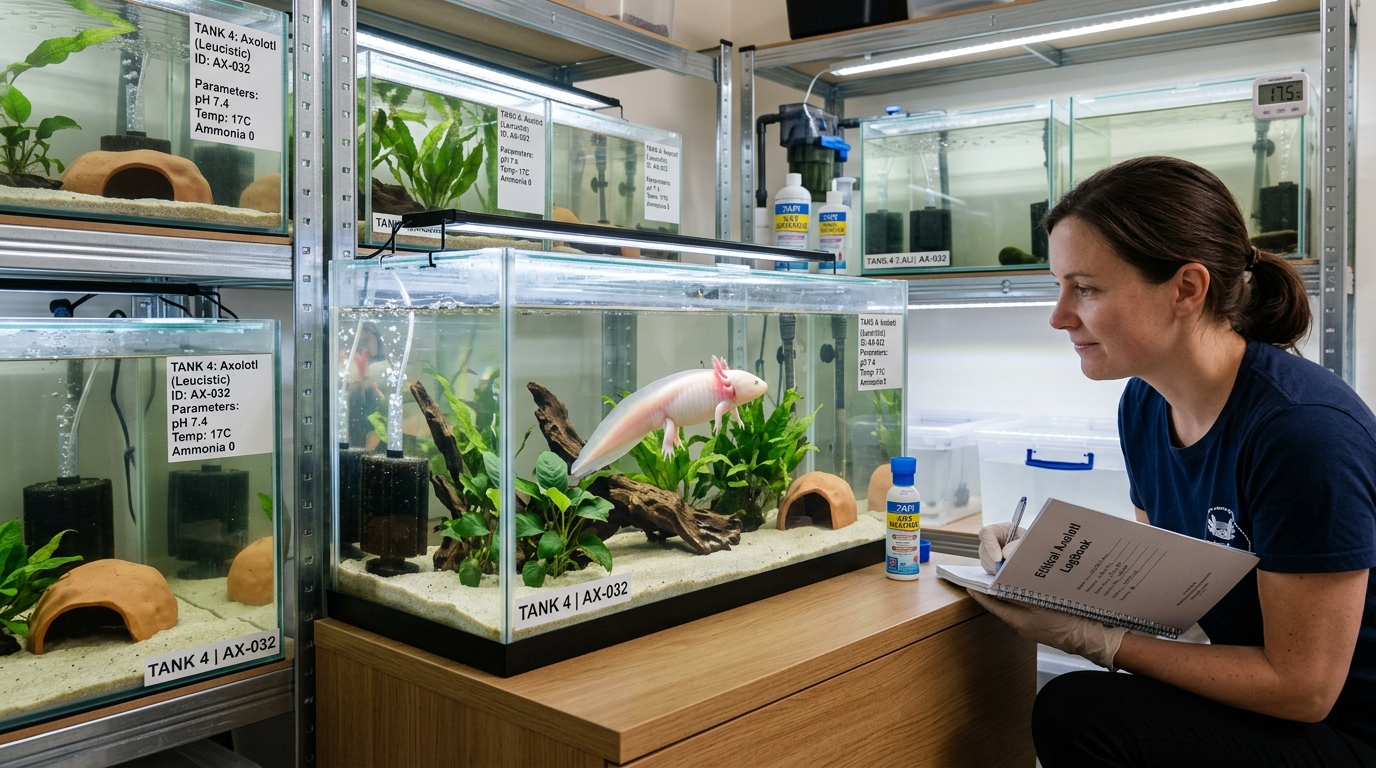
Where you get your axolotl determines the animal’s health trajectory from day one. Captive-bred axolotls from reputable breeders arrive with known genetics, documented lineage, and a health baseline you can verify. Wild-caught axolotls are illegal to collect or trade internationally under CITES Appendix II, and the species is classified as Critically Endangered by the IUCN with an estimated wild population of 50 to 1,000 adults (https://en.wikipedia.org/wiki/Axolotl). Every pet axolotl in the hobby descends from captive-bred stock, but not all captive-bred animals come from responsible operations. This guide covers how to identify trustworthy breeders, what red flags disqualify a seller, when adoption or rescue is the better path, why most pet stores are poor sources, what prices to expect across morph types, and which legal checks to complete before purchase.
Why captive-bred is the only legal and ethical option
All axolotls sold as pets must be captive-bred. The species (Ambystoma mexicanum) is native exclusively to the remnant canal system of Lake Xochimilco in Mexico City, and its wild population has declined to critically endangered levels due to habitat loss, invasive species (tilapia and carp), and water pollution (https://earth.org/?endangered-species=axolotl-endangered-species-spotlight). The Mexican government classifies the axolotl under its highest domestic protection category, making collection from the wild a federal offense in Mexico. CITES Appendix II restricts all international commercial trade, requiring export permits that Mexico does not issue for the pet trade (https://en.wikipedia.org/wiki/Axolotl).
The practical result is that every axolotl in the global pet hobby traces back to laboratory and breeding colonies established decades ago. These colonies are genetically separate from wild populations. Buying a captive-bred axolotl does not directly harm wild stocks, but purchasing from irresponsible breeders perpetuates poor genetic practices (inbreeding, failure to cull deformed hatchlings, mixed-lineage crosses without tracking) that degrade animal welfare across the hobby.
For a deeper look at why wild populations collapsed and what conservation efforts exist, see the endangered species guide. For the species’ evolutionary and geographic background, see the origins guide.
What to look for in a reputable breeder
A responsible axolotl breeder treats the animals as living organisms with welfare needs, not as inventory to move. The following markers separate serious breeders from mass producers.
Lineage records. A reputable breeder tracks parentage across at least three generations and can provide lineage documentation for any animal you purchase. This matters because axolotl colonies are genetically narrow. Without lineage tracking, inbreeding accumulates recessive defects (shortened gills, curved spines, reduced immune function) within a few generations. When experienced axolotl keepers we work with evaluate a new breeder, the first question is always whether they can produce a lineage chart. If the answer is vague or defensive, the breeder is not tracking genetics (https://themottledlotl.com/the-mottled-lotl-blog/finding-a-reputable-axolotl-breeder/).
Visible housing conditions. Good breeders are willing to share photos or videos of their breeding colony’s housing. You should see clean tanks with appropriate water volume, functioning filtration, temperature control (60 to 68 degrees Fahrenheit), and adequate space per animal. Overcrowded tubs with murky water and no filtration signal a production-first mentality.
Health guarantees. Reputable breeders offer a live-arrival guarantee and a short health window (typically 7 to 14 days) during which they will replace or refund an animal that arrives sick or dies. This is not generosity; it reflects confidence in the quality of their stock and shipping methods.
Proper shipping practices. Axolotls ship in insulated boxes with heat packs (winter) or cold packs (summer) to maintain safe transit temperatures. The animal travels in a sealed bag with enough water for oxygen exchange, inside a secondary container to prevent puncture. A breeder who ships in a thin plastic bag inside an uninsulated cardboard box is cutting costs at the animal’s expense.
Willingness to answer questions. A good breeder answers questions about the animal’s age, hatch date, diet history, water parameters in their facility, morph genetics, and any health observations. They welcome informed buyers. Sellers who respond to basic care questions with hostility or redirect you to generic care sheets are signaling low engagement with their animals.
Chytrid and disease testing. The highest-tier breeders test their colony for Batrachochytrium dendrobatidis (Bd, the chytrid fungus that devastates amphibian populations globally) via PCR swab testing. This is not yet standard across the hobby, but breeders who test and can share results represent the gold standard for responsible sourcing (https://rarepethub.com/reputable-axolotl-breeder/).
Red flags that disqualify a seller
Not every breeder who markets axolotls online operates responsibly. The following warning signs indicate a seller to avoid.
No lineage information available. If the seller cannot tell you who the parents are, what morph genetics the parents carry, or how many generations they have tracked, the animals are being produced without genetic oversight. The result is higher rates of deformity, shortened lifespans, and unpredictable morph expression in offspring.
Suspiciously low prices. A well-bred wild-type axolotl from a reputable breeder costs $30 to $75 depending on age and size. Leucistic and albino morphs fall in a similar range. An axolotl listed for $10 to $15 is almost certainly coming from a mass-production operation that cuts costs on food quality, water maintenance, genetic tracking, and veterinary oversight. The lower upfront cost translates to higher vet bills and shorter animal lifespans (https://fantaxies.com/blogs/axolotls/how-much-are-axolotls-9-quick-checks).
Ships in bags without insulation. Axolotls are ectotherms with a narrow safe temperature range. Shipping without insulated containers and temperature-control packs exposes the animal to lethal heat or cold during transit. A seller who skips insulation is prioritizing shipping cost over animal survival.
Sells to states where axolotls are illegal. Any seller willing to ship to California, New Jersey, Maine, or Washington D.C. (where axolotl ownership is prohibited) is violating state law and demonstrating a disregard for regulatory compliance. This attitude typically extends to other corners of their operation (https://fantaxies.com/blogs/news/axolotls-legal-illegal-usa-states-the-complete-list).
Mixed-sex housing without separation. Breeders who keep males and females together in the same tanks without intentional pairing produce unplanned clutches. Those clutches result in hundreds of larvae that the breeder may not have the capacity, genetics knowledge, or resources to raise properly. The overflow animals get sold cheap with no lineage data.
No photos of actual breeding stock. If the seller uses generic stock images or refuses to show their actual animals and facility, you cannot verify the conditions the animals are raised in.
Mass-produced at expos without documentation. Reptile and amphibian expos can be excellent places to meet breeders face to face, but some expo vendors buy wholesale from mass producers and resell without any knowledge of the animal’s background. Ask the same lineage and care questions you would ask online. If the vendor cannot answer them, walk away.
Adoption and rescue as a sourcing path
Not every axolotl needs to come from a breeder. Rescue organizations and private rehoming offer an alternative that reduces demand for new breeding while giving an existing animal a better home.
Axolotl rescue organizations. Dedicated amphibian rescues, such as Libertyland Axolotl Rescue, accept surrendered axolotls and rehome them to qualified keepers. These organizations typically assess the animal’s health, provide quarantine, and disclose any known medical history before adoption. Adoption fees are generally lower than breeder prices and support the rescue’s operating costs.
Rehoming from other keepers. Axolotl forums (Caudata.org, Reddit r/axolotls) and local herpetological society classifieds regularly feature axolotls available for rehoming. Common reasons include the keeper moving, upgrading to a different species, or being unable to maintain proper water parameters. When adopting from a private keeper, ask for the animal’s age, diet history, water parameters, and any health issues. Meet in person if possible, or request detailed photos and videos showing gill condition, body shape, and activity level.
What to verify before adopting. Rescued and rehomed axolotls may arrive with unknown genetics, prior health issues, or stress from inadequate previous care. Plan for a full quarantine period regardless of source, isolating new arrivals in a separate container with daily water changes for at least 30 days before introducing them to an established tank.
Why most pet stores are poor axolotl sources
Pet stores, including large national chains, are generally the weakest option for sourcing axolotls. The problems are structural, not universal, but they are consistent enough to warrant caution.
Unknown genetics. Chain pet stores source from wholesale distributors who buy from multiple breeders. By the time the axolotl reaches the store shelf, its lineage is untraceable. You cannot determine parentage, morph genetics, or inbreeding coefficient.
Mixed-sex housing. Many pet stores house axolotls together without sexing them, which means females may arrive pregnant from unplanned mating. A keeper who buys a gravid female faces hundreds of eggs within days of purchase, with no preparation, no larval rearing setup, and no plan for rehoming the offspring. Reviewing common questions in axolotl keeper communities, surprise pregnancies from pet store purchases rank among the most frequent problems new keepers face.
Untrained staff. Most pet store employees receive minimal exotic-animal training. Axolotls are commonly mislabeled, housed at incorrect temperatures, kept in tanks with gravel substrate (an impaction risk), or sold with care information that contradicts established husbandry standards. A staff member who downplays the care requirements or frames axolotls as simple pets is repeating marketing language, not welfare guidance.
No health screening or guarantees. Pet stores rarely offer health guarantees comparable to reputable breeders. The animal may have been in the store for weeks under suboptimal conditions, developing stress-related immune suppression that manifests as fungal infection or appetite loss days after purchase.
When pet stores are acceptable. Rare exceptions exist. Some independent pet stores specializing in aquatics or exotics maintain dedicated axolotl tanks with proper water parameters, single-sex housing, and knowledgeable staff. If you can verify the store’s sourcing (ask which breeder supplies their axolotls), confirm proper housing conditions, and the animal appears healthy (full gills, clear skin, responsive to feeding, no visible lesions), a specialty store can be a reasonable option. The bar is simply higher than most stores clear.
Price expectations by morph and source
Axolotl pricing varies by morph type, age, breeder reputation, and whether the animal carries GFP (green fluorescent protein). The following ranges reflect 2025-2026 market pricing from reputable breeders. Pet store and expo prices may differ.
| Morph category | Price range (USD) | Notes |
|---|---|---|
| Wild type | $30 – $75 | Most common morph; dark brown/green with spots |
| Leucistic | $30 – $75 | Pink body, dark eyes; widely available |
| Albino (white/golden) | $30 – $80 | Golden albino slightly higher than white |
| Melanoid | $40 – $100 | Solid dark coloring, no iridophores |
| Copper | $80 – $150 | Less common; copper/caramel coloring |
| GFP variants | $50 – $150+ | GFP gene adds $20-50 premium to base morph price |
| Axanthic | $100 – $200 | Lacks yellow pigment; silvery-grey appearance |
| Lavender / Silver Dalmatian | $100 – $250 | Uncommon morphs with limited breeder availability |
| Piebald | $200 – $500+ | White body with irregular dark patches; rare |
| Chimera / Mosaic | $300 – $1,000+ | Extremely rare; genetic anomalies, not breedable to type |
(https://fantaxies.com/blogs/axolotls/how-much-are-axolotls-9-quick-checks)
Price as a quality signal. An axolotl priced well below these ranges likely comes from a seller cutting costs on food quality (pellets instead of live blackworms), water maintenance, or genetic documentation. Higher prices from established breeders reflect the cost of maintaining healthy breeding colonies with proper nutrition, regular water testing, and multi-generational lineage tracking (https://axolotlplanet.com/blogs/all-about-axolotls/axolotls-to-buy-a-guide-to-choosing-reputable-breeders-and-making-an-informed-purchase).
Legal verification before purchase
Axolotl ownership is legal in most US states and most countries, but several jurisdictions prohibit or restrict it. Verifying legality before purchase is non-negotiable. Buying an axolotl where ownership is prohibited exposes you to fines, animal confiscation, and potential criminal charges.
US states where axolotls are illegal to own:
- California (classified as detrimental animals threatening native salamander species)
- New Jersey (listed as prohibited exotic species)
- Maine (banned due to potential ecological impact on native amphibians)
- Washington D.C. (prohibited exotic animal)
US states requiring permits:
- New Mexico (requires import permit with health certificate and USDA documentation)
- Hawaii (requires Department of Agriculture permit; violations carry penalties up to $500,000 and 3 years imprisonment)
(https://fantaxies.com/blogs/news/axolotls-legal-illegal-usa-states-the-complete-list)
Virginia lifted its ban on axolotl ownership on August 1, 2021. Axolotls are now legal to own in Virginia without a permit.
Outside the US, axolotl legality varies. The United Kingdom, most of the European Union, Canada (excluding some provinces), and Australia (with import restrictions) each have their own frameworks. Check your national or regional wildlife authority before purchasing.
Federal import restriction. As of 2025, the axolotl was added to the Lacey Act’s list of injurious species, making importation into the United States from abroad federally illegal. This does not affect domestic captive-bred sales within the US, but it means you cannot legally import an axolotl from an international seller (https://worldpopulationreview.com/state-rankings/axolotl-legal-states).
For a complete walkthrough of state-by-state and international legality, see the legal ownership guide.
Quarantine after arrival
Every new axolotl, regardless of source, should be quarantined before entering an established tank. Quarantine serves two purposes: it protects existing animals from diseases the new arrival may carry, and it gives you a controlled observation window to assess the new animal’s health without the variables of a community tank.
A standard quarantine setup uses a separate container (a clean plastic tub works) with dechlorinated, temperature-matched water (60 to 68 degrees Fahrenheit), daily 100-percent water changes, and no substrate. The quarantine period runs 30 days minimum. During that window, monitor for fungal growth on skin or gills, appetite loss, floating, lethargy beyond normal resting patterns, abnormal gill posture (curling or clamping), and any visible lesions or discoloration.
Axolotls purchased from pet stores carry higher quarantine risk because of unknown housing history, potential exposure to sick animals in shared tanks, and lack of disease testing. Breeder-sourced animals from tested colonies carry lower (but not zero) risk. The quarantine protocol is the same regardless.
The full quarantine protocol, including tub setup, water change schedule, and symptom-response flowchart, is covered in the quarantine guide.
Sourcing checklist: before you buy
Use this checklist before completing any axolotl purchase.
- Legal check. Confirm axolotls are legal in your state, province, or country. If a permit is required, obtain it before the animal arrives.
- Breeder verification. Ask for lineage records, hatch date, parent photos, and facility images. If the seller cannot provide these, find another seller.
- Shipping method. Confirm the animal ships in an insulated container with appropriate temperature-control packs. Confirm live-arrival guarantee terms.
- Tank readiness. Your tank should be fully cycled (ammonia 0 ppm, nitrite 0 ppm, nitrate below 20 ppm) before the animal arrives. A new axolotl should never go into an uncycled tank. The tank setup guide covers the full cycling process.
- Quarantine setup. Have a separate quarantine container prepared with dechlorinated water at the correct temperature before the animal arrives.
- Vet identification. Locate an exotic veterinarian experienced with amphibians in your area before purchasing. Do not wait until the animal is sick to start searching for a vet.
- Price sanity check. Compare the asking price against the morph-based ranges above. Prices significantly below range warrant skepticism.
- Morph verification. If you are paying a premium for a specific morph (copper, axanthic, piebald), confirm the breeder can document the genetic basis. Visual identification alone is insufficient for some morph types.
For a broader perspective on whether an axolotl fits your lifestyle, care capacity, and budget, see the as pets guide.
Frequently asked questions
Is it legal to buy a wild-caught axolotl?
No. Wild axolotls are protected under CITES Appendix II and Mexican federal law. International commercial trade in wild-caught specimens is prohibited, and collection from Lake Xochimilco is a federal offense in Mexico. All pet axolotls in the hobby are captive-bred descendants of laboratory and breeding colonies. Any seller claiming to offer wild-caught axolotls is either lying about the animal’s origin or engaged in illegal wildlife trade.
How can I tell if a breeder is reputable?
Ask for lineage records covering at least three generations, request photos of breeding stock and housing conditions, confirm they offer a live-arrival guarantee, and verify they use insulated shipping with temperature-control packs. A reputable breeder answers care questions readily and does not ship to states where axolotl ownership is illegal. If the breeder cannot provide lineage documentation or becomes evasive when asked about their breeding practices, choose a different source.
Should I buy from a pet store or a breeder?
A reputable breeder is almost always the better choice. Pet stores typically source from wholesale distributors with no lineage tracking, house axolotls in mixed-sex tanks (risking unplanned pregnancies), and employ staff without exotic-animal training. Exceptions exist among specialty aquatic or exotic pet stores that maintain proper axolotl husbandry, but these are uncommon. The breeder route gives you documented genetics, health guarantees, and direct access to someone who knows the animal’s history.
What is a fair price for a common axolotl morph?
Wild-type and leucistic axolotls from reputable breeders typically cost $30 to $75 depending on age and size. Albino morphs fall in a similar range. Prices below $20 suggest the animal comes from a mass-production operation with minimal investment in genetics, nutrition, or water quality. Rare morphs (copper, axanthic, piebald, chimera) command higher prices ranging from $80 to over $1,000 for the rarest genetic anomalies.
Do I need to quarantine an axolotl from a reputable breeder?
Yes. Quarantine is standard practice regardless of source. Even well-maintained breeding colonies can harbor subclinical infections that manifest under the stress of shipping and acclimation to a new environment. A 30-day quarantine in a separate container with daily water changes protects both the new animal and any existing tank inhabitants. The quarantine protocol is not optional; it is a baseline responsible-keeping practice.
What should I do if I can no longer keep my axolotl?
Contact an axolotl rescue organization, post on reputable keeper forums (Caudata.org, Reddit r/axolotls), or reach out to your local herpetological society. Provide the new keeper with the animal’s age, diet, water parameters, and any health history. Never release an axolotl into local waterways. Released axolotls cannot survive in most climates and pose an ecological risk as a non-native species in any body of water outside Lake Xochimilco.
Researched and written by the ExoPetGuides editorial team with AI-assisted drafting. All husbandry parameters and conservation references independently verified against the IUCN Red List assessment for Ambystoma mexicanum, the CITES Appendix II species listing, the Wikipedia axolotl conservation status summary, the Fantaxies axolotl pricing and legality guides, the Mottled Lotl breeder evaluation criteria, and the Axolotl Planet purchasing guide.
Disclaimer: This content is for educational purposes only and is not a substitute for professional veterinary advice. Always consult a qualified veterinarian — ideally an exotic-animal specialist — for any health concern about your pet. Care recommendations may vary based on species, individual animal, and local regulations.