


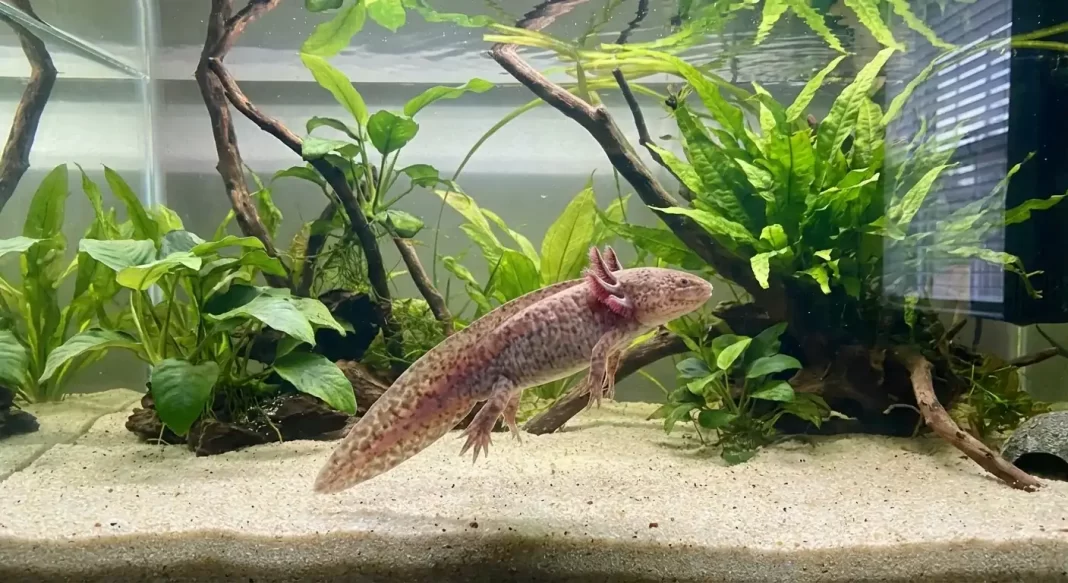
Impaction is a mechanical foreign-body blockage of the axolotl gastrointestinal tract, usually caused by ingested gravel. Food refusal, abdominal swelling, and floating from trapped gas are the classic signs. Mild cases respond to 24-to-48-hour fasting plus slight warming to 18 to 20 degrees Celsius. Severe cases need an exotic vet immediately.
What is axolotl impaction and how is it different from constipation?
Axolotl impaction is a mechanical foreign-body blockage of the gastrointestinal tract that will not break down regardless of time or temperature. Constipation is a dietary slowdown of soft waste material that responds to fasting plus diet adjustment. The distinction matters because the treatments diverge. Impaction requires active intervention. Constipation needs a small dietary fix.
The two conditions can look similar on the surface, with reduced fecal output and behavioral changes, but the underlying mechanism differs entirely. A piece of gravel in the stomach is not food and the axolotl’s digestive enzymes cannot dissolve stone. The axolotl care guide covers the broader husbandry framework that prevents most impaction events. The emergency care checklist covers the broader triage matrix that routes impaction presentations to the correct severity tier.
| Feature | Impaction | Constipation |
|---|---|---|
| Blockage material | Indigestible foreign object (gravel, sand grain, decoration fragment) | Soft organic waste that has slowed or stopped moving |
| Resolution mechanism | Physical passage, regurgitation, or surgical removal required | Dietary change, fasting, and warmth restore motility |
| Time to deterioration | Days to weeks depending on size and location of blockage | Days to resolve once dietary fix applied |
| Treatment direction | Active intervention via fasting, fridging, or vet escalation | Passive dietary fix plus observation |
| Recovery prognosis | Variable; severe cases require surgery | Excellent with simple dietary adjustment |
What impaction actually means mechanically
Impaction means a physical object or mass of objects that the axolotl has swallowed but cannot digest or pass through the intestine. The obstruction is mechanical rather than functional. Unlike a constipated axolotl whose digestive enzymes work normally but the waste has stalled, an impacted axolotl has something solid lodged in the tract that the body cannot dissolve or push through with its normal mechanisms. The food entering the stomach has nowhere to go, so the axolotl stops eating and waste production halts upstream of the blockage.
Where blockages occur
The most common impaction site is the pyloric region, the narrow passage between the stomach and the small intestine. Gravel pieces that fit through the esophagus and sit in the stomach may be too large to pass through this narrowing. A single piece of gravel lodged at the pyloric junction blocks all downstream digestion. Blockages can also occur in the mid-intestine where the digestive tract narrows further. Multiple smaller particles, such as coarse sand grains, can accumulate and form a compacted mass that obstructs the tract even though each individual grain could theoretically pass alone. This type of impaction develops gradually over weeks of repeated sand ingestion and is harder to detect early because the axolotl may continue eating until the accumulation reaches a critical point.
How impaction differs from constipation in practice
Constipation in axolotls is a slowdown or halt in waste production caused by dietary factors, cold temperatures, or short-term stress. The waste material is organic and will eventually break down or pass if conditions improve. Treatment is straightforward: adjust diet, check water temperature, and wait. Impaction involves inorganic foreign material that will not break down regardless of time or temperature. A piece of gravel in the stomach will remain there indefinitely. This is why impaction requires active intervention rather than passive waiting. The health red flags guide covers the broader chronic-symptom catalog that helps distinguish dietary issues from mechanical obstruction.
What are the symptoms of impaction?
Impaction symptoms develop over days to weeks depending on the size and location of the blockage and whether the obstruction is complete or partial. Early signs are easy to miss. Progressive symptoms add abdominal bloating, floating from trapped gas, and lethargy. Late-stage warning signs include frantic swimming, cloacal prolapse, and complete immobility requiring immediate veterinary care.
The progression matters because intervention timing affects outcomes. The earlier the impaction is recognized, the more likely home treatment will succeed. Once late-stage symptoms appear, home options narrow rapidly and the case becomes a veterinary emergency.
| Symptom stage | Visual signs and behavior | Action |
|---|---|---|
| Early signs (days 1-3) | Food refusal or strikes-and-spits, reduced or absent fecal output for 3+ days, axolotl otherwise alert | Begin water-quality check + 24-48 hour fast + slight warming |
| Progressive symptoms (days 4-7) | Abdominal bloating visible from above, floating from trapped gas, elevated tail posture, visible bulge in lower abdomen, lethargy | Move to fridging-for-impaction protocol; vet contact if no improvement after 48 hours |
| Late-stage warning signs (days 7+) | Frantic swimming, repeated surface gulping, cloacal prolapse, complete immobility | Vet escalation immediately; do not attempt further home treatment |
Early signs
The earliest sign is typically a change in feeding behavior. An axolotl that was eating normally begins refusing food, or it strikes at food and immediately spits it out. This happens because the stomach is full of indigestible material and the axolotl’s satiety signals register a full stomach even though no nutrition is being absorbed. Reduced fecal output follows. If your axolotl has not produced visible waste for 3 or more consecutive days despite recent feeding, impaction should be considered alongside other causes of food refusal. The health red flags guide covers the full range of presentations including the food-refusal differential.
Progressive symptoms
As the blockage persists, additional symptoms develop. Abdominal bloating presents as visible distension particularly in the lower abdomen. In moderate cases the swelling is visible from above as a widening of the body behind the front legs. Floating occurs because gas accumulates behind the blockage when normal digestive gases cannot pass through the obstructed tract. This trapped gas makes the axolotl buoyant, causing it to float at the surface or struggle to return to the bottom after swimming upward. Elevated tail posture is another tell. An impacted axolotl resting on the bottom may hold its tail elevated rather than flat against the substrate, a response to abdominal discomfort and gas pressure. In some cases the obstructing object is large enough to create a visible lump in the abdomen that can be felt gently through the skin. Lethargy compounds the picture. The axolotl becomes less active than normal, with reduced movement beyond typical resting behavior.
Late-stage warning signs
If impaction progresses without intervention, frantic swimming may appear. The axolotl swims erratically, crashing into tank walls or decorations as internal discomfort increases. Surface gulping presents as repeated trips to the surface to gulp air, which may be an attempt to relieve pressure or a sign of systemic distress. Cloacal prolapse, where tissue protrudes from the cloaca due to severe straining against the obstruction, is a veterinary emergency. Complete immobility, where the axolotl has stopped moving entirely and does not respond to gentle stimulation, indicates critical condition. Any late-stage warning sign requires immediate contact with an exotic veterinarian.
What causes impaction in captive axolotls?
Impaction is almost always caused by the axolotl ingesting something it should not have access to in its tank. Five primary causes account for nearly all captive impaction cases. Gravel substrate is the leading cause. Coarse sand above 1 millimeter grain size compounds gradually. Decoration fragments and glass beads create acute risk. Oversize food boluses contribute when feeders exceed safe portion size. Hard-exoskeleton feeders such as mealworms and superworms are difficult to digest and accumulate.
The mechanism that drives all substrate-related impactions is the axolotl suction-feeding strike. Per Axolotl.org/housing, axolotls have a habit of getting normal aquarium gravel in their mouths and occasionally swallowing it (source: Axolotl.org housing). This feeding mechanism is involuntary. The axolotl cannot selectively avoid substrate during a feeding strike.
| Cause | Mechanism | Prevention |
|---|---|---|
| Gravel substrate (primary cause) | Suction-feeding strike pulls in substrate particles; gravel too large to pass pyloric junction | Remove all gravel immediately; replace with bare-bottom or fine sand under 1 mm |
| Coarse sand above 1 mm | Grains pass individually but accumulate into compacted mass over weeks | Use fine sand under 1 mm grain size only (CaribSea Super Naturals or similar aquarium-grade fine sand) |
| Decoration fragments and glass beads | Loose small items swallowed during feeding strike or exploration | Apply head-size rule; remove every loose object smaller than axolotl head |
| Oversize food bolus | Single feeding item too large to digest; lodges in stomach or pyloric junction | Match feeder to mouth-width; portion control per axolotl size |
| Hard-exoskeleton feeders (mealworms, superworms) | Chitinous exoskeleton difficult to digest; accumulates in tract | Feed earthworms and soft feeders preferentially; reserve hard-exoskeleton items as occasional supplement only |
Long-time hobbyist forums and breeder accounts consistently identify gravel-substrate impaction in surrendered juveniles as the single most preventable cause of death they see, and in nearly every case the original owner did not realize gravel was a hazard when they set up the tank. The new keeper followed standard fish-aquarium substrate guidance, which works for fish but not for animals that feed by suction.
Gravel substrate
Gravel is the number-one cause of impaction in captive axolotls. Standard aquarium gravel ranges from approximately 2 to 15 millimeters in diameter. These pieces are small enough for an axolotl to swallow during suction feeding but far too large to pass through the gastrointestinal tract. Per AxolotlCentral, axolotls cannot be kept on gravel or rocks (source: AxolotlCentral substrate safety). Every feeding event on gravel substrate is a probability event. Some strikes pull in gravel and some do not. Over weeks and months of daily feeding, even a low per-strike ingestion rate compounds. An axolotl’s captive lifespan is 10 to 15 years. Across thousands of feeding events over a decade, gravel ingestion is a near-certainty. The substrate guide covers the full range of substrate options and their safety profiles.
Coarse sand
Fine sand with a grain size under 1 millimeter passes through the axolotl’s digestive tract without issue per Axolotl.org/housing (per Axolotl.org housing). Coarse sand, construction sand, or play sand with grain sizes above 1 millimeter presents an intermediate risk. Individual grains may pass, but repeated ingestion can allow coarse particles to accumulate into a compacted mass in the intestine. This type of impaction develops more slowly than gravel impaction and is harder to diagnose early because the axolotl may appear normal for weeks before symptoms emerge.
Decorations and foreign objects
Small decorative items, loose pieces of broken terracotta, glass beads, small pebbles used as accent stones, and bits of plastic from deteriorating artificial plants can all be ingested during feeding or exploration. Any object in the tank that is smaller than the axolotl’s head and not anchored in place is a potential impaction hazard. The head-size rule applies to everything in the tank, not just substrate.
Oversize food bolus
A single feeding item too large for the axolotl to digest can lodge in the stomach or at the pyloric junction. Earthworms larger than the axolotl’s mouth width, oversize chunks of fish, or large feeder fish all carry this risk. Portion control per axolotl size prevents this category of impaction. The portion size guide covers the size-by-age portion framework. The feeding schedule by age guide covers age-specific feeder selection. The what do axolotls eat guide covers the broader feeder catalog.
Hard-exoskeleton feeders
Mealworms and superworms have chitinous exoskeletons that are difficult for axolotls to digest. While occasional feeding is unlikely to cause impaction, regular feeding of hard-shelled insects increases the risk of food-bolus obstruction. Bone fragments from feeder fish can also lodge in the intestine. Earthworms (nightcrawlers) are the gold-standard staple food for adult axolotls because they are soft, highly digestible, and nutritionally complete.
How severe is the impaction and which severity tier applies?
Four severity tiers route treatment. Mild presentations with single-day food refusal and an alert axolotl respond to 24-to-48-hour fasting plus slight warming. Moderate presentations with 2-to-3-day refusal plus floating or bloating use fridging at 5 to 8 degrees Celsius for 48 hours maximum. Severe presentations with cloacal prolapse or complete immobility need immediate vet. Recurrent impaction within weeks of a prior episode also needs vet escalation.
The tier determines the treatment direction and the vet-contact threshold. Moving up tiers as symptoms progress is normal. Moving down tiers is also possible if home treatment works and symptoms resolve. The framework guides intervention without forcing it.
| Severity tier | Signs + behavior | First-line treatment | Vet escalation threshold |
|---|---|---|---|
| Mild (early slow-gut) | Single-day food refusal; slight reduced waste; axolotl alert and responsive; no bloating | 24-48 hour fasting + slight warming to 18-20°C upper safe range + water-quality test + observation | If symptoms persist beyond 48-72 hours |
| Moderate (confirmed blockage indicators) | 2-3 day refusal; floating from gas accumulation; slight bloating; elevated tail posture; lethargy | Fridging at 5-8°C for 48 hours maximum + 100% daily water change + dim lighting + dechlorinated water + reacclimate over 4 days | If no improvement after 48 hours of fridging |
| Severe (critical presentation) | Visible abdominal bulge; severe distension; complete immobility; frantic swimming; cloacal prolapse; surface gulping | ARAV vet escalation immediately + transport in shallow dechlorinated water + do not attempt home treatment | Immediate vet contact |
| Recurrent impaction | Symptoms returning within weeks of prior episode | ARAV vet escalation immediately + investigate retained foreign material or ongoing exposure source | Immediate vet contact |
What is the home treatment protocol for mild impaction?
For mild slow-gut presentations where the axolotl is still alert and there is no bloating, the home treatment protocol is straightforward. Fast the axolotl for 24 to 48 hours to clear gut content. Slightly warm the water to the upper end of the safe range 18 to 20 degrees Celsius to aid GI motility, staying inside the documented 12 to 20 degrees Celsius comfort band (per AxolotlCentral care guide). Test water parameters and confirm zero ammonia and nitrite. Observe behavior and fecal output for 48 hours.
The mild-impaction protocol works because the axolotl’s digestive tract still has motility. The slight warming nudges the GI system to push residual material along. The fasting prevents new food from compounding the slow-gut presentation. The parameter test rules out water-quality stress as a contributing factor.
Step-by-step mild-impaction protocol
Begin by withholding food for 24 to 48 hours. Continue normal water changes during the fasting period. Use a thermometer to confirm tank water is at 18 to 20 degrees Celsius, the upper end of the safe operating range per Axolotl.org. Per Axolotl.org, the optimum temperature for axolotls is between about 16 and 18 degrees Celsius (source: Axolotl.org captive requirements), and the 18 to 20 range remains acceptable for short-term warming intervention. Do not exceed 20 degrees Celsius during this protocol since above 22 degrees Celsius creates immune suppression and accelerated infection risk per AxolotlCentral (source: AxolotlCentral care guide). The temperature guide covers the full operating range and threshold biology.
Parameter check during the protocol
Test ammonia, nitrite, nitrate, and pH at the start of the protocol and again every 24 hours. Any detectable ammonia or nitrite during an impaction event compounds physiological stress. Perform a 20 to 30 percent water change with dechlorinated temperature-matched water if any parameter is out of range. The water testing guide covers the liquid-reagent test protocol. The dechlorinator guide covers Prime dosing for fresh water preparation. The tank cycling guide covers the nitrogen-cycle foundation that prevents parameter spikes.
Observation during the protocol
Watch for visible waste passage as the most direct evidence the protocol is working. Watch for behavior changes. An alert axolotl that begins responding to food at the end of the 48-hour fast is recovering. An axolotl that becomes lethargic or develops bloating during the protocol is escalating and should move to the moderate-impaction protocol or vet contact. If no improvement is visible after 48 hours of mild treatment, move to the fridging-for-impaction protocol described in the next section.
What is the fridging-for-impaction protocol distinct from fungal-fridging?
The fridging-for-impaction protocol places the axolotl in a refrigerator at 5 to 8 degrees Celsius for up to 48 hours to slow metabolism and encourage gut emptying. The biological basis is that when a cold-blooded animal’s body temperature drops significantly, its digestive system attempts to eject undigested material to prevent internal decomposition. The protocol differs from the fungal-fridging protocol described in the axolotl fungus guide, which uses a tub at 5 to 15 degrees Celsius for 7 to 14 days to maintain immune-supportive cool conditions during salt-bath treatment.
The protocol distinction matters. The fungus protocol uses tub-temperature cool water that can be the room-temperature-cool end of acceptable for sustained periods. The impaction protocol uses refrigerator-cold water for acute time-limited intervention. Both protocols use dechlorinated water and 100 percent daily water changes. Both require careful reacclimation when ending the protocol.
| Protocol element | Impaction fridging | Fungal fridging |
|---|---|---|
| Temperature range | 5-8°C refrigerator-cold | 5-15°C tub-cool (refrigerator-cold not required) |
| Duration | 48 hours maximum (acute) | 7-14 days or longer (sustained) |
| Container location | Inside refrigerator | Tub at room-temperature-cool location |
| Intent | Encourage gut emptying via cold-induced expulsion | Maintain immune-supportive cool conditions during salt-bath treatment |
| Water changes | 100% daily with pre-chilled water | 100% daily with same-temperature water |
Safety caveat before starting fridging
Fridging is widely practiced in the axolotl keeper community and frequently recommended on forums and hobbyist care sites. However, it is not a veterinary-endorsed treatment. No published veterinary literature recommends refrigerating amphibians as a therapeutic protocol. The temperature range is well below the axolotl’s normal safe range. Immune function is suppressed at low temperatures. The mechanism is anecdotal. For mild to moderate impactions where the obstructing material is small enough to pass, the metabolic slowdown may genuinely help. For severe impactions or any axolotl showing late-stage warning signs, fridging is not appropriate and immediate veterinary care is required instead.
Seven-step fridging-for-impaction protocol
Step 1: Prepare the container. Use a clean food-grade plastic container 6 to 12 quart capacity large enough for the axolotl to stretch out fully. The container must have a secure lid with small air holes drilled in or punched through the lid.
Step 2: Fill with dechlorinated water at current tank temperature. Use Prime or equivalent dechlorinator per product instructions. The starting water should match the axolotl’s current environment temperature within 1 degree Celsius to avoid additional thermal shock.
Step 3: Place the container in the refrigerator. Allow the water to cool gradually to 5 to 8 degrees Celsius over 2 to 4 hours. Do not place the axolotl directly into pre-chilled water since the rapid temperature drop causes thermal shock.
Step 4: Cover the container with a towel. Reduce light stress by covering the container or storing in the back of the refrigerator where light exposure is minimal. The axolotl is more vulnerable to stress at low temperatures and minimizing additional stressors supports recovery.
Step 5: Perform 100 percent water change daily. Use pre-chilled dechlorinated water for the daily change. Remove any waste or regurgitated material with a turkey baster before each water change. Inspect the water for any passed foreign material that confirms the protocol is working.
Step 6: Do not feed the axolotl during the fridging period. Continued feeding compounds the impaction by adding new material to a blocked tract. The maximum fridging duration is 48 hours. If no waste passage or regurgitation has occurred at 48 hours, move to vet escalation immediately.
Step 7: Reacclimate gradually over 4 days. When ending the fridging period, reacclimate over 4 days. On day 1 replace fridge water with a mixture of 75 percent chilled water and 25 percent tank-temperature water. On day 2 use 50/50. On day 3 use 25 percent chilled and 75 percent tank-temperature water. On day 4 return to full tank-temperature water and move the axolotl back to the main tank. Test parameters before reintroduction to confirm ammonia and nitrite are at zero.
What about Epsom salt baths and other adjuncts?
Epsom salt baths have a mild laxative effect that may help with constipation-adjacent slow-gut presentations but do not move hard foreign-body blockages. The mechanism is osmotic. Epsom salt (magnesium sulfate) draws water into the gut at low concentrations, which can stimulate motility. The effect is mild and limited to cases where the tract is partially functional, not completely obstructed.
Some keeper-community sources recommend offering soft foods with bulk-fiber properties to axolotls still willing to eat. Bloodworms and daphnia are the most commonly cited. They are soft, easily digested, and may help stimulate gut motility. They are not effective against a hard foreign-body blockage but may help with partial obstructions or constipation-adjacent presentations where some material can still move through the tract. Use Epsom salt baths only if the axolotl is alert and the symptoms are mild, follow keeper-community dose guidance at low concentration, and rinse the axolotl in fresh dechlorinated water after the bath. Do not use Epsom salt as a substitute for fridging in true impaction.
What about warming-for-mild-impaction the opposite of fungal cooling?
Slight warming to the upper end of the safe range 18 to 20 degrees Celsius can aid GI motility for mild slow-gut presentations. This is opposite of fungal-cooling protocols described in the axolotl fungus guide, which always cools the axolotl. The two protocols target different mechanisms. Warming supports digestive motility in mild impaction by raising metabolic rate slightly. Cooling supports immune function during fungal treatment by lowering metabolic stress.
The warming protocol is mild, limited in duration, and only appropriate for mild presentations while the axolotl is alert and responsive. The temperature ceiling is firm at 20 degrees Celsius. Above 22 degrees Celsius the immune-suppression effect kicks in and accelerates infection risk per AxolotlCentral (per AxolotlCentral). For moderate or severe impaction, the warming protocol is not appropriate and fridging or vet escalation are the correct routes. The temperature guide covers the full operating range.
What should you NOT do during impaction treatment?
Four actions cause more harm than help during impaction treatment. Continued feeding worsens the blockage. Manual abdominal massage can perforate the intestine if the obstruction is sharp-edged gravel. Oral laxatives without veterinary guidance risk dehydration and electrolyte imbalance. Fasting beyond 5 days compounds metabolic stress. Warming above 22 degrees Celsius suppresses immune function and accelerates secondary infection risk.
The do-not list exists because some keeper-community recommendations carry real risks. Manual belly massage has appeared in older guidance but carries the documented risk of intestinal perforation when the obstructing object is sharp-edged. Oral laxatives are sometimes suggested but no amphibian-safe dosing exists for over-the-counter human laxatives. The safer route is to follow the severity-tier protocols above and escalate to a vet when symptoms warrant.
| Action | Why dangerous | Correct alternative |
|---|---|---|
| Continued feeding during impaction event | Adds new material to blocked tract, compounds obstruction | Fast for 24-48 hours minimum; do not resume feeding until waste passage confirmed |
| Manual abdominal massage | Pressure on sharp-edged foreign object can perforate intestinal wall | Use fridging or vet escalation instead; no external pressure on impacted abdomen |
| Oral laxatives without vet guidance | No amphibian-safe dosing for OTC human laxatives; dehydration and electrolyte imbalance risk | Bloodworms or daphnia as mild bulk-fiber adjunct only if axolotl is still eating |
| Warming above 22°C | Immune suppression and accelerated infection risk per AxolotlCentral | Limit warming to 18-20°C upper safe range; never exceed 20°C during impaction protocol |
No continued feeding
Continued feeding during impaction adds new material to a blocked tract. The new material cannot pass and compounds the obstruction. Fasting for 24 to 48 hours minimum is the correct response. Do not resume feeding until waste passage is confirmed and the axolotl shows normal behavior including return of appetite.
No manual abdominal massage
Some older keeper-community guidance recommended gentle belly massage to encourage movement of the obstruction. This practice carries real risk. The axolotl’s abdominal wall is thin and the internal organs are delicate. If the obstruction is a large sharp-edged gravel piece, external pressure could push it into the intestinal wall rather than along the tract. Intestinal perforation is a surgical emergency. Use fridging or vet escalation instead.
No oral laxatives without vet guidance
Oral laxatives marketed for human or canine use have no amphibian-safe dosing. The risks include dehydration, electrolyte imbalance, and direct gut-flora damage. If a laxative effect is needed and the case is mild enough for home treatment, the Epsom salt bath at low concentration provides a much safer alternative. For moderate or severe cases, veterinary guidance is required before any pharmacological intervention.
No warming above 22 degrees Celsius
The mild-impaction warming protocol caps at 20 degrees Celsius. Above 22 degrees Celsius the immune-suppression effect kicks in. Fungal and bacterial reproduction accelerates. The trade-off becomes unfavorable. Slight warming aids motility. Heat warming creates new health risks. Sustained exposure over 24 degrees Celsius can become fatal (per AxolotlCentral care guide).
When should you escalate to an exotic veterinarian?
Six conditions warrant veterinary escalation during impaction. No improvement after 48 hours of home treatment. Visible distress with frantic swimming or repeated surface gulping. Cloacal prolapse. Combined floating and bloating lasting more than 72 hours. Recurrent impaction within weeks of prior episode. Suspected blockage in juvenile axolotl under 6 inches body length.
The vet thresholds exist because home treatment has clear limits. The window for fridging-for-impaction is 48 hours maximum. Beyond that window the obstruction is unlikely to pass on its own and continued home treatment delays definitive care. The Association of Reptile and Amphibian Veterinarians directory locates qualified exotic vets in most regions (source: ARAV Find-A-Vet directory).
No improvement after 48 hours of home treatment
If fridging, dietary intervention, or any combination of home treatments produces no visible improvement after 48 hours, the obstruction is likely too large or too firmly lodged to pass on its own. Continuing home treatment beyond this point delays definitive care. The emergency care checklist covers the broader decision framework for recognizing when professional care is needed.
Visible distress
An impacted axolotl that is swimming frantically, showing rapid gill movements at rest, curling its body, or failing to respond to stimulation is in distress that home treatment cannot address. These behavioral signs indicate significant pain or systemic compromise.
Cloacal prolapse
If tissue protrudes from the cloaca as a result of straining against an obstruction, this is an emergency. Do not attempt to push the tissue back in. Place the axolotl in a shallow container of clean cool dechlorinated water and contact an exotic vet immediately.
Combined floating and bloating
Persistent floating combined with abdominal bloating and food refusal lasting more than 3 days is a high-risk presentation. The combination suggests a complete obstruction with gas accumulation that is not resolving. The health red flags guide covers the full spectrum of presentations that indicate home care is not sufficient.
Recurrent impaction
An axolotl that has been treated for impaction and develops symptoms again within weeks needs veterinary evaluation. Recurrence may indicate retained foreign material from the first episode, intestinal damage from the original blockage, or ongoing exposure to an impaction source that has not been identified and removed.
What a vet can do
An exotic vet can perform diagnostic imaging through radiography to confirm the presence, size, and location of a foreign body in the digestive tract. X-rays show gravel stones and other dense objects clearly inside the axolotl. Based on imaging results the vet may recommend continued conservative management, manual extraction if the object is accessible, or surgical intervention. Surgical removal of foreign bodies from the gastrointestinal tract of axolotls is rare but documented in exotic veterinary practice. The procedure is performed under tricaine methanesulfonate anesthesia and involves an incision to remove the obstructing material. Recovery from gastrointestinal surgery in axolotls is possible given their regenerative capacity covered in the axolotl injury and regeneration guide, but the procedure carries inherent risks including anesthetic complications, infection, and post-surgical adhesions. Surgery is a last resort.
How do you prevent impaction in your axolotl tank?
Impaction is one of the most preventable health emergencies in axolotl keeping. Every case traces back to something in the tank that should not have been there or a substrate choice that created unnecessary risk. Five prevention layers eliminate nearly all cases. Remove all gravel. Use bare-bottom or fine sand under 1 millimeter only. Use feeding tongs or a feeding dish. Apply the head-size rule to every tank object. Monitor fecal output daily as the earliest detection signal.
The preventable nature of impaction is the central message. Unlike many health conditions where the keeper cannot fully eliminate risk, impaction risk drops to near-zero with substrate selection and feeding methodology. The economics also work. Sand or bare-bottom tank conversion is inexpensive compared to the cost of vet imaging and possible surgery.
Hobbyist case reports posted across breeder forums and aquarium discussion threads show that owners who switched to bare-bottom after a near-miss impaction event rarely lose another animal to that cause. The keepers who retain one small decorative gravel area, reasoning that just a corner of stones is harmless, frequently return with a second impaction within 18 months. The suction-feeding mechanism does not distinguish a decorative area from a substrate.
| Day-range post-treatment | Checks | Decision point |
|---|---|---|
| Days 1-3 post-treatment | Visual confirmation of waste passage; behavior return to baseline; parameter test daily | If no waste by day 3, return to vet contact |
| Days 4-7 post-treatment | Gradual reintroduction of feeding at half portions; continued parameter monitoring; fecal observation | If feeding tolerated and waste normal, transition to maintenance routine |
| Days 8+ maintenance | Daily fecal output monitoring; weekly water parameter test; substrate and tank-object audit | Continue monitoring as routine; investigate any 3-day no-waste pattern |
Remove all gravel
If your tank currently contains gravel, remove it immediately. Do not wait for symptoms. Every day an axolotl spends on gravel substrate is a day it might ingest a piece that causes a fatal blockage. Per AxolotlCentral, axolotls cannot be kept on gravel or rocks (per AxolotlCentral substrate safety). Replace gravel with bare bottom or fine sand. There is no safe way to use gravel in an axolotl tank.
Use bare bottom or fine sand only
Bare-bottom tanks eliminate impaction risk entirely because there is nothing on the floor to swallow. This is the safest option for all axolotls and is preferred for juveniles under 6 inches body length. Fine sand with grain size under 1 millimeter (such as CaribSea Super Naturals or similar aquarium-grade fine sand) is acceptable for adults. Per Axolotl.org/housing, use either large smooth pebbles too big to swallow or fine sand (per Axolotl.org housing). Individual sand grains under 1 millimeter pass through the digestive tract without causing blockage. The substrate guide covers the full range of substrate options.
Use feeding tongs or a feeding dish
Feeding with tongs allows you to hold the food item directly in front of the axolotl’s mouth, minimizing the area of substrate pulled in during the suction strike. Alternatively, placing food on a shallow dish (a terracotta saucer or similar smooth flat surface) creates a substrate-free feeding zone. Both methods reduce incidental substrate ingestion during meals even on fine-sand setups. The portion size guide covers the size-by-age portion framework that prevents oversize-bolus impactions.
Apply the head-size rule
Apply the head-size rule to every object in the tank. Any loose item smaller than the axolotl’s head must be removed. This includes decorative pebbles, glass beads, loose plant weights, small ceramic figurines, and any decoration that has broken into pieces small enough to swallow. The rule is conservative deliberately. An object that the axolotl could not realistically swallow today might become broken or chipped over time, producing smaller fragments that are dangerous.
Monitor fecal output as the early-warning signal
Tracking your axolotl’s waste production is the single best early-warning system for impaction. On a bare-bottom tank, fecal matter is immediately visible. If 3 or more days pass without visible waste and the axolotl has been eating normally, begin monitoring for additional impaction symptoms. The earlier impaction is caught, the more likely home intervention will succeed. The axolotl care SOP covers the broader daily routine including fecal observation. The water parameters guide covers the parameter targets that support digestive health.
Frequently asked questions
Can an axolotl pass gravel on its own without treatment?
It depends on the size of the gravel relative to the axolotl’s digestive tract. Very small gravel pieces around 2 to 3 millimeters may pass naturally, particularly in large adult axolotls with wider intestinal diameter. Larger gravel pieces 5 millimeters and above are unlikely to pass without intervention. Waiting to see if gravel passes on its own is risky because the window for effective home treatment narrows as the impaction worsens. If you know or suspect your axolotl has swallowed gravel, begin intervention rather than waiting for symptoms.
How long can an axolotl survive with impaction?
Survival time depends on whether the obstruction is partial or complete, the size of the axolotl, and the location of the blockage. A partial obstruction that still allows some food and waste to pass can persist for weeks before reaching a critical point. A complete obstruction is more urgent. Axolotls can survive without eating for extended periods due to their slow metabolism, but a complete blockage prevents nutrient absorption and causes progressive internal pressure. Most keeper-community sources recommend acting within the first 48 to 72 hours of symptom onset. Cumulative tissue damage from prolonged pressure can compromise recovery even when the blockage eventually resolves.
Is fridging-for-impaction safe for juvenile axolotls under 6 inches?
Fridging protocols were developed primarily for adult axolotls. Juvenile axolotls have faster metabolisms, less body mass for thermal buffering, and are more susceptible to temperature-related stress. The keeper-facing comfort band sits between 12 and 20 degrees Celsius (per AxolotlCentral care guide), and juvenile thermal range tolerance is narrower within that band. If a juvenile axolotl shows impaction symptoms, veterinary consultation is strongly recommended over home fridging. Juveniles on bare-bottom tanks should not be at impaction risk in the first place, so impaction in a juvenile warrants investigating what foreign material it accessed. The substrate-and-tank-object audit is the more important intervention than the fridging protocol itself.
What does impaction look like on an X-ray?
Gravel stones and dense foreign objects appear as bright white spots against the darker soft tissue on a radiograph. The bright appearance happens because dense materials absorb X-ray radiation rather than transmitting it through to the imaging film or sensor. A vet can identify the number of stones, their approximate size, and their location in the digestive tract. Sand accumulation may appear as a diffuse bright area rather than distinct spots. X-ray imaging is the definitive diagnostic tool for confirming impaction and determining whether surgical intervention is necessary.
Can impaction cause permanent damage even after the blockage passes?
Prolonged impaction can stretch and damage the intestinal walls, potentially weakening the tissue at the blockage site. In severe cases the pressure from a lodged object can cause localized tissue death in the intestinal lining. Most axolotls recover fully once the obstruction is cleared, particularly if intervention was early. However, an axolotl that experienced a severe or prolonged impaction should be monitored for recurring digestive issues including irregular waste production and recurring bloating in the weeks following recovery. The regenerative capacity of axolotls aids most recoveries but does not eliminate the possibility of residual scarring.
Related guides
- Axolotl care guide: complete husbandry hub for new keepers
- Axolotl emergency care checklist: broader 12-row symptom-triage matrix and 5-step immediate-response protocol
- Axolotl fungus guide: fungal-treatment protocol and cross-protocol fungal-fridging distinction
- Axolotl substrate guide: bare-bottom vs fine sand vs gravel substrate selection
- Axolotl portion size guide: size-by-age portion control preventing oversize bolus
- Axolotl feeding schedule by age: age-specific feeder selection
- What do axolotls eat: feeder catalog avoiding hard-exoskeleton choices
- Axolotl health red flags: chronic-symptom catalog including food-refusal differential
- Axolotl water testing guide: liquid-reagent test cadence during recovery
- Axolotl temperature guide: 16-to-20-degree Celsius safe range plus warming-window
- Axolotl tank cycling guide: nitrogen cycle parameter foundation
- Axolotl dechlorinator guide: Prime dosing for bath water preparation
- Axolotl injury and regeneration guide: regenerative-biology context for post-surgical recovery
- Axolotl water parameters: parameter targets during recovery
- Axolotl care SOP: proactive husbandry including 30-day quarantine
By the ExoPetGuides editorial team (AI-assisted drafting; human-reviewed), reviewed by an exotic-animal veterinarian
Updated 2026-05-20
Primary sources: Axolotl.org housing, Axolotl.org health, AxolotlCentral substrate safety, Axolotl.org captive requirements, ARAV Find-A-Vet directory
Disclaimer: This content is for educational purposes only and is not a substitute for professional veterinary advice. Always consult a qualified veterinarian, ideally an exotic-animal specialist, for any health concern about your pet. Care recommendations may vary based on species, individual animal, and local regulations.