

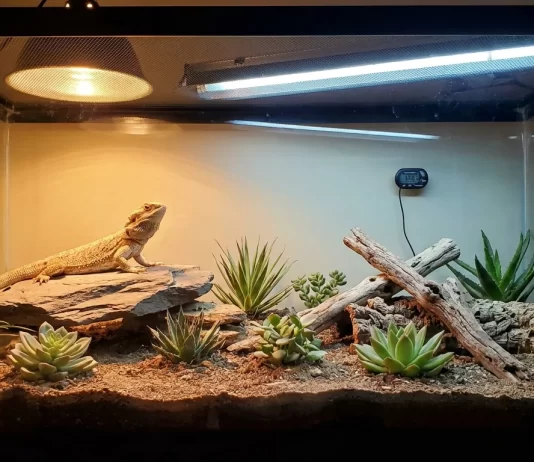
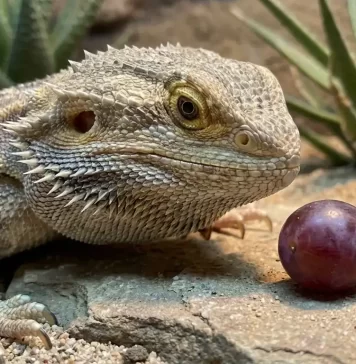
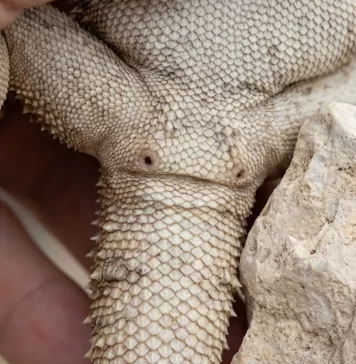
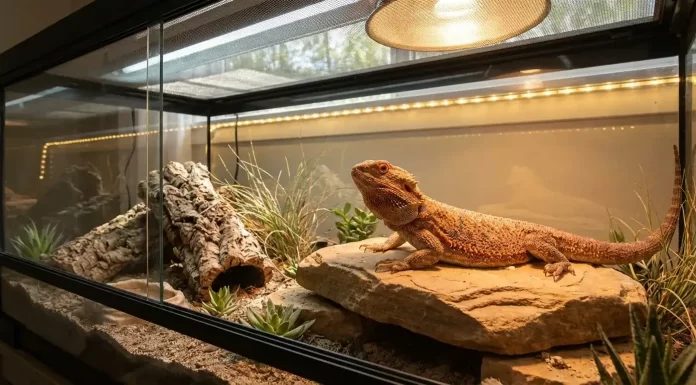
Bearded dragons are the most popular pet lizard in the United States — and it’s easy to see why. They’re docile enough to handle...
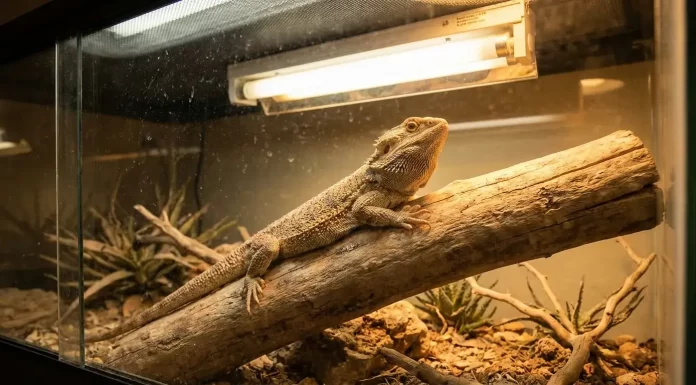
UVB deficiency is the most common cause of metabolic bone disease in captive bearded dragons. MBD is painful, progressive, and entirely preventable — and...
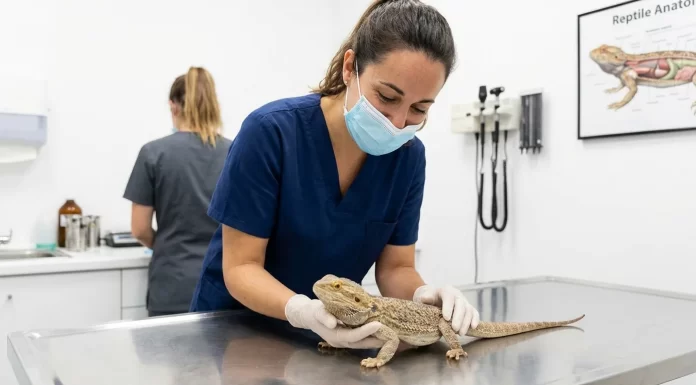
Metabolic bone disease is the most common serious illness in captive bearded dragons — and the most preventable. It develops slowly, often invisibly, until...

Temperature is not decoration in a bearded dragon enclosure — it’s the foundation of every physiological process: digestion, immune function, growth, and behavior. Get...
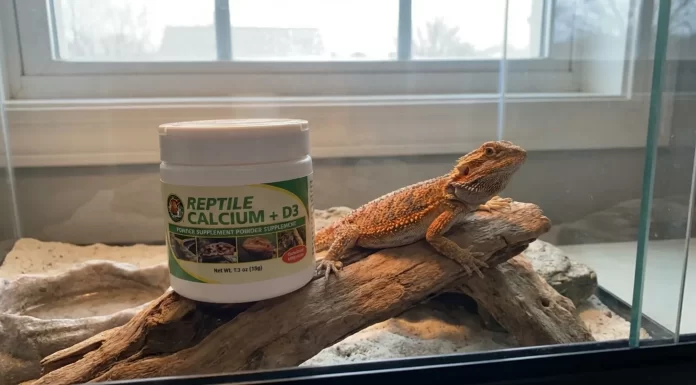
Calcium supplementation is the most important feeding habit in bearded dragon care — and also the most frequently confused. The confusion usually comes down...
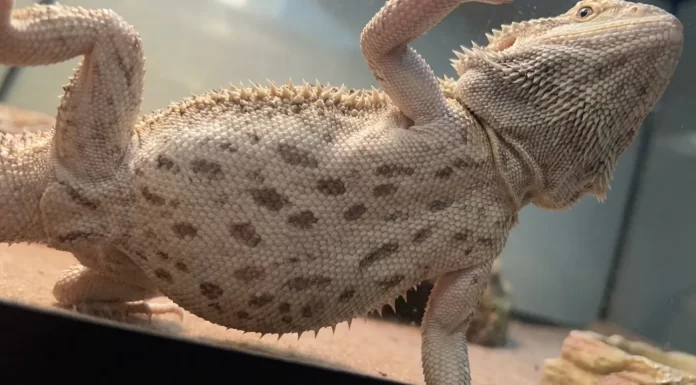
Your dragon has dark lines across its belly, it won’t eat, and it keeps scratching the glass. Is it stressed — or could something...
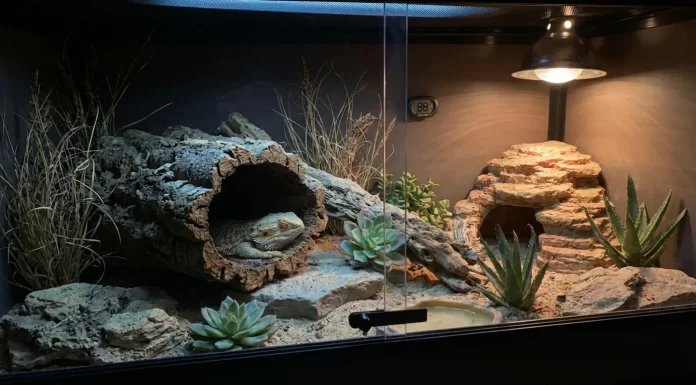
You check the enclosure one morning and your bearded dragon is completely still, barely responding, and won’t touch food. Your first thought is that...

Bearded dragons don’t make much noise, but they communicate constantly — through posture, colour, skin patterning, and gesture. Learning to read these signals as...
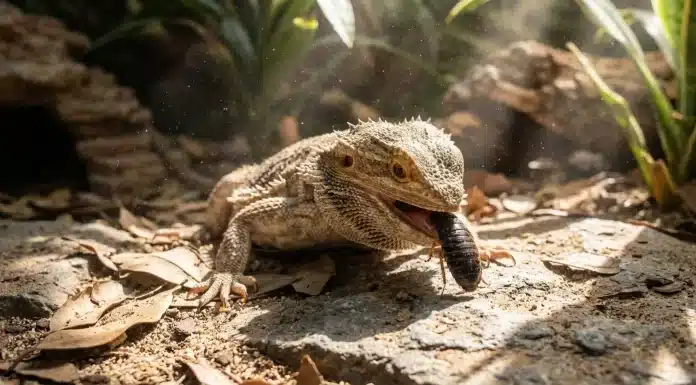
The insect you choose determines a big chunk of your dragon’s calcium balance and protein intake — and the wrong choice (crickets fed straight...

Bearded dragons are hardy animals when their husbandry is correct. But when something is wrong, they often hide it until the condition is advanced...