

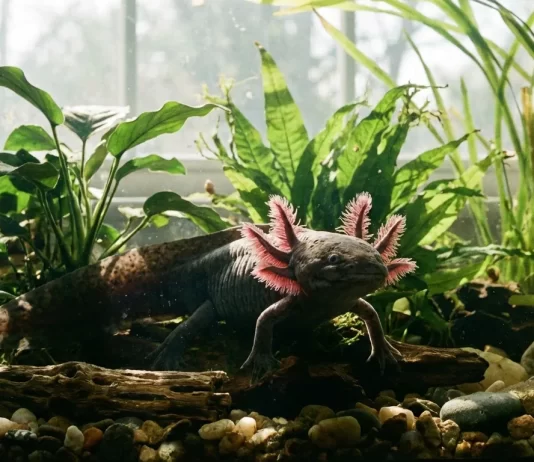
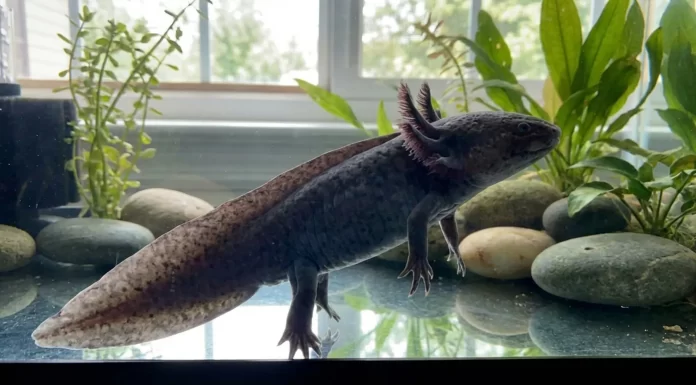
A healthy pet axolotl usually lives 10 to 15 years, and a well-kept animal can reach 20 or more. Wild axolotls rarely pass five...
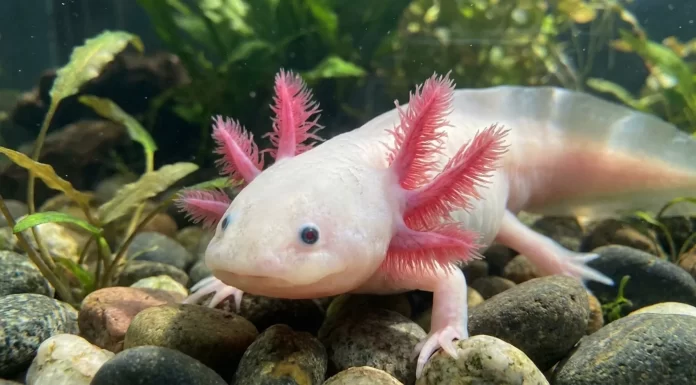
Most axolotl health problems respond to home corrections like water-quality fixes, lower temperatures, tubbing, and tea baths. A small set does not. This guide...
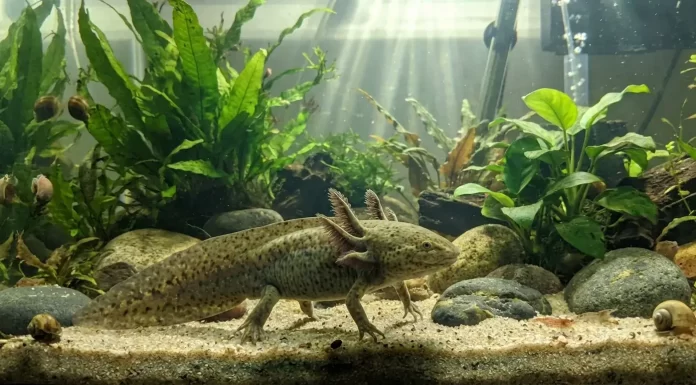
Axolotls communicate through body language not sound. Normal behavior includes long resting periods, gill flicking, occasional surface gulps, slow bottom walking, and food-motivated response....
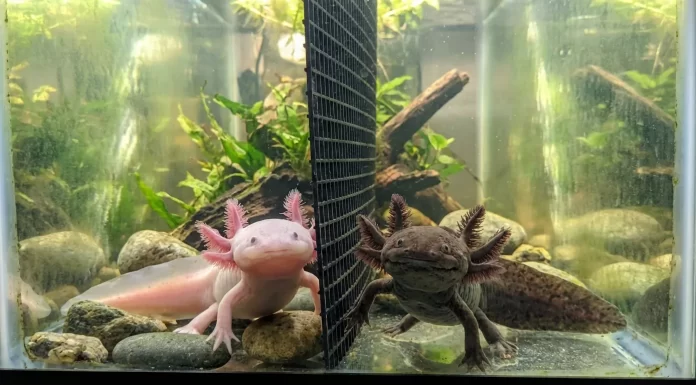
Axolotls eat each other because of a movement-triggered suction reflex, not aggression. Their poor eyesight means a tank mate's gill or toe reads the...
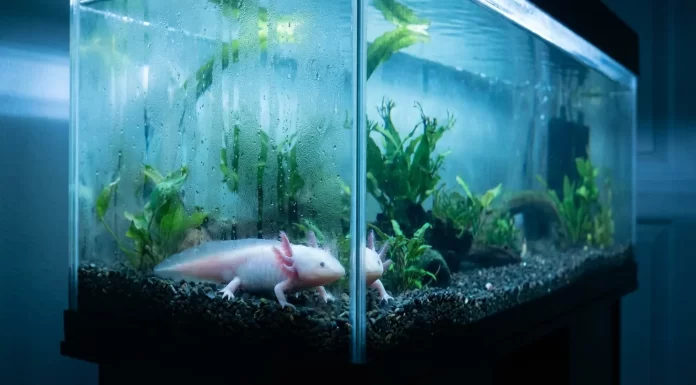
Heat is the most dangerous routine event for captive axolotls. If your tank climbs past 70 degrees Fahrenheit, start an evaporative fan, float a...
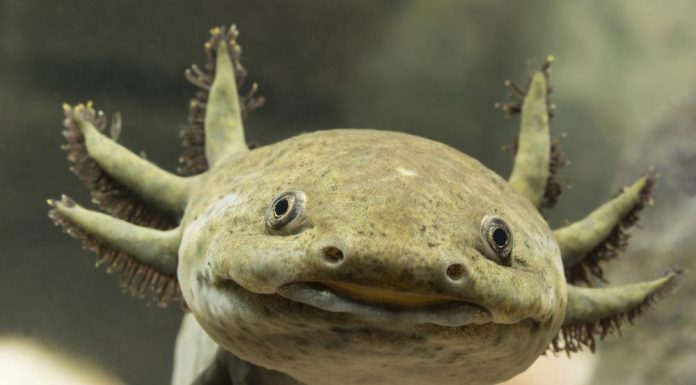
Axolotls come from one place in the wild: the canals around Xochimilco, near Mexico City. They are salamanders that never grow up, keeping their...
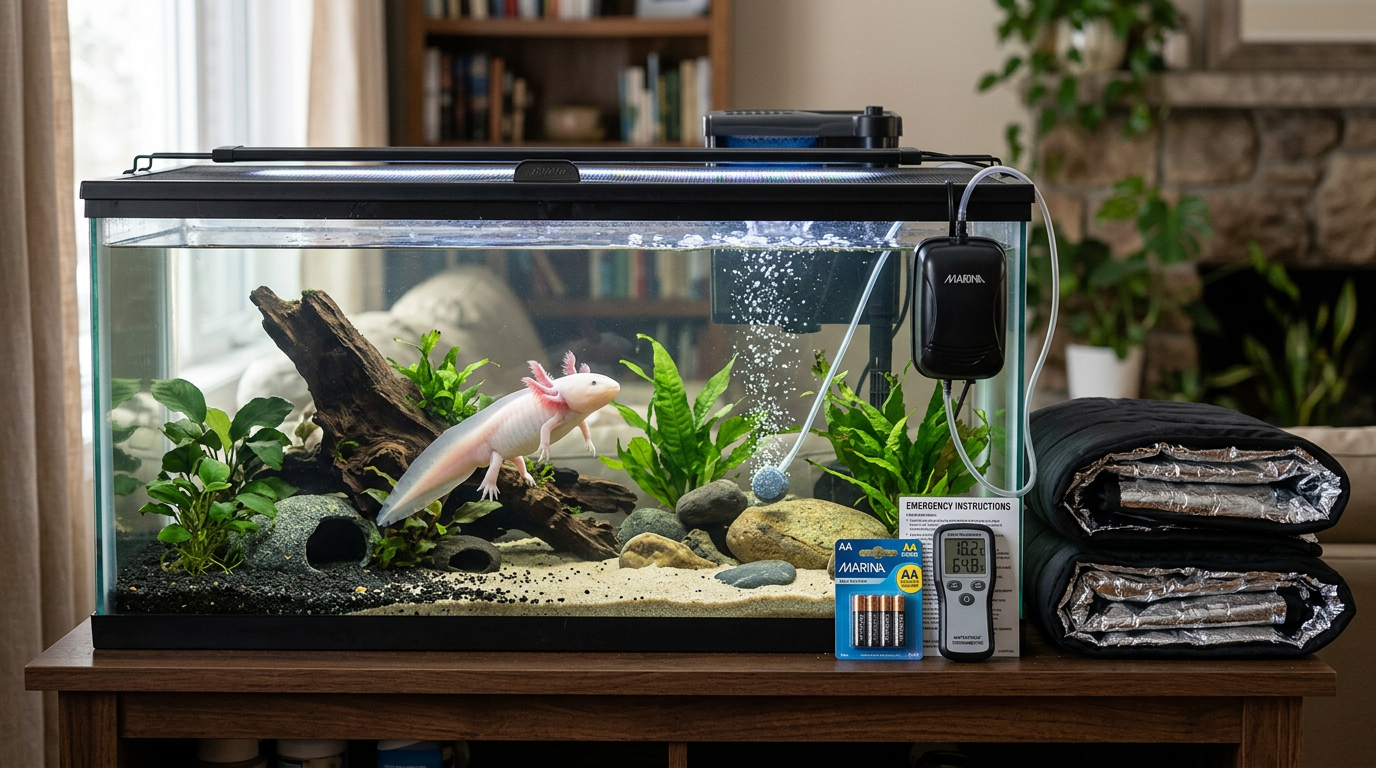
A power outage threatens an axolotl in two ways. The filter stops, so oxygen drops and ammonia starts to build. In warm weather the...
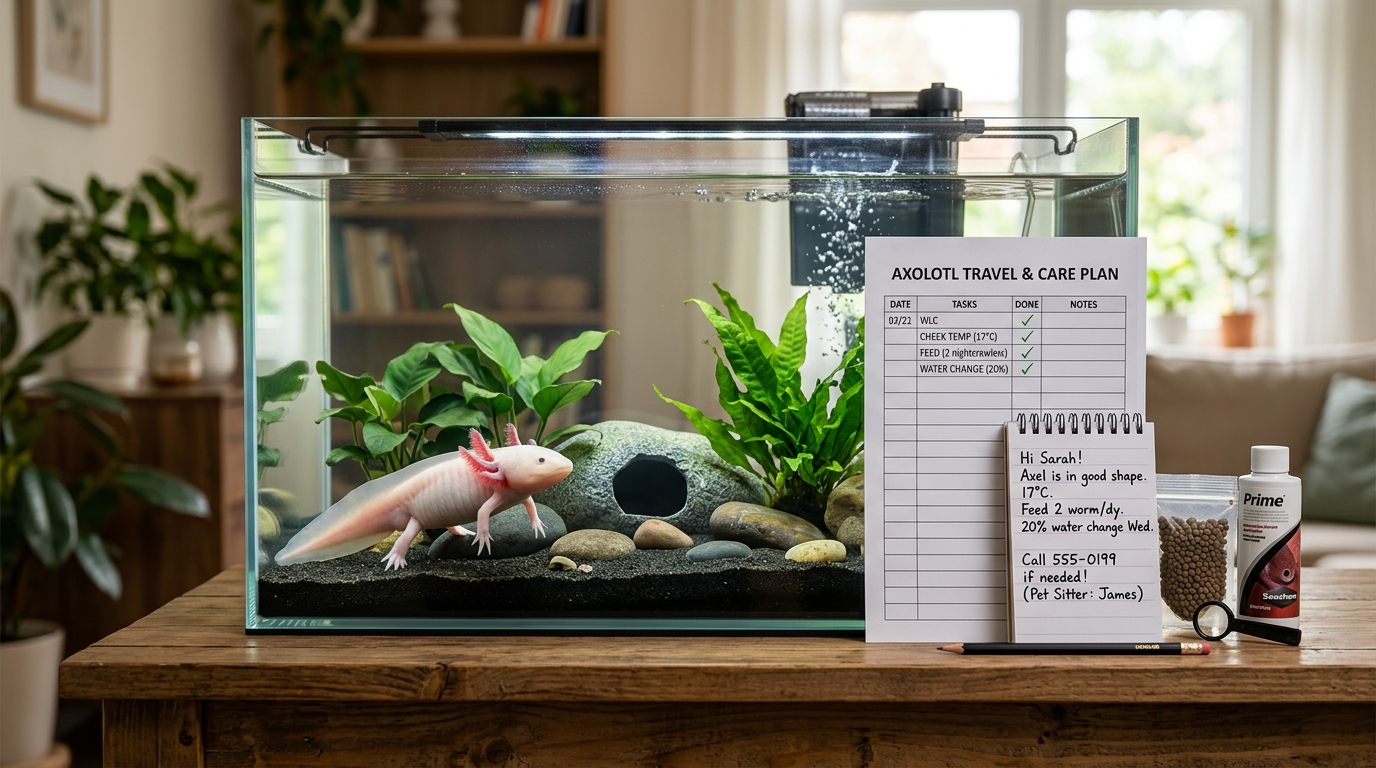
Match your travel plan to your trip length. A healthy adult axolotl can be left alone for a long weekend, a fasting adult tolerates...
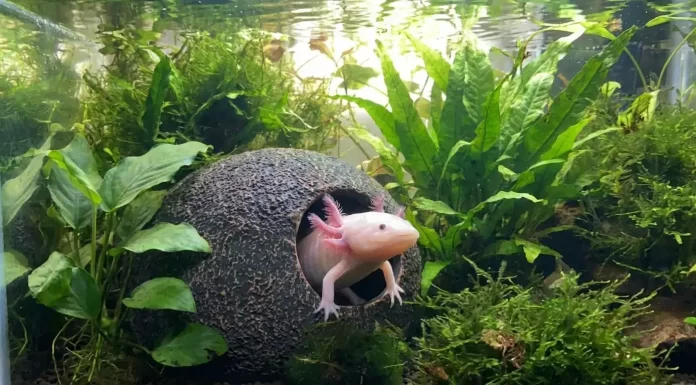
Hides are not decoration in an axolotl tank. They are a welfare requirement. Axolotls have lidless eyes and are sensitive to light. Provide at...
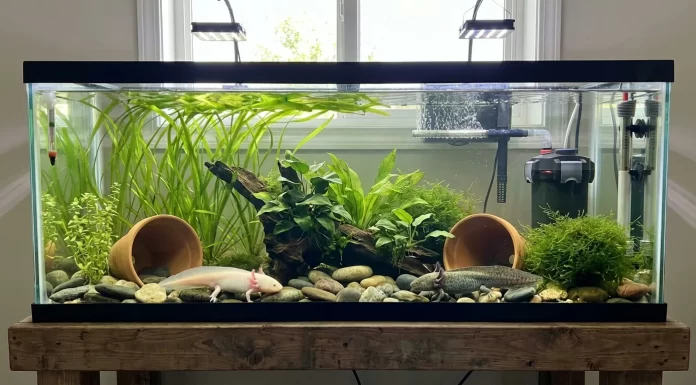
Setting up an axolotl tank correctly before the animal arrives prevents most early health emergencies. A complete setup requires a 20 to 40 gallon...