


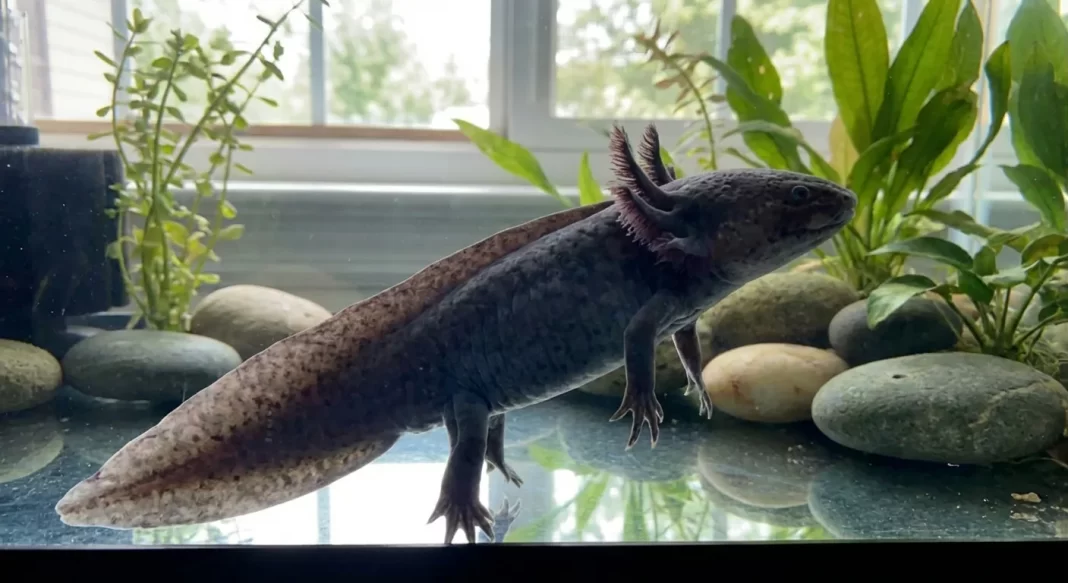
A healthy pet axolotl usually lives 10 to 15 years, and a well-kept animal can reach 20 or more. Wild axolotls rarely pass five or six years, because predators, pollution, and habitat loss cut their lives short. The gap is huge, and almost all of it comes down to the conditions a keeper controls every single day.
How long do axolotls live in captivity versus the wild?
Captive axolotls commonly live 10 to 15 years, with careful keepers reaching the upper end and a few animals passing 20. Wild axolotls in Lake Xochimilco typically survive only five or six years. The difference is not biology but circumstance: a tank removes the predators, pollution, and food scarcity that shorten a wild life.
The captive range is well established across reference sources. Britannica states that captive axolotls may live as long as 15 years, while wild animals live only about five or six years (source: Encyclopaedia Britannica). Most keepers settle on a working figure of 10 to 15 years, with a median near 12, and the well-documented research databases that track aging put the verified ceiling higher still. The longevity record for the species sits at 21 years in managed care, with weaker anecdotal reports suggesting some animals reach 25 (source: AnAge: The Animal Ageing and Longevity Database).
The wild figure is lower for reasons that have nothing to do with the animal itself. Xochimilco axolotls face invasive tilapia and carp that eat eggs and young, water pollution from a growing city, and a habitat that has shrunk to a few remaining canals. The collapse is steep: field surveys recorded a fall from roughly 6,000 animals per square kilometer in 1998 to about 100 per square kilometer by 2008 (source: Contreras et al., Biological Conservation). The decline has continued since, and the species is now critically endangered, with later surveys suggesting as few as 50 to 1,000 mature animals left (conservation status per IUCN Red List). A captive axolotl skips all of that. The trade-off is that every protective factor a wild lake lacks now becomes the keeper’s job, and the axolotl care guide covers the full husbandry framework that turns those years into reality.
| Setting | Typical lifespan | Why it lands there |
|---|---|---|
| Wild (Lake Xochimilco) | 5 to 6 years | Predation, pollution, food scarcity, habitat loss |
| Average pet tank | 10 to 12 years | Stable water, no predators, reliable food |
| Well-managed pet tank | 13 to 15 years | Cool stable temperature, zero ammonia, varied diet |
| Exceptional or research care | 18 to 21 years | Tight parameter control across the whole life |
What are the five life stages of an axolotl?
An axolotl moves through five stages: egg, larva, juvenile, sub-adult to adult, and senior. Each stage carries its own risks and care needs, and most early deaths happen in the first two. Knowing where your animal sits tells you what to watch for and roughly how much life is still ahead.
Because axolotls keep their larval form for life, a trait biologists call paedomorphosis, their stages are defined more by size and age than by metamorphosis (per Encyclopaedia Britannica). The first weeks are the fragile window. A female lays 100 to over 1,000 eggs in jelly coats, and at around 20 degrees Celsius (68 Fahrenheit) they hatch in roughly two weeks. Hatchlings emerge near 10 to 13 millimeters, absorb their yolk sac within a day or two, then need live food and pristine water. Cannibalism is a real threat once size gaps open up between siblings, which is why the axolotl cannibalism prevention guide treats the larval tank as a sorting problem, not just a feeding one. I have watched a clutch lose half its limbs to nipping in a single week when the larvae were not separated by size on time.
| Stage | Age range | What is happening | Main lifespan risk |
|---|---|---|---|
| Egg | 0 to 2 weeks | Embryo develops inside jelly coat | Fungus from dead eggs left in place |
| Larva | 2 weeks to 2 months | Front then hind legs form; lives on live food | Cannibalism, water fouling |
| Juvenile | 2 to 6 months | All four limbs with toes; rapid growth | Substrate impaction, uncycled tank |
| Sub-adult to adult | 6 to 18 months | Reaches 9 to 12 inches; matures sexually | Heat stress, poor diet |
| Senior | 8 years and up | Growth done; slower metabolism | Organ decline, infection |
By two months a juvenile has all four limbs with distinct toes and grows fast, which is when substrate impaction becomes the headline danger; a bare bottom is safest until the animal is large enough to handle sand. Adults reach 9 to 12 inches, usually settling near 9 or 10, and reach sexual maturity somewhere between 6 and 18 months. After eight to ten years the senior stage brings subtle changes that are easy to mistake for illness, which the aging section below sorts out. The axolotl larvae care guide covers the fragile early stages in full, and the axolotl egg care guide covers handling the clutch before hatching.
What determines how long a captive axolotl lives?
Five factors set the lifespan ceiling: water quality, temperature stability, diet, genetics, and a properly cycled tank. Water quality and temperature matter most, because both can kill slowly without obvious symptoms. Genetics fixes the upper limit, but husbandry decides whether an animal gets anywhere near it. Most captive axolotls die well below their potential.
The ranking matters because keepers often pour effort into the wrong factor. The single largest controllable cause of a shortened life is chronic poor water quality, especially low-level ammonia that never spikes high enough to look like an emergency. Ammonia at even a fraction of a part per million damages gills, suppresses the immune system, and stresses organs month after month. It also gets more toxic as pH rises, because more of it shifts into the un-ionized form that crosses the gills. This is the silent killer, and the only defense is testing. The target parameters below come from keeper husbandry references and veterinary care sheets that agree closely (source: Caudata Culture (axolotl.org) requirements; source: VCA Animal Hospitals).
| Parameter | Target | Hard ceiling | Why it shapes lifespan |
|---|---|---|---|
| Ammonia | 0 ppm | Any reading is a problem | Chronic gill and organ damage |
| Nitrite | 0 ppm | Any reading is a problem | Blocks oxygen in the blood |
| Nitrate | Below 20 ppm | 40 ppm | Slow stress at higher levels |
| pH | 7.4 to 7.6 | 6.5 to 8.0 | Drives ammonia toxicity |
| Temperature | 60 to 64 F | Avoid above 68 F | Heat speeds aging and infection |
Temperature stability ranks a close second, and it works two ways. A sudden heat wave can kill in days, but a tank held at the warm end of the safe range shortens life slowly, because a faster metabolism means faster cellular aging. Keepers who hold steady cold water consistently report animals reaching 12 or 15 years (per Caudata Culture). Diet sits third: earthworms make the gold-standard staple for protein and calcium, while a pellet-heavy or bloodworm-only diet erodes health over years through obesity or missing nutrients. Genetics sets the ceiling, since heavily inbred lines from the narrow pet-trade founder stock carry congenital weaknesses that surface after several years. Get all four right on a properly cycled tank, and you have done nearly everything in your power. The axolotl water parameters guide and the axolotl temperature guide cover the two biggest levers in detail.
Why does a cycled tank matter so much for lifespan?
A cycled tank is the foundation every other longevity factor sits on, because without it, ammonia and nitrite spike and poison the animal before any diet or temperature plan can help. Cycling grows the bacteria that convert toxic waste into safer nitrate. Skipping it is the most common preventable cause of early death and lasting damage in newly bought axolotls.
The mechanism is straightforward and unforgiving. An axolotl produces ammonia constantly through its waste and gills. In an established tank, two colonies of beneficial bacteria convert ammonia to nitrite and then nitrite to nitrate, keeping both toxins at zero. In a brand-new tank those colonies do not exist yet, so ammonia climbs until it burns the gills. A fishless cycle takes roughly four to eight weeks to build, and rushing it is how so many first axolotls arrive healthy and decline within months. From a rescue-intake perspective, a large share of surrendered or sickly young animals trace back to a tank that was never cycled, not to bad luck or a weak animal.
Here is the trap in practice. A new keeper buys an axolotl and a tank the same day, fills it with dechlorinated water, and adds the animal that night. For the first week everything looks fine. By week two the ammonia from the animal’s own waste has nowhere to go, the gills start to redden and curl, and the keeper sees a “sick” axolotl without realizing the water did it. The damage here is not always visible at the time. Even an animal that survives the spike can carry scarred gills and a weakened immune system for years, which quietly lowers its ceiling long after the water reads clean again. The fix is to cycle before the animal arrives, or to run daily water changes and constant testing if an animal is already in an uncycled tank. Either way, test, do not guess. The axolotl tank cycling guide walks through the fishless cycle step by step, and the axolotl ammonia burn guide covers what to do once damage has started.
How do you recognize aging in an axolotl?
Aging shows up gradually after about eight to ten years through thinner gills, a slightly smaller appetite, slower regeneration, and more resting. These changes are normal senescence, not disease, as long as the animal still holds normal posture, responds to food, and keeps its weight. The skill is telling ordinary aging apart from a treatable problem.
The hard part is that several aging signs look almost identical to early illness, so the difference is in the pattern, not the single symptom. Gill filaments naturally become less dense and fluffy in an old animal, but the same thinning appears with ammonia damage; the tell is whether your water tests clean. A senior eats a bit less while keeping its body weight, which is fine, whereas eating less and losing weight together is a vet visit. Regeneration slows dramatically with age. A two-year-old can regrow a gill branch in a couple of weeks, while a twelve-year-old may take months, and that is expected rather than alarming. The comparison table below sorts the look-alikes.
| Sign | Normal aging | Warning sign needing a vet |
|---|---|---|
| Gills | Slowly thinner, still intact | Sudden loss, redness, or fuzz with clean water |
| Appetite | Eats a little less, holds weight | Refuses food for weeks, visibly thinner |
| Activity | Rests more, still responds to food | Cannot stay upright, floats helplessly |
| Regeneration | Slow but happening | A wound that will not close at all |
| Skin | Subtle darkening or mottling | Open lesions, redness, abnormal slime |
Older animals rest more and explore less, yet they should still react to a feeding cue and move normally when they choose to. Subtle darkening or mottling of the skin is usually cosmetic. The judgment call is always the cluster: one mild change against clean water is age, while several changes at once, or any change paired with bad water, points to a problem. When you are unsure, do not wait it out. Consult an exotic-animal veterinarian. The axolotl health red flags guide lists the symptoms that mean act now, and the axolotl regeneration guide covers how healing changes across a lifetime.
How do you assess quality of life in a very old axolotl?
Quality-of-life assessment weighs whether an aging animal can still do the basics: eat, hold normal posture, and stay free of chronic infection. An old axolotl with a modest appetite and clean gills has good quality of life. Persistent refusal to eat, an inability to right itself, or non-healing wounds point the other way, and that conversation belongs with a vet.
This is the section keepers most want to skip, and the one that matters most at the end of a long life. The goal is an honest, repeatable check rather than a single emotional snapshot. Run through the same short list every week or two for a declining senior, and watch the trend across checks rather than reacting to one bad day. A single off day is normal; a steady slide across several checks is the signal. The decision aid below frames the call without pretending to replace professional judgment.
| Quality-of-life check | Acceptable | Concerning |
|---|---|---|
| Eating | Takes food, even if less than before | Refuses for weeks despite clean water and cool temperature |
| Posture | Rests flat, rights itself when it moves | Lists, rolls, or floats and cannot recover |
| Body condition | Holds weight, filled-out body | Visible wasting with food available |
| Skin and gills | Intact, no spreading infection | Chronic lesions or fungus that will not heal |
| Response | Reacts to feeding and light changes | No response, loss of the righting reflex |
A few normal-aging traits sit comfortably in the acceptable column: eating less while holding weight, resting more, slow regeneration, and slightly thinner gills with no fungus. The concerning column describes an animal whose body can no longer recover, often because organ function and immune strength have both faded. No table can make this decision for you, and welfare here is too important to guess at. An exotic-animal veterinarian, ideally one listed through an amphibian-experienced directory, can give an objective read on body condition, pain, and organ function. The axolotl when-to-see-a-vet guide covers how to find that help.
What kills captive axolotls before their time?
Most premature deaths trace to a short list: heat stress, ammonia poisoning, substrate impaction, opportunistic infection, and inherited weakness. The first four are preventable with husbandry, and the fifth is reduced by buying from a careful breeder. Almost every early death is a husbandry story, not an unlucky animal, which is the hopeful part.
Each cause has a signature worth knowing. Heat stress is the leading acute killer: a summer power cut or a neglected chiller pushes the water past the low seventies Fahrenheit, and the animal stops eating, pales at the gills, and can decline within days. Sustained temperatures above 72 Fahrenheit are widely reported by keepers as a major cause of premature death because heat suppresses the immune system and opens the door to fungus and bacteria (per Caudata Culture). Ammonia poisoning is the leading early-life killer, almost always from an uncycled tank or a crashed filter, and rinsing filter media in chlorinated tap water is a classic way to wipe out the bacteria overnight. The cause-and-prevention map below pairs each killer with its fix.
| Cause | Signature | How it is prevented |
|---|---|---|
| Heat stress | Pale gills, stops eating, fast decline in summer | Hold below 68 F; chiller or cooling plan |
| Ammonia poisoning | Reddened curled gills, lethargy, early-life onset | Cycle the tank; never rinse media in tap water |
| Substrate impaction | Bloating, floating, refusing food after gravel | Use sand or bare bottom, never gravel |
| Infection (fungus, bacteria) | Cottony tufts, sores on a stressed animal | Fix the root stressor: heat or water quality |
| Inherited weakness | Organ or immune problems after a few years | Source from a breeder who tracks lineage |
Substrate impaction kills because axolotls feed by suction and swallow loose gravel, which lodges in the gut; mild cases sometimes clear with cooling, but severe ones need surgery or turn fatal. Fungal and bacterial infections like Saprolegnia are usually a symptom rather than the root cause, colonizing an animal already weakened by heat, bad water, or injury, so treating the fungus without fixing the environment rarely works. Inherited weakness is the one factor husbandry cannot fully overcome, which is why the buying decision matters; the healthy-axolotl selection guide covers screening at purchase, the axolotl impaction guide covers the substrate risk, and the axolotl heat spike emergency guide covers acting fast when the water warms.
How can you maximize your axolotl’s lifespan?
You cannot beat the genetic ceiling, but since most captive animals die well below it, a few consistent habits move yours toward the upper range. Hold the water cool and clean, feed a worm-based diet without overfeeding, keep the tank cycled, and buy from a breeder who tracks lineage. None of it is hard; all of it is daily.
The honest framing is that longevity is a routine, not a trick. The four levers that move the needle are the same ones that determine lifespan in the first place, applied with consistency over a decade. Cool water at the lower end of the safe range slows aging and starves off infection. Zero ammonia and nitrite, held through weekly partial water changes and a mature filter, removes the silent killer. A staple of earthworms with occasional variety, portioned so the animal stays trim rather than fat, protects the organs. And a documented breeder lowers the odds of an inherited problem that no husbandry can fix. The longevity routine below turns those levers into a schedule.
| Habit | What to do | How often |
|---|---|---|
| Cool, stable water | Hold 60 to 64 F; add a chiller or fan in summer | Daily check |
| Test the water | Confirm ammonia and nitrite at zero, nitrate low | Weekly |
| Partial water change | Swap 20 to 30 percent with dechlorinated water | Weekly |
| Worm-based diet | Earthworms as staple; vary occasionally; do not overfeed | Per feeding |
| Watch body condition | Trim, not bloated; adjust portions to match | Ongoing |
One overlooked point is that overfeeding is as harmful as underfeeding over a decade, because obesity and fatty-liver disease shorten life as surely as poor water does. A trim axolotl that eats a touch less than it wants tends to outlast one kept plump. Beyond these basics, stability itself is a longevity factor; an axolotl held at steady parameters for years does better than one bounced between extremes, even if each extreme alone is survivable. The same logic applies to handling and tank traffic: a low-stress animal that is rarely netted or moved keeps a stronger slime coat and immune response, so a quiet, predictable setup quietly buys time. Reference care sheets converge on the same short list of levers, which is reassuring because it means the routine is knowable rather than a matter of luck (per VCA Animal Hospitals). If a pairing or any health uncertainty enters the picture, consult an exotic-animal veterinarian before acting. The axolotl water change schedule and the axolotl obesity guide cover the two habits keepers most often get wrong, and the axolotl breeding guide covers how a breeding life affects an adult’s working lifespan.
Frequently asked questions
What is the longest an axolotl has ever lived?
The best-documented longevity record for an axolotl is 21 years in managed care, logged in a research-aging database, with weaker anecdotal reports suggesting a rare individual may reach 25. No verified record clearly exceeds the mid-twenties. Laboratory and research colonies tend to hold the longest reliable records, because their conditions stay tightly controlled across the animal’s whole life. For a pet, 15 to 20 years is the realistic top end with excellent care.
Do axolotls die of old age?
Yes. Axolotls undergo senescence, the gradual decline of organ function, regeneration, and immune strength that comes with age. An animal that reaches 12 or more years will usually, in the end, develop a condition its aging body can no longer recover from, such as a persistent infection or organ failure. Death of pure old age, with no other cause, is less common than a final illness that a younger animal would have shrugged off.
At what age do axolotls stop growing?
Most axolotls reach full adult size, around 9 to 12 inches, by roughly 18 to 24 months, with the fastest growth in the first year. After about age two, any apparent size increase is usually weight gain rather than true skeletal growth, and often a sign of overfeeding rather than health. This is why size becomes an unreliable way to guess an adult animal’s exact age once it has matured.
Why do captive axolotls live so much longer than wild ones?
Captivity removes the three things that kill wild axolotls early: predators, pollution, and food scarcity. Wild Xochimilco animals face invasive fish that eat their young, water fouled by a growing city, and a shrinking habitat, which together hold their lives to about five or six years. A tank trades those hazards for keeper-controlled stability, so the same animal that would last six years in the lake can last two or three times longer indoors.
Can two axolotls share a tank and still live full lives?
They can, but only with care, because axolotls are not social and will nip or swallow tankmates that fit in the mouth, especially when size differs. Housed adults need enough space, similar size, and reliable feeding to avoid stress and cannibalism, and many keepers find solo housing simpler and safer for longevity. If you do cohabit, watch for nipped gills and missing toes as early stress signs.
Does breeding shorten an axolotl’s lifespan?
Breeding can shorten a female’s working lifespan, because producing large clutches is physically costly and repeated spawning drains an animal’s reserves. Responsible breeders rest females between clutches and avoid breeding animals that are too young, too old, or in poor condition. A pet kept purely as a companion, never bred, faces none of this drain and tends to reach the upper lifespan range more easily, all else being equal.
Related guides
- Axolotl care guide: complete husbandry hub for new keepers
- Axolotl temperature guide: holding the cool water that adds years
- Axolotl tank cycling guide: build the bacteria before the animal
- Axolotl health red flags: when a change means act now
- Axolotl breeding guide: how a breeding life affects lifespan
- Axolotl cannibalism prevention: raising many larvae safely to size
By the ExoPetGuides editorial team (AI-assisted drafting; human-reviewed), reviewed by an exotic-animal veterinarian
Updated 2026-06-03
Primary sources: AnAge Animal Ageing and Longevity Database (Ambystoma mexicanum), Encyclopaedia Britannica, IUCN Red List, Caudata Culture (axolotl.org), VCA Animal Hospitals
Disclaimer: This content is for educational purposes only and is not a substitute for professional veterinary advice. Always consult a qualified veterinarian, ideally an exotic-animal specialist, for any health concern about your pet. Care recommendations may vary based on species, individual animal, and local regulations.