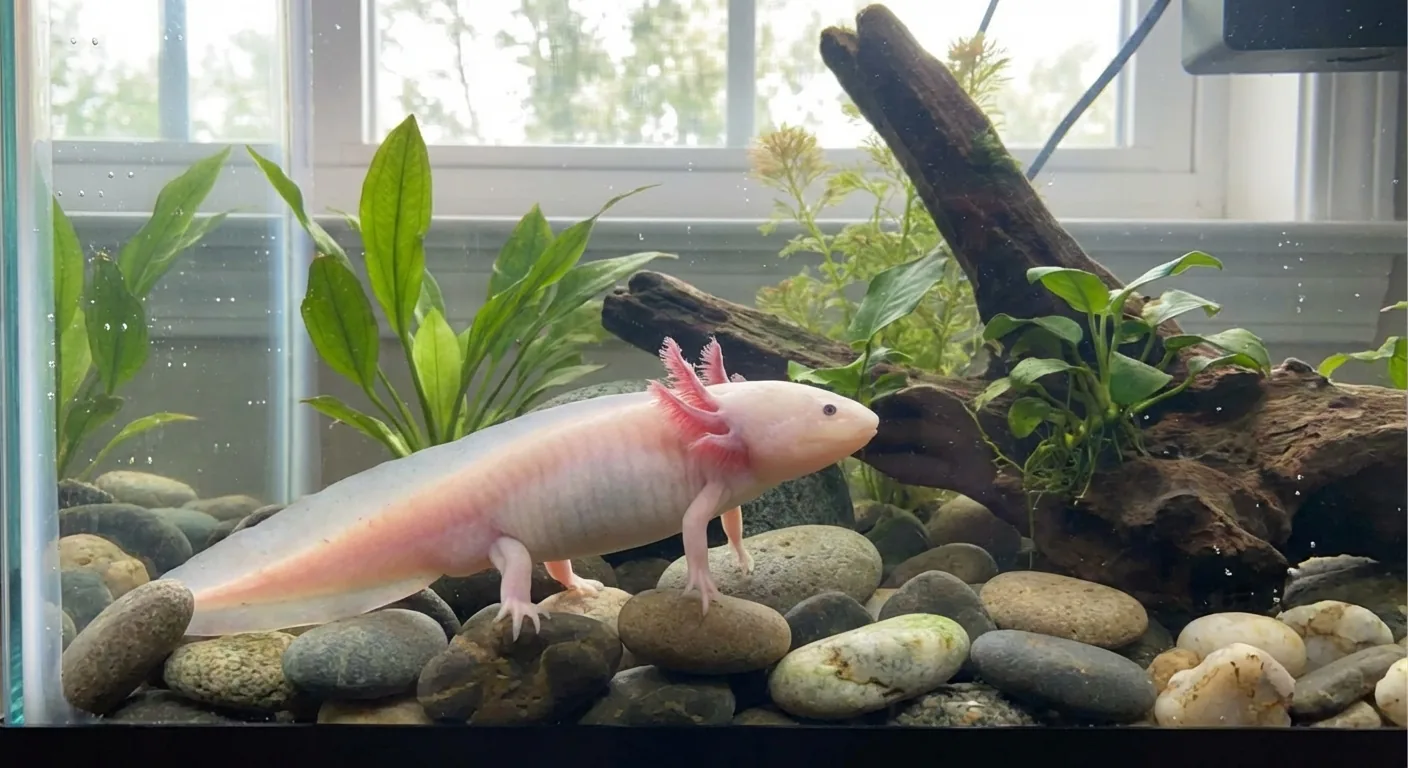
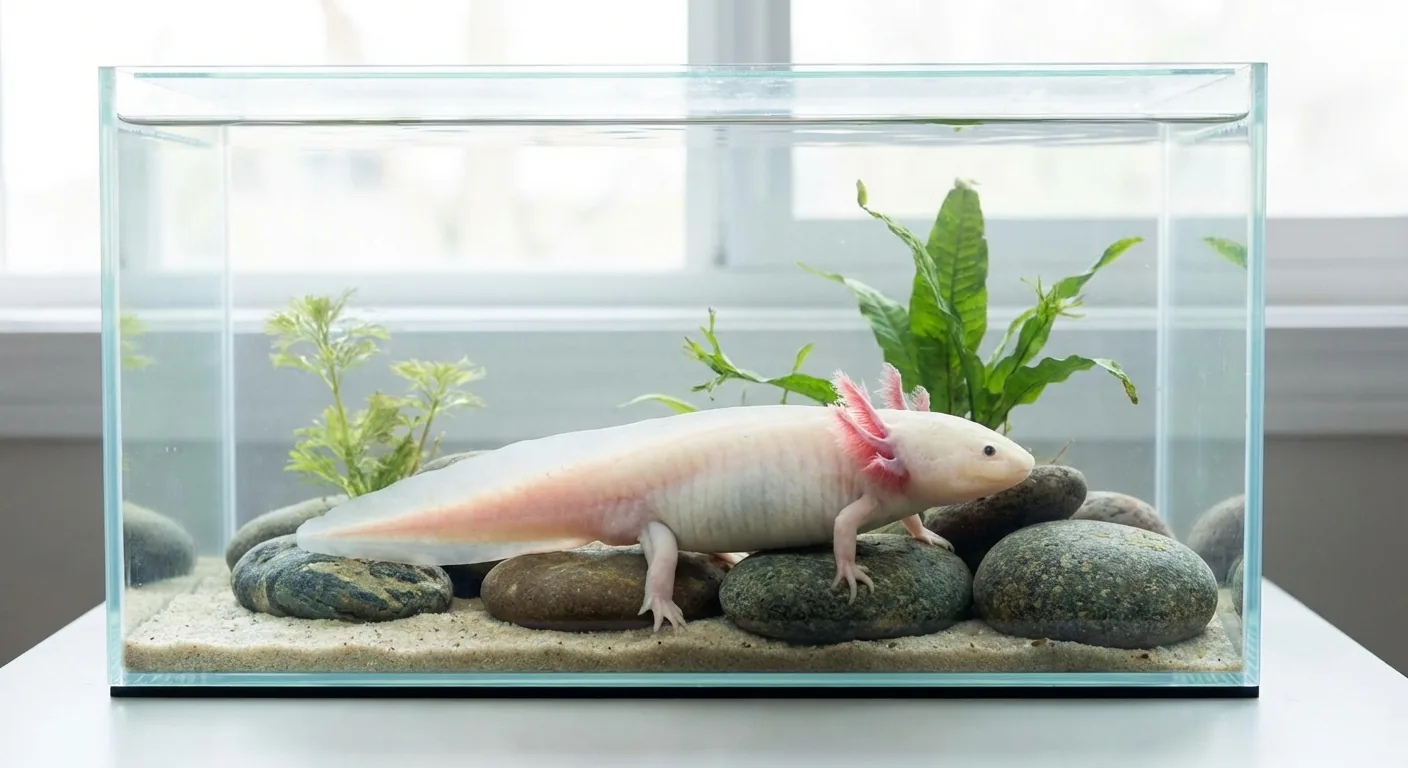
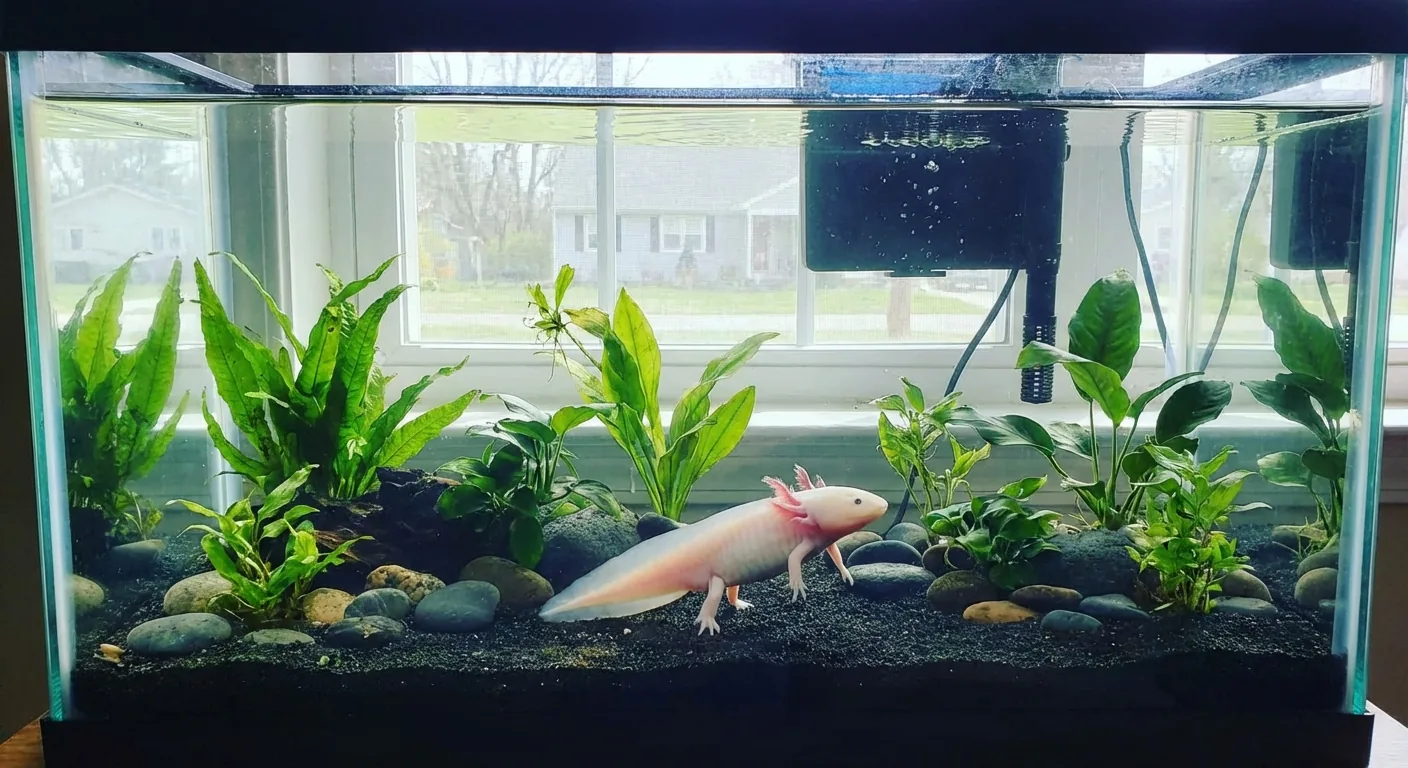
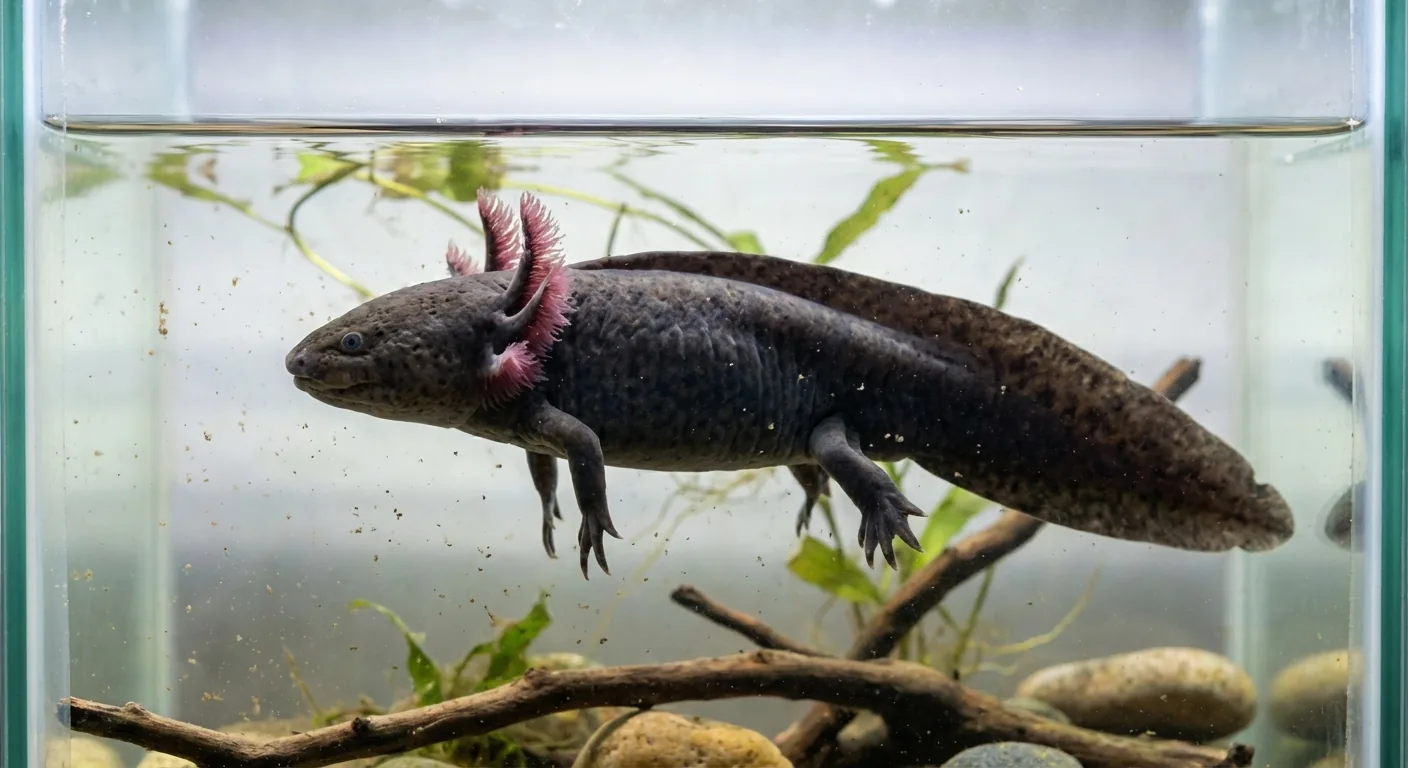
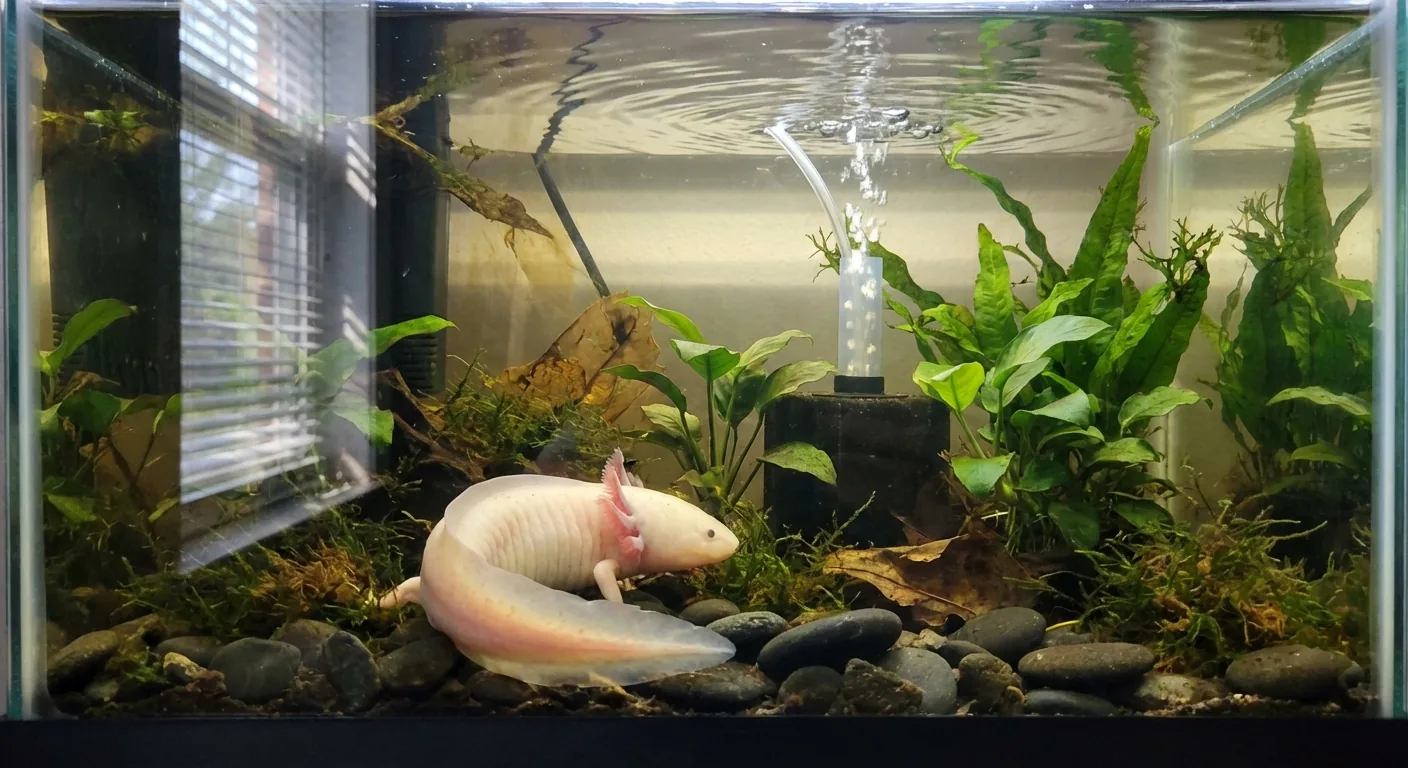
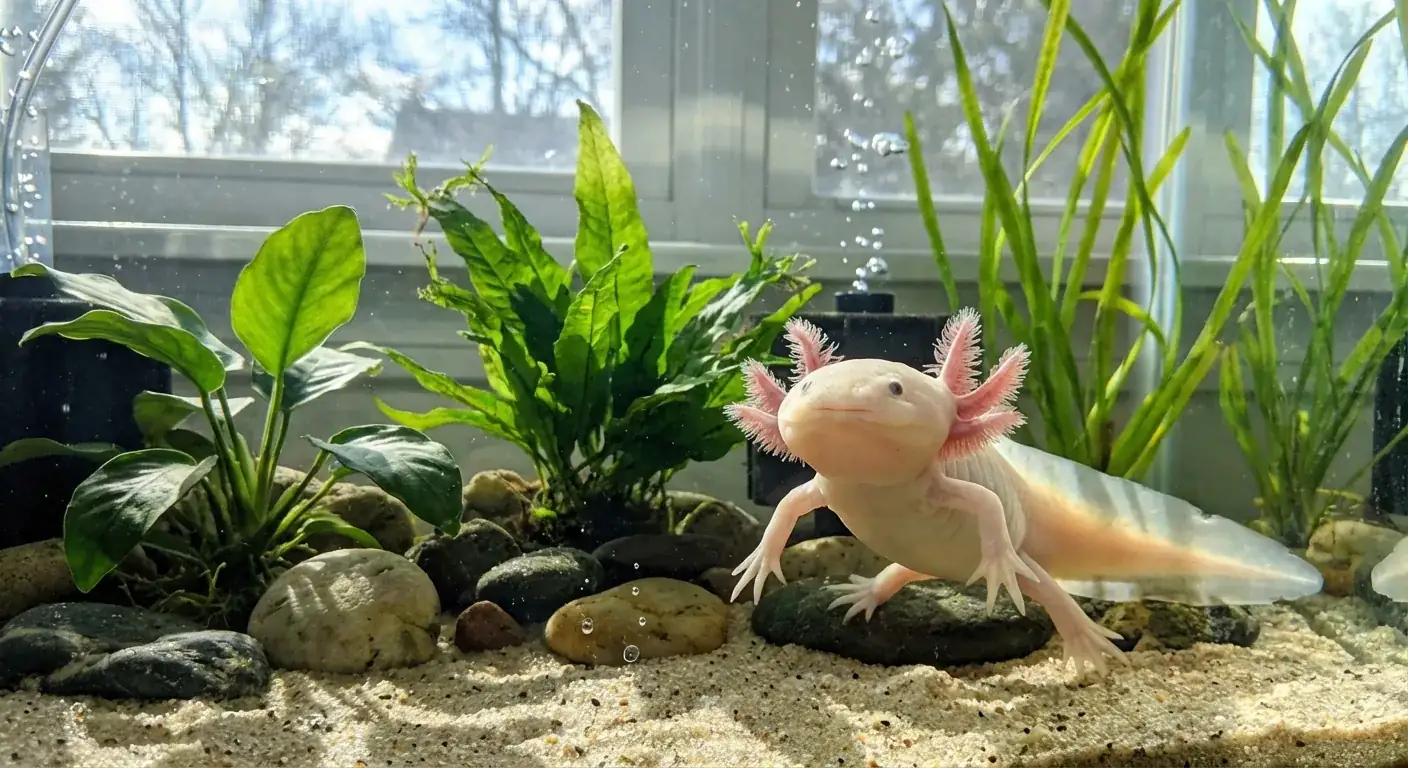
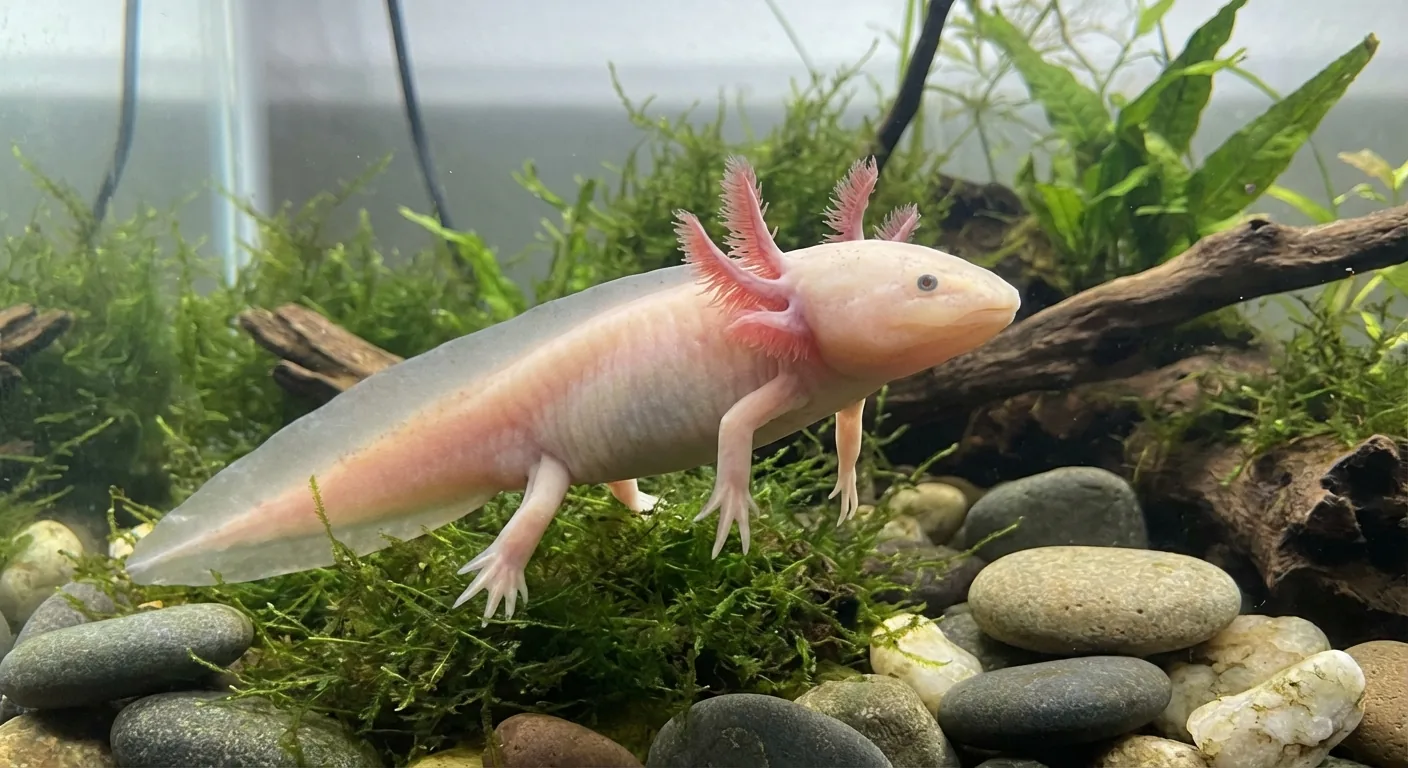
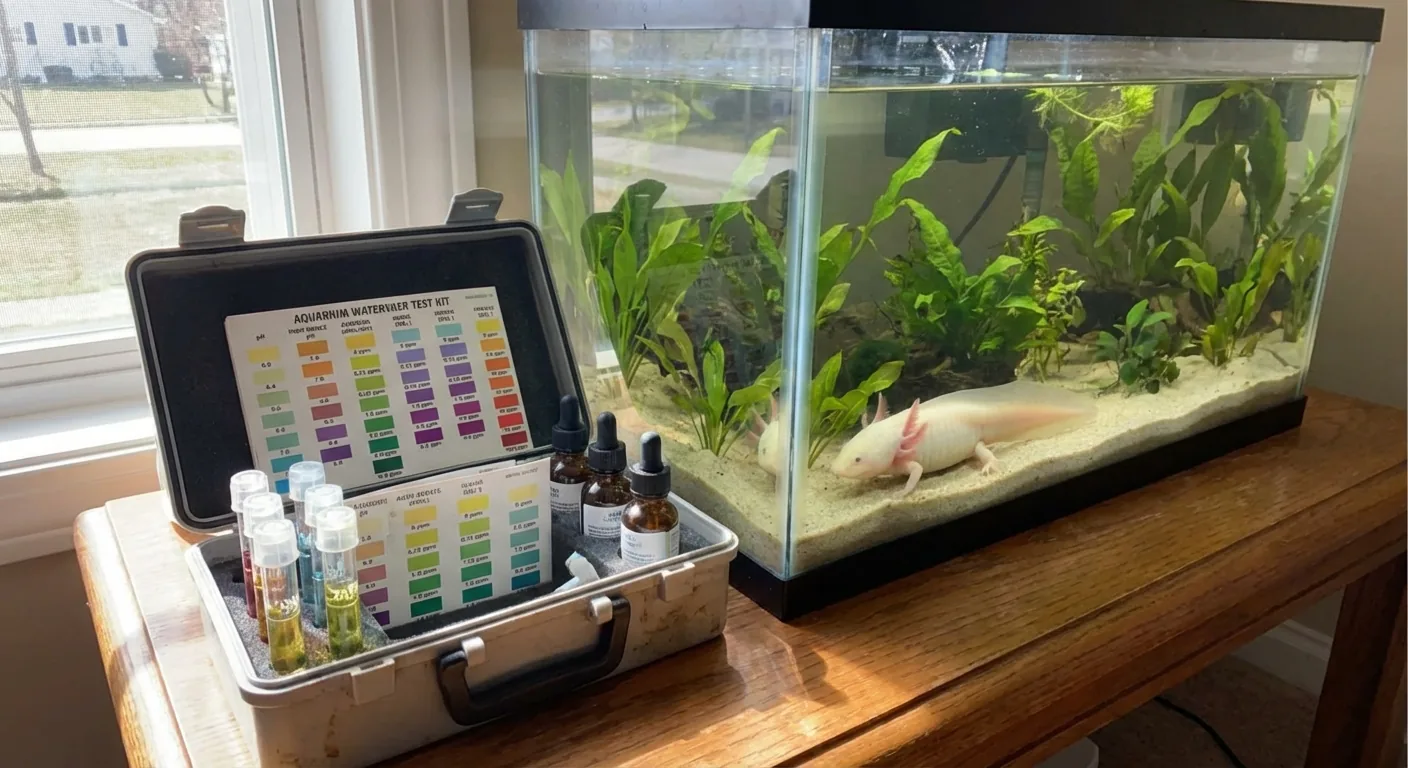
Cycling an axolotl tank grows the bacterial colony that converts the animal's toxic ammonia waste into nitrate before the axolotl ever enters the water....
Axolotls need pH between 6.5 and 8.0, GH between 7 and 14 degrees (general hardness), and KH between 3 and 7 degrees (carbonate hardness)....
Axolotls need filtration that processes waste without creating strong current. Strong flow stresses benthic animals with external gill filaments, damages gill tissue, and can...
Axolotls absorb chemicals through gill filaments and permeable skin, which makes untreated tap water dangerous. Chlorine burns gill tissue on contact. Chloramine releases free...
Cloudy water in an axolotl tank is not one problem with one fix. Milky white usually signals bacterial bloom from an uncycled or disrupted...
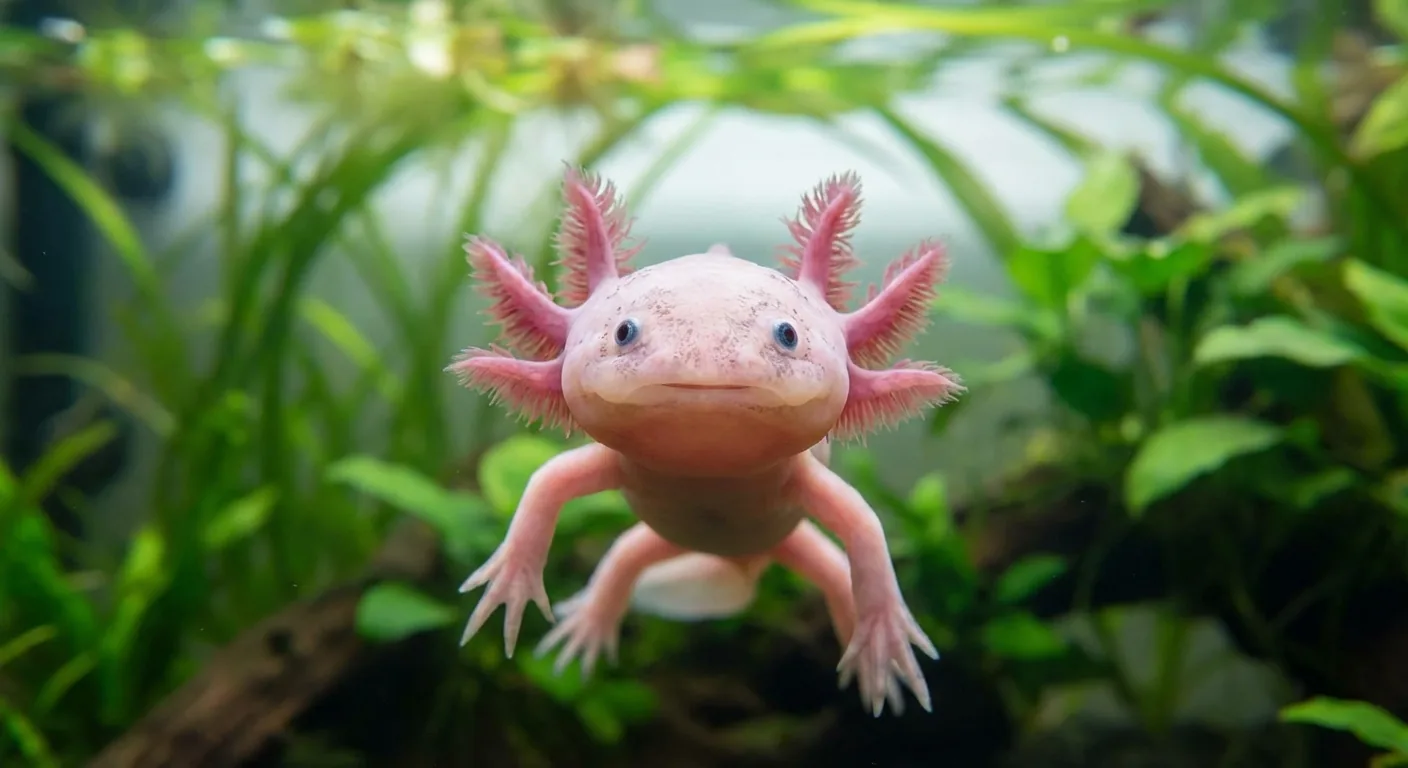
Axolotl ammonia burn is acute chemical injury caused by dissolved ammonia damaging gill epithelium and permeable skin, presenting as reddened gills, skin patches, surface...
Axolotl tank water should hold temperature at 60 to 68 degrees Fahrenheit, pH between 6.5 and 8.0, ammonia and nitrite at 0 ppm, nitrate...
The ideal water temperature for axolotls is 60 to 64 degrees Fahrenheit (16 to 18 degrees Celsius) per Axolotl.org, with a tolerable range up...
A single adult axolotl needs a minimum of 20 gallons, with AxolotlCentral identifying 29 gallons as the bare minimum and a 40-gallon breeder at...
Setting up an axolotl tank correctly before the animal arrives prevents most early health emergencies. A complete setup requires a 20 to 40 gallon...