

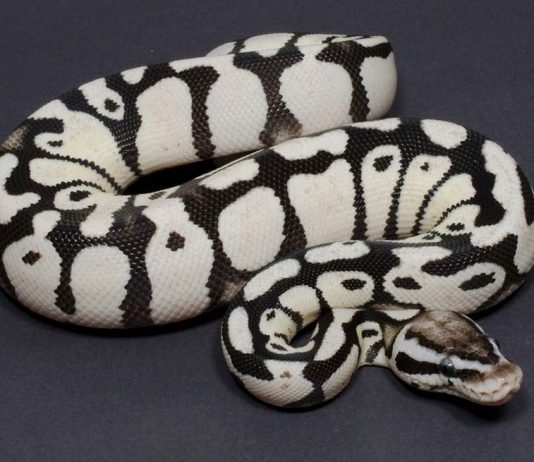
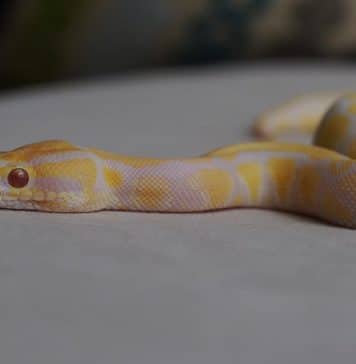

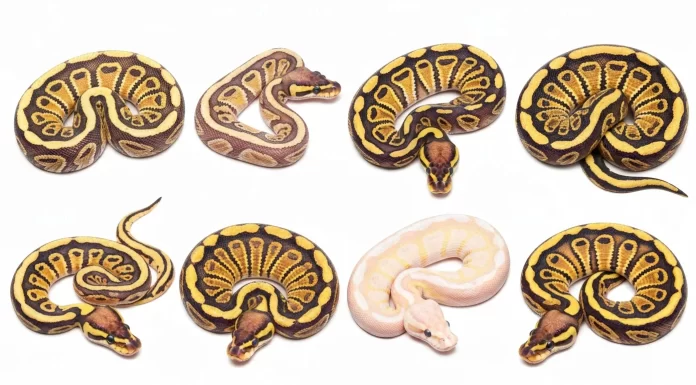
A ball python morph is a genetic mutation that changes the snake’s color, pattern, or both. There are over 4,000 documented morphs, produced through...
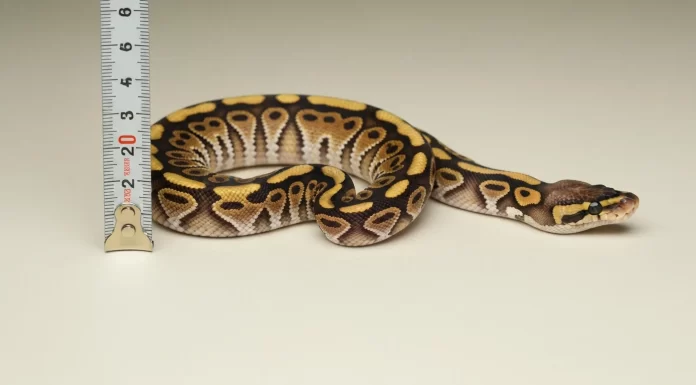
Ball python hatchlings typically measure 10–17 inches and weigh 60–100g. Adults reach 3–5 feet and 1,500–2,500g, with females significantly larger than males. These are...
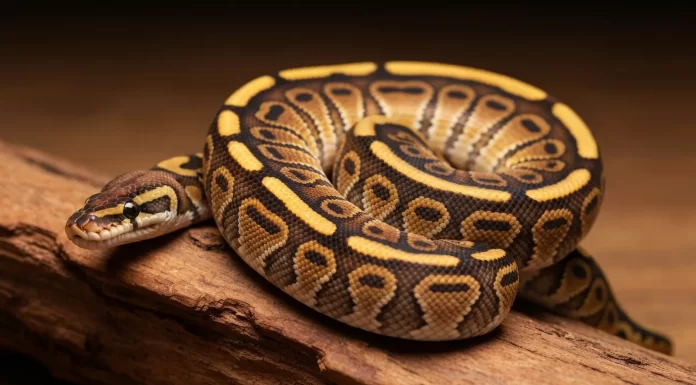
Ball pythons need a 4×2×2 ft enclosure with a hot spot of 88–92°F, a cool side of 76–80°F, and 60–80% humidity. Feed frozen-thawed rats...
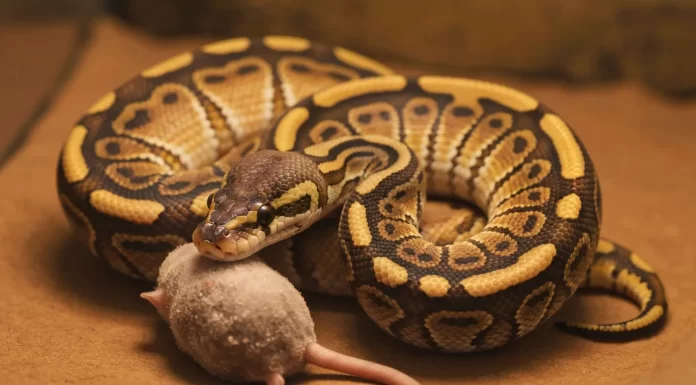
Ball pythons eat whole prey rodents — primarily frozen-thawed mice or rats. Prey size should match the widest point of the snake’s mid-body. Feed...
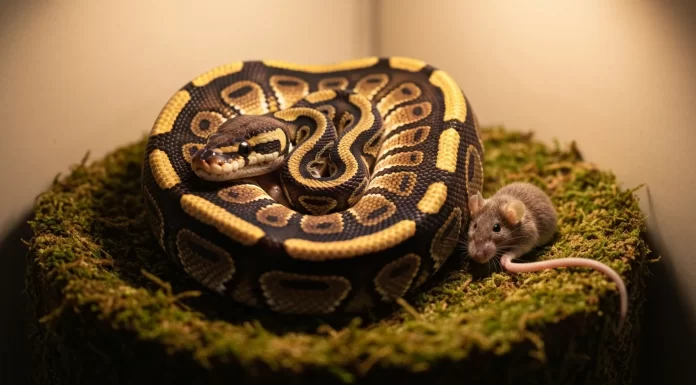
Ball pythons are notorious for feeding strikes — it’s the most common keeper concern with this species, and most strikes trace back to a...
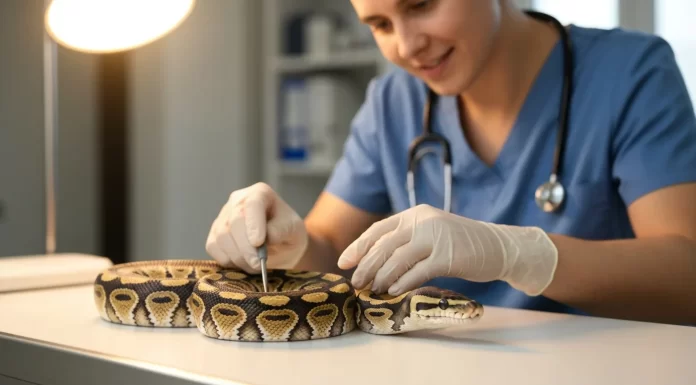
The most common ball python health problems are respiratory infections, mites, scale rot, stuck shed complications, and obesity. Most can be avoided with correct...
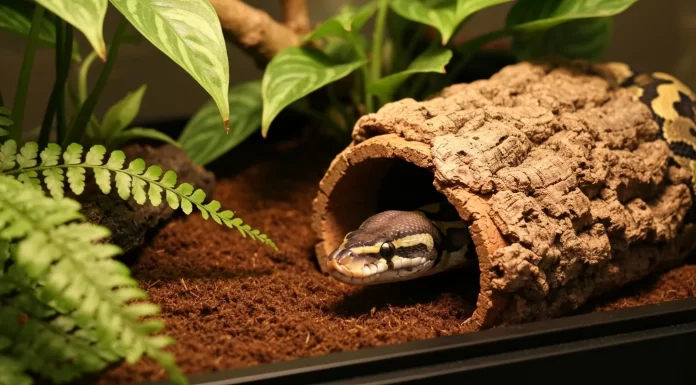
Ball pythons need at least two hides — one on the warm side, one on the cool side — sized to fit snugly around...
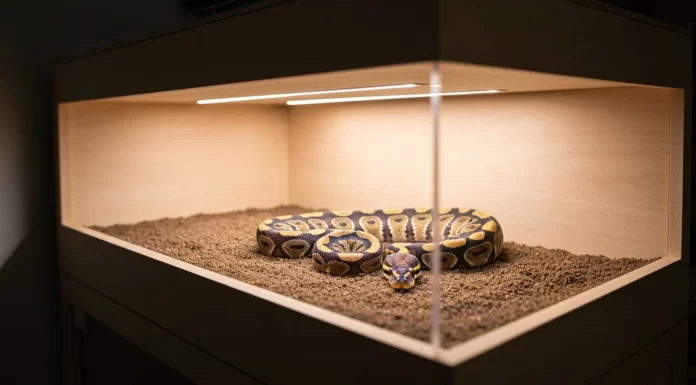
Ball pythons don’t require visible light for survival, but a consistent 12-hour light / 12-hour dark cycle maintains a healthy circadian rhythm. UVB is...
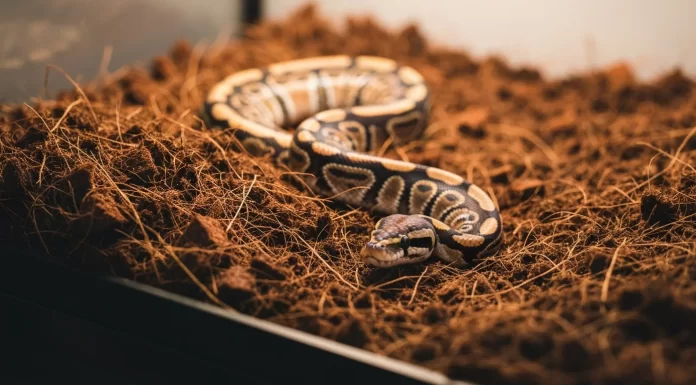
Ball python substrate must retain moisture to support 60–80% ambient humidity. Coconut fiber (coco coir), a topsoil/coco fiber mix, and cypress mulch are the...
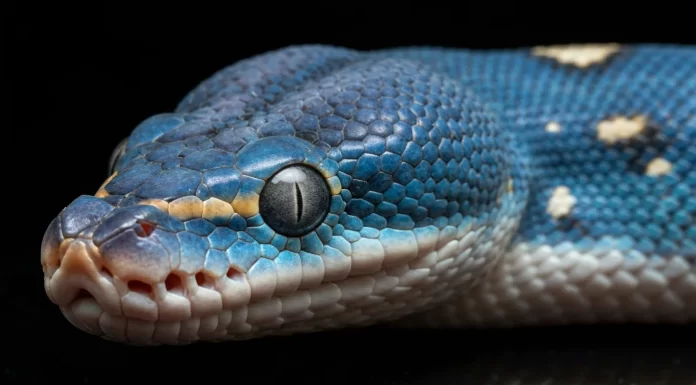
Ball pythons shed their entire skin every 4–6 weeks as juveniles and every 6–8 weeks as adults. Signs appear 10–14 days before the shed:...