

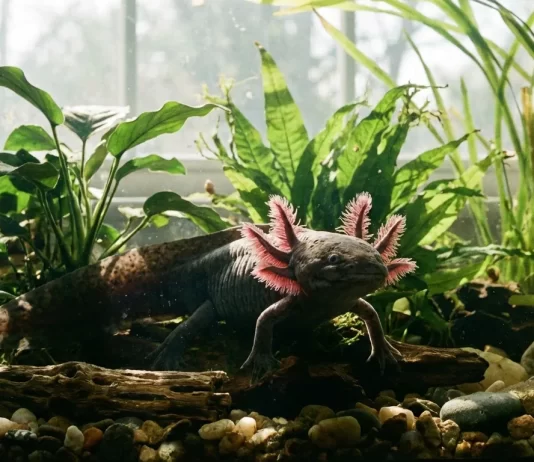
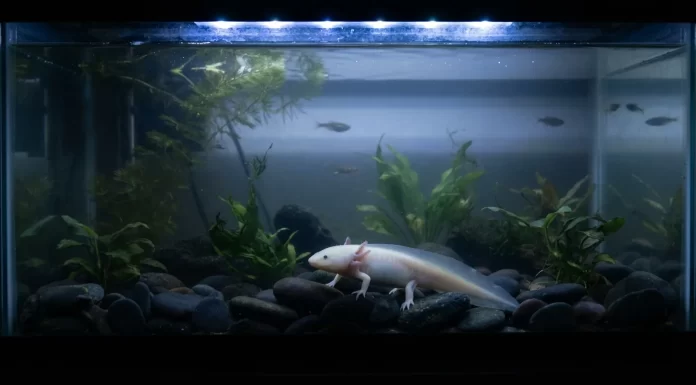
Axolotls are photophobic amphibians with lidless eyes. The default lighting recommendation is ambient room light during the day and complete darkness at night. If...
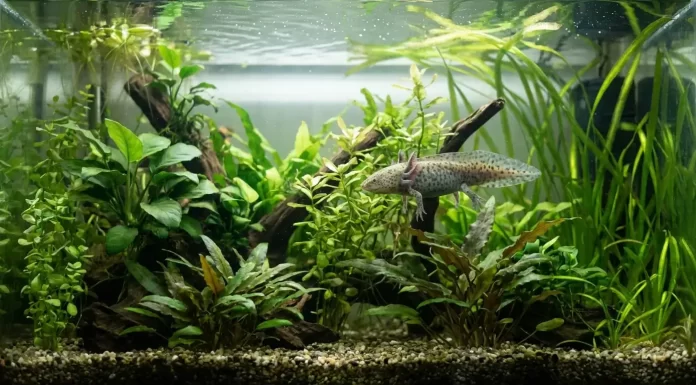
Live plants help axolotl tanks through nitrate uptake, dissolved oxygen contribution, visual enrichment, and bacterial colonization surface. Cool-water and low-light tolerance filters out most...
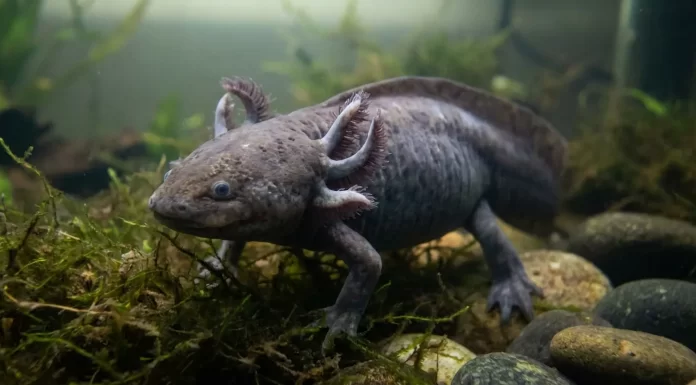
Every visible axolotl stress sign maps to an environmental cause. Water quality is the number-one cause in the majority of cases. Test ammonia, nitrite,...
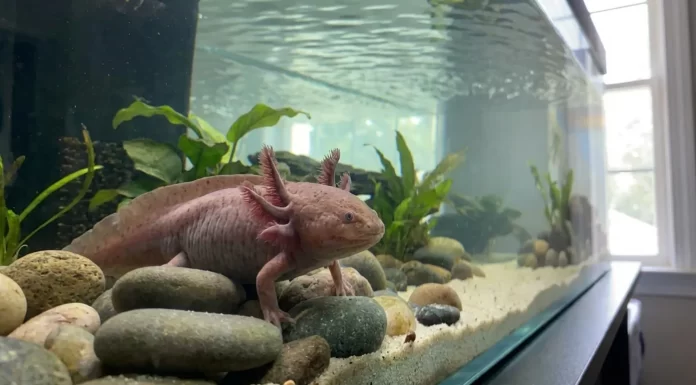
Axolotls evolved in still water and cannot tolerate strong current. Signs of too much flow include forward-curled gills, persistent hiding away from the filter...
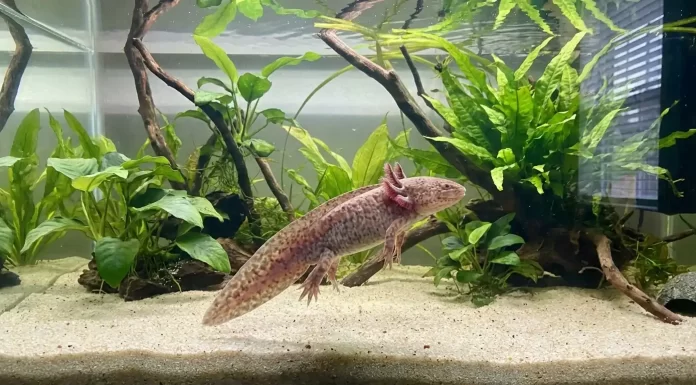
Impaction is a mechanical foreign-body blockage of the axolotl gastrointestinal tract, usually caused by ingested gravel. Food refusal, abdominal swelling, and floating from trapped...
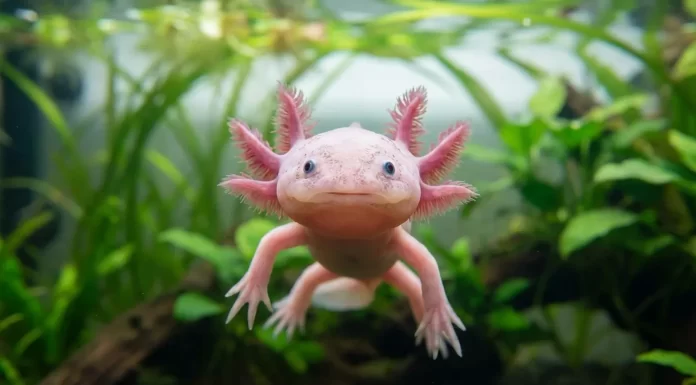
Axolotls absorb chemicals through gill filaments and permeable skin, which makes untreated tap water dangerous. Chlorine burns gill tissue on contact. Chloramine releases free...
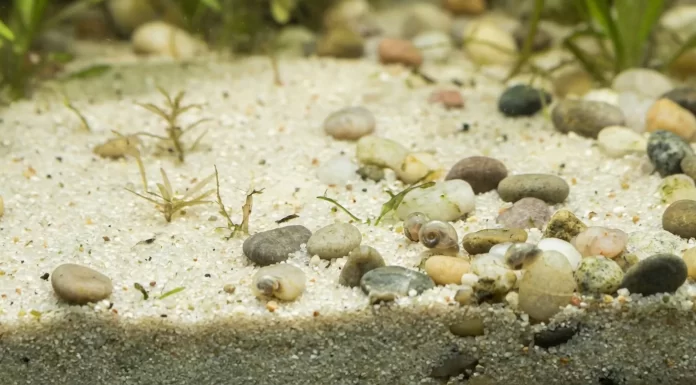
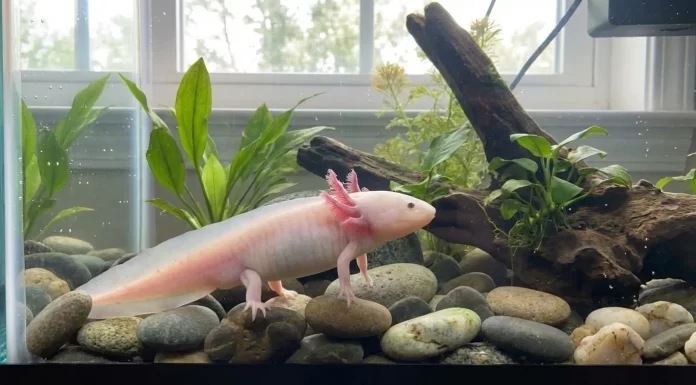
Gravel is the single most dangerous substrate for axolotls because pieces between 2 and 15 millimeters fit in the mouth but cannot pass through...
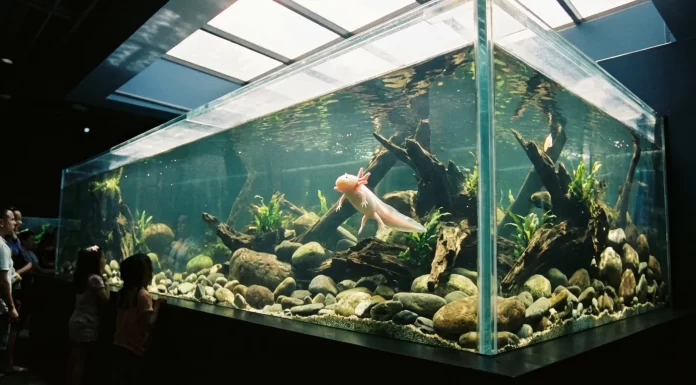
A single adult axolotl needs a minimum of 20 gallons, with AxolotlCentral identifying 29 gallons as the bare minimum and a 40-gallon breeder at...
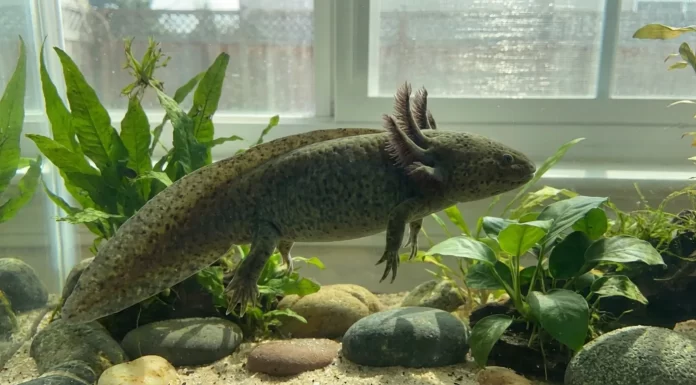
Obesity in captive axolotls develops gradually from feeding-pattern mistakes: portions too large, meals too frequent, or high-fat treats offered too often. The BCS 1-to-5...
Axolotl water testing requires a liquid drop test kit (the API Freshwater Master Test Kit is the standard) plus a separate API GH and...