

Axolotl glass surfing pattern is the first diagnostic. Random direction with no concurrent signs is stress. Consistent corner-to-corner direction at feeding time is hunger...
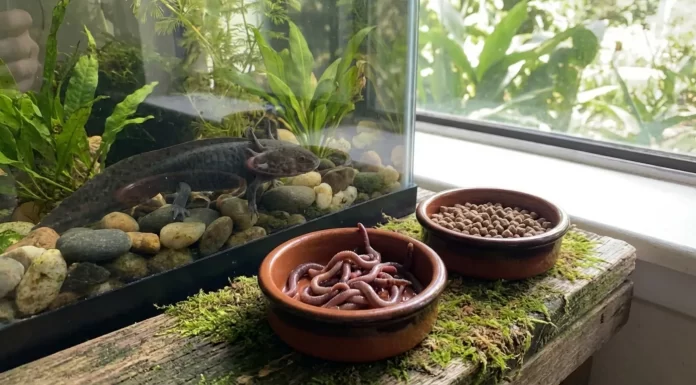
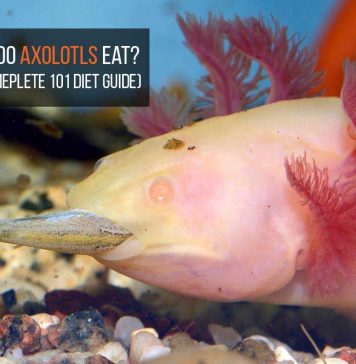
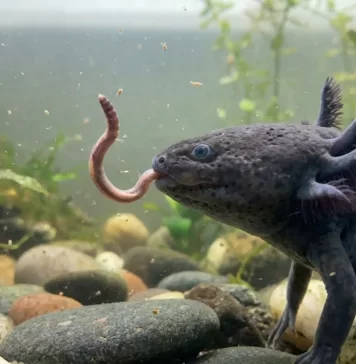
Earthworms are the nutritionally superior staple food for captive axolotls. Pellets are useful backup for situations where worms are impractical. The optimal approach for...
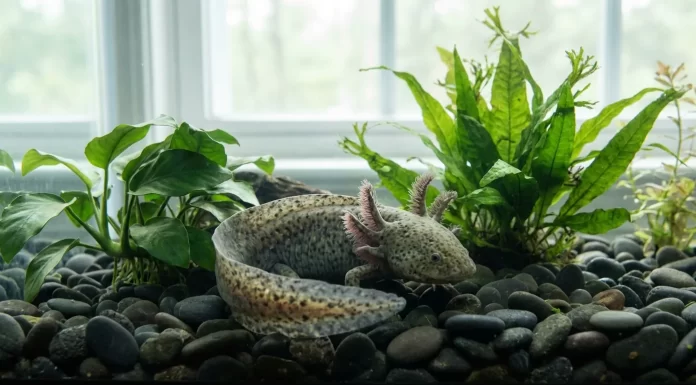
Axolotl daytime stillness is normal nocturnal rest if the animal responds to food, becomes active after dark, and shows normal coloring and posture. Concerning...
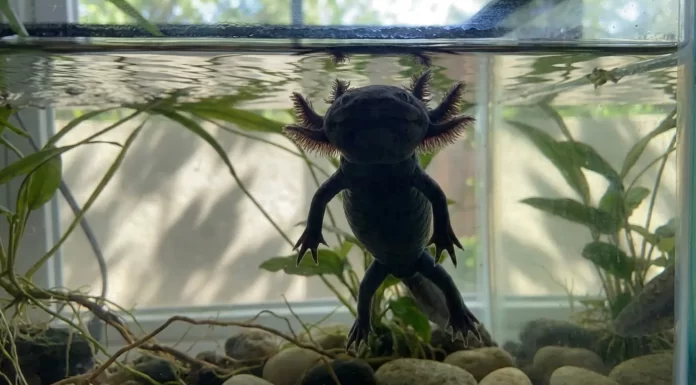
Occasional calm surface gulps are normal lung use. Healthy axolotls visit the surface once or twice per hour for a brief gulp and return...
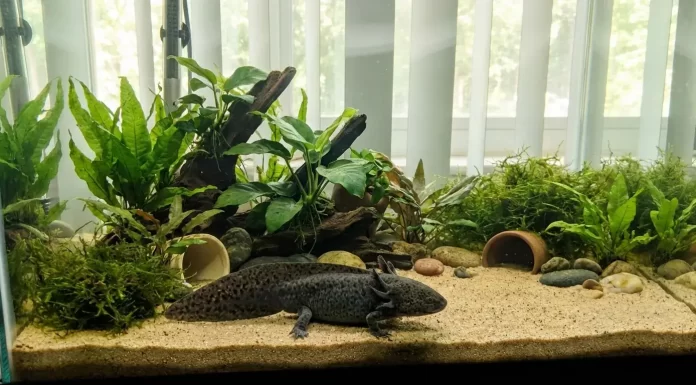
Most axolotl losses come from a short list of avoidable beginner mistakes: warm water, an uncycled tank, gravel substrate, strong filter flow, the wrong...
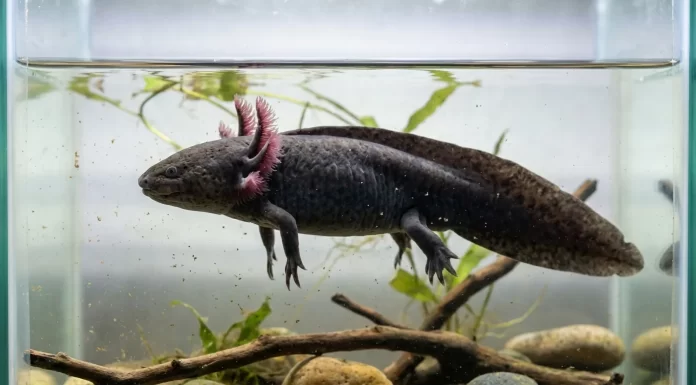
Axolotls need pH between 6.5 and 8.0, GH between 7 and 14 degrees (general hardness), and KH between 3 and 7 degrees (carbonate hardness)....
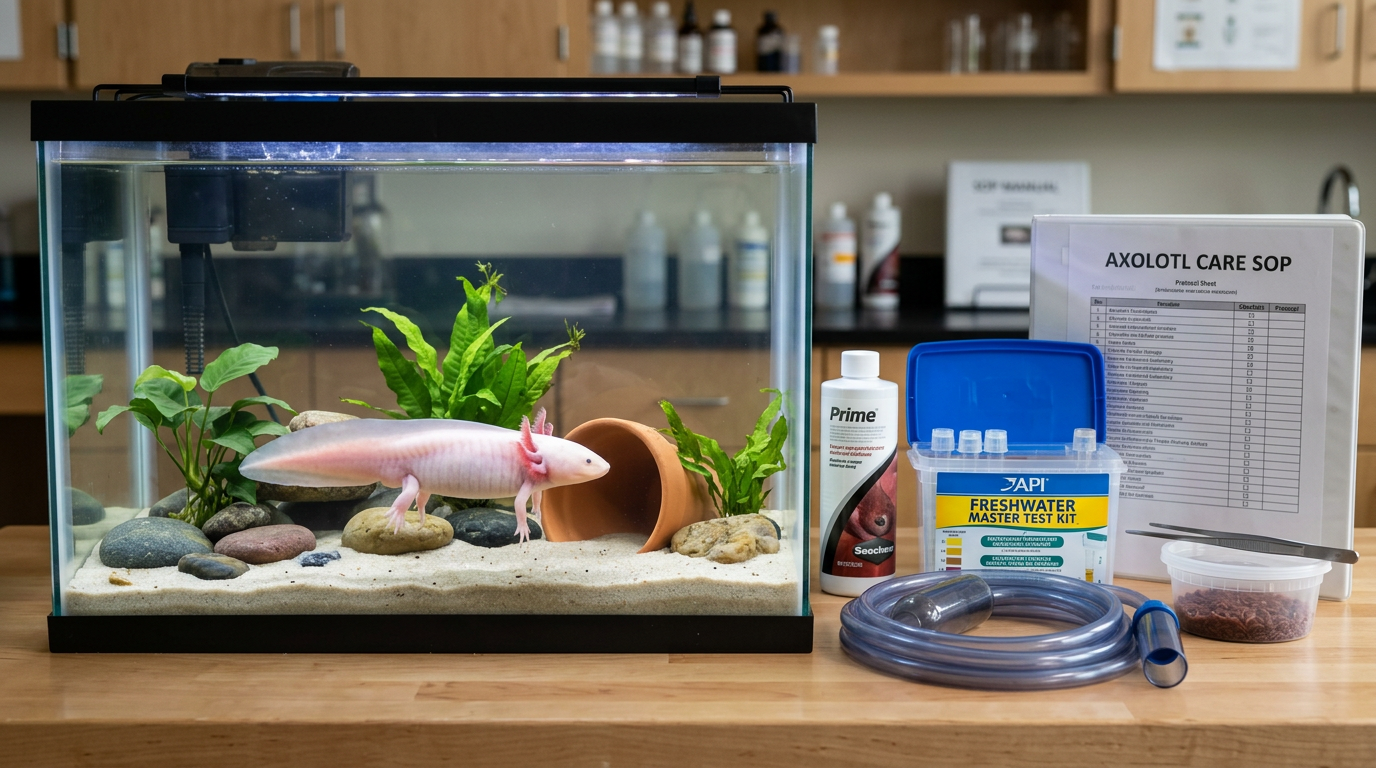
Axolotl husbandry is a repeating cycle of observation, testing, cleaning, and equipment verification that keeps water quality stable and catches health problems before they...
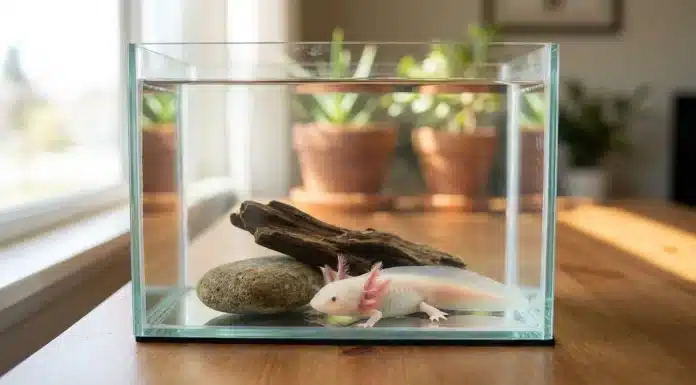
Every new axolotl should spend 30 days in a separate tub before main-tank introduction. Sick axolotls should also be tubbed for treatment. A 6...
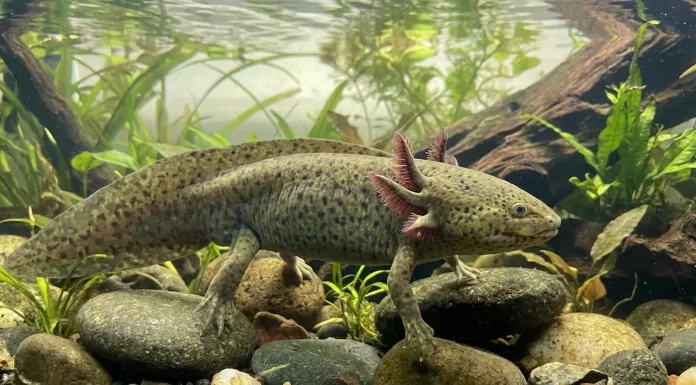
Line breeding means pairing related axolotls on purpose to lock in a color morph or trait. Hobbyists do it because crossing siblings fixes a...
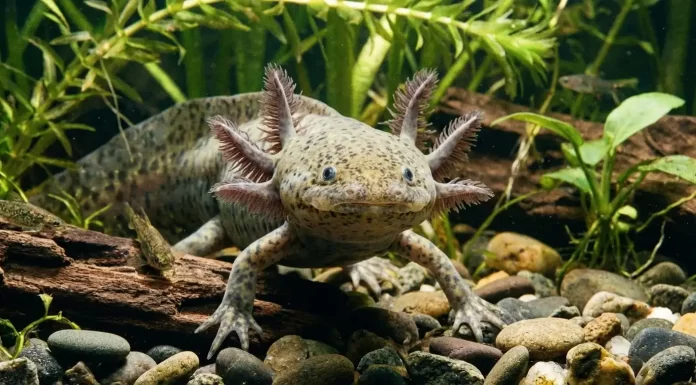
Not every axolotl symptom needs a vet. The severity matrix tells you which do. Categorical vet-immediate situations include seizure-like movements and loss of righting...