

Axolotls are photophobic amphibians with lidless eyes. The default lighting recommendation is ambient room light during the day and complete darkness at night. If...
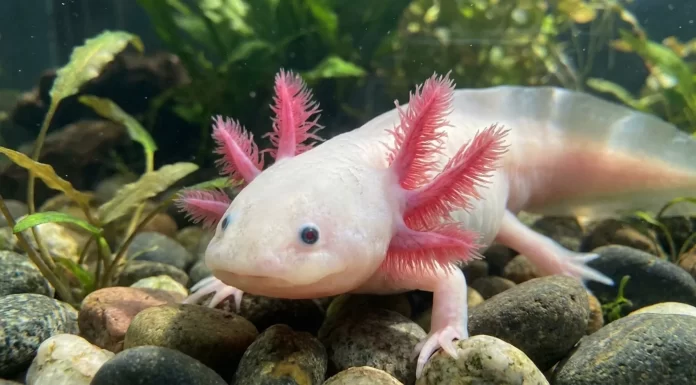
Most axolotl health problems respond to home corrections like water-quality fixes, lower temperatures, tubbing, and tea baths. A small set does not. This guide...
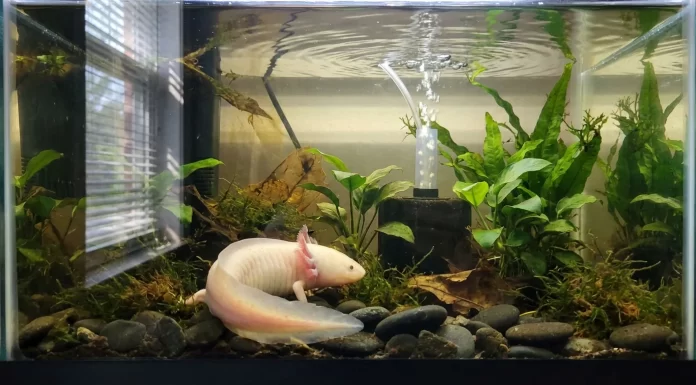
Axolotls need filtration that processes waste without creating strong current. Strong flow stresses benthic animals with external gill filaments, damages gill tissue, and can...
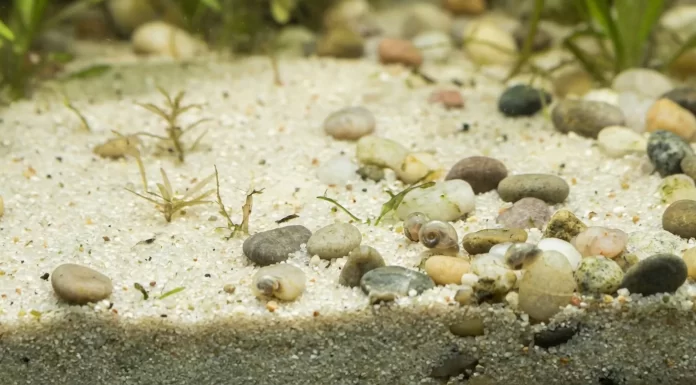
Gravel is the single most dangerous substrate for axolotls because pieces between 2 and 15 millimeters fit in the mouth but cannot pass through...
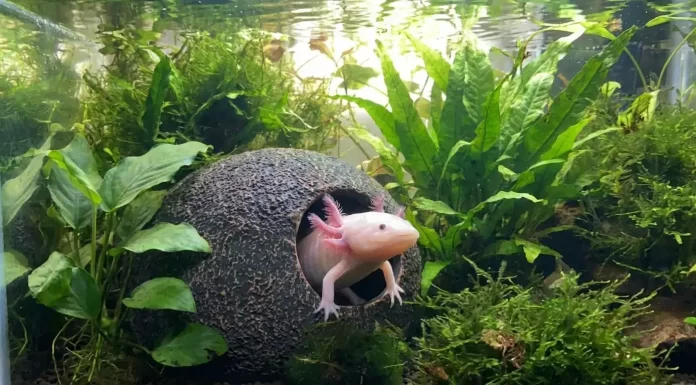
Hides are not decoration in an axolotl tank. They are a welfare requirement. Axolotls have lidless eyes and are sensitive to light. Provide at...
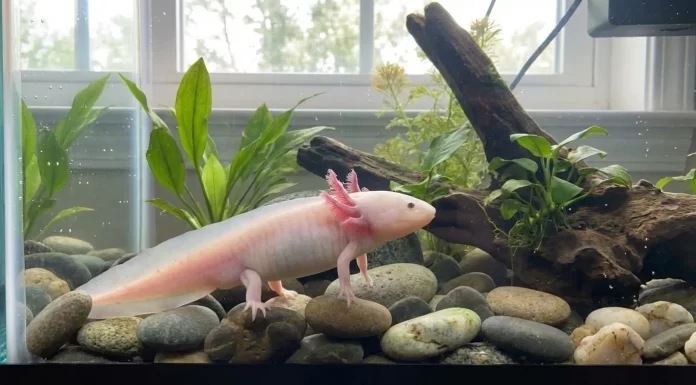
Axolotl water testing requires a liquid drop test kit (the API Freshwater Master Test Kit is the standard) plus a separate API GH and...
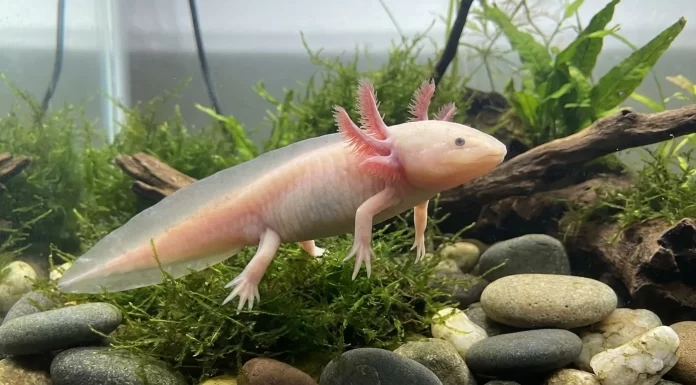
Axolotl ammonia burn is acute chemical injury caused by dissolved ammonia damaging gill epithelium and permeable skin, presenting as reddened gills, skin patches, surface...
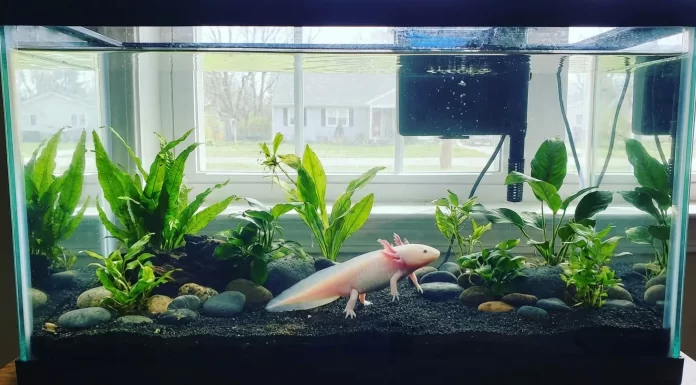
Cycling an axolotl tank grows the bacterial colony that converts the animal's toxic ammonia waste into nitrate before the axolotl ever enters the water....
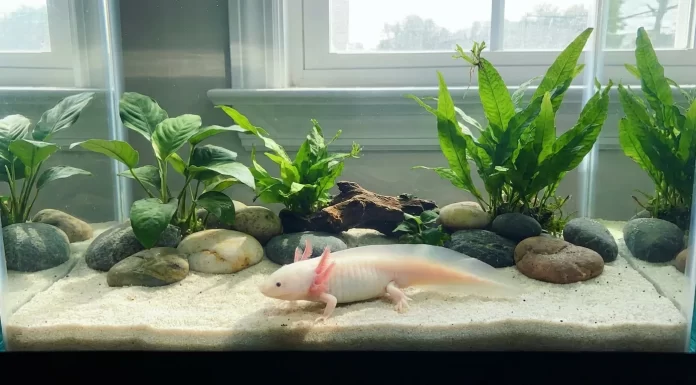
A clean axolotl tank is not one that looks sterile. It is one where ammonia reads 0 ppm, nitrite reads 0 ppm, nitrate stays...
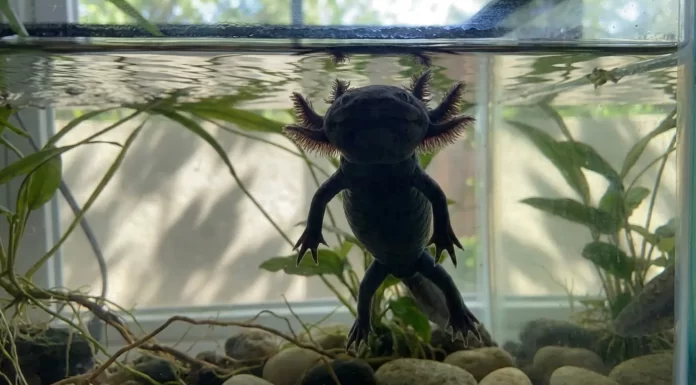
Occasional calm surface gulps are normal lung use. Healthy axolotls visit the surface once or twice per hour for a brief gulp and return...