


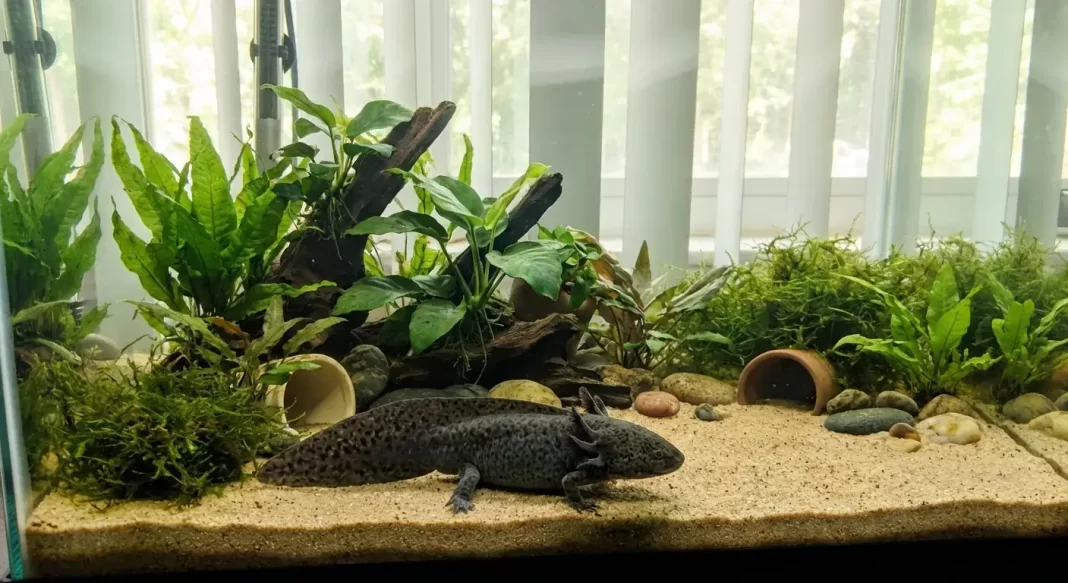
Most axolotl deaths in the first year of ownership trace back to a handful of preventable errors. The animals themselves are hardy when their specific environmental needs are met, but those needs are narrow and unforgiving: cold water, zero ammonia, no gravel, minimal handling. New owners who treat axolotls like tropical fish or assume they require little upkeep run into the same problems that veterinary professionals and experienced keepers see repeatedly. This guide covers the 12 most common and most damaging mistakes, explains why each one happens, identifies the harm it causes, and provides the concrete fix.
Skipping the nitrogen cycle before adding an axolotl
Placing an axolotl into an uncycled tank is the single most dangerous mistake a new owner can make. An uncycled aquarium has no established colonies of beneficial bacteria to convert ammonia into nitrite and then into nitrate, which means waste products accumulate to toxic levels within days.
Fishless cycling with pure ammonia or ammonium chloride typically takes 4 to 8 weeks https://www.axolotlcentral.com/cycling-guide. During that period, you dose the tank to approximately 2 to 3 ppm of ammonia and wait for two bacterial populations to establish: Nitrosomonas species that oxidize ammonia to nitrite, and Nitrospira species that oxidize nitrite to nitrate. The cycle is complete when the tank can process a full ammonia dose to 0 ppm ammonia and 0 ppm nitrite within 24 hours, with nitrate rising as the end product.
New owners skip this step because the timeline feels excessive, because the tank looks clean and full of water, or because a pet store employee said the tank was ready. None of those are reliable indicators. An uncycled tank exposes the axolotl to ammonia burns on the gills and belly skin, nitrite poisoning that blocks oxygen transport in the blood, and chronic stress that suppresses the immune system. Gill deterioration from ammonia exposure can be permanent even after water quality improves.
The fix is straightforward but requires patience: cycle the tank fully before purchasing the animal. If you already have an axolotl in an uncycled tank, the emergency response is tubbing — placing the axolotl in a clean container of dechlorinated water at the correct temperature, changing that water daily, and allowing the main tank to complete its cycle without the animal in it. The tank cycling guide walks through the full fishless-cycle process.
Using gravel or small stones as substrate
Gravel is never safe for axolotls. This is not a matter of preference or debate among experienced keepers; it is a hard rule grounded in axolotl feeding mechanics. Axolotls eat by suction feeding, rapidly opening their mouths to create a vacuum that pulls food and surrounding material inward. They cannot selectively avoid ingesting nearby substrate.
When an axolotl swallows gravel, the stones cannot pass through the digestive tract. The result is gastrointestinal impaction: a physical blockage that prevents food from moving through the intestines. Symptoms include loss of appetite, bloating, absent or reduced fecal output, and buoyancy problems where the animal floats and cannot return to the bottom. Mild impaction sometimes resolves with fridging, a controlled cooling procedure that slows metabolism and gives the obstruction time to pass. Severe impaction requires surgical removal by an exotic-animal veterinarian, and the cost of that surgery regularly exceeds $200 https://axolotlguide.com/en/mistakes-to-avoid-with-an-axolotl/.
The safe substrate options are bare bottom (the easiest to maintain and the lowest impaction risk) and fine sand with a grain size below 1 millimeter. Sand grains small enough to pass harmlessly through the digestive tract are acceptable, though sand does require periodic stirring to prevent anaerobic pockets. Larger river rocks that are physically too big to fit in the axolotl’s mouth can serve as decorative elements but do not replace a true substrate choice. The substrate guide covers selection and maintenance in detail.
Keeping water too warm
Axolotls are cold-water amphibians. The ideal water temperature range is 60 to 68 degrees Fahrenheit (16 to 20 degrees Celsius), with the optimal band around 60 to 64 degrees Fahrenheit (16 to 18 degrees Celsius) https://www.axolotl.org/requirements.htm. Sustained temperatures above 72 degrees Fahrenheit (22 degrees Celsius) are dangerous. Above 75 degrees Fahrenheit (24 degrees Celsius), axolotls experience heat stress, immune suppression, loss of appetite, and organ damage that can be fatal.
This mistake happens because most aquarium advice online is written for tropical fish that thrive at 76 to 80 degrees Fahrenheit. New axolotl owners sometimes place their tank in a warm room, near a window with direct sunlight, or even install a heater. An axolotl tank almost never needs a heater; the challenge is cooling, not warming.
Heat stress does not present as obvious distress the way it would in a mammal. Instead, you see reduced appetite, forward-curled gills, frequent surface gulping for air, and a general lethargy that an inexperienced keeper might dismiss as normal. By the time fungal growth appears on the gills, the immune system has already been compromised for days or weeks. Experienced keepers in communities we work with consistently rank overheating as the single biggest killer of captive axolotls.
Cooling options include aquarium chillers (the most effective and most expensive), clip-on fans that increase evaporative cooling at the water surface, and frozen water bottles as a temporary emergency measure. The temperature guide covers equipment selection, and the heat spike emergency guide walks through crisis response.
Overfeeding or feeding the wrong foods
Adult axolotls need to eat only two to three times per week. New owners accustomed to feeding fish daily often overfeed, which leads to uneaten food decaying on the tank floor, ammonia spikes from the organic waste, and obesity that shortens lifespan and strains internal organs https://www.petmojo.com/common-mistakes-first-time-axolotl-owners-makes/.
The staple diet for axolotls should be nightcrawler earthworms (genus Lumbricus), which provide the protein, calcium, and caloric density that axolotls need https://www.petmd.com/exotic/what-do-axolotls-eat. Sinking pellets like Hikari Sinking Carnivore Pellets are an acceptable supplement but should not be the sole diet for adults. Bloodworms are treats, not staples. Live feeder fish are a poor choice: they carry parasites, they often nip axolotl gills before being caught, and if the fish is too large, the axolotl can choke or suffer internal damage.
Feeding frequency varies by age. Juveniles under six months eat daily. Sub-adults between six and twelve months eat every other day. Adults eat two to three times per week. Food should be appropriately sized; cut earthworms into segments for juveniles, offer whole worms to adults. Remove any uneaten food within a few hours to prevent water quality degradation.
For detailed feeding schedules and portion guidance, see the feeding schedule by age and the portion size guide.
Using a tank that is too small
A single adult axolotl requires a minimum of 20 gallons (approximately 75 liters), and a 29-gallon or 40-gallon breeder tank is strongly recommended because additional water volume provides more stable temperature and chemistry and more floor space for the animal to move. Each additional axolotl housed together needs at least 10 extra gallons.
Small tanks create cascading problems. Water parameters swing faster in lower volumes, making ammonia and temperature spikes more frequent and more severe. The axolotl has less space to move away from waste concentrations. Territorial stress increases, and glass surfing — a visible stress behavior where the animal swims back and forth along the walls repeatedly — becomes chronic.
New owners sometimes purchase a small "starter" tank with the intention of upgrading later. In practice, the upgrade rarely happens on schedule, and the animal spends weeks or months in conditions that cause chronic stress. Buy the correct tank size from the start. Floor space matters more than tank height; axolotls are bottom dwellers that rarely use the upper water column. A long, wide tank is always better than a tall, narrow one. The tank size guide covers dimensions and stocking limits.
Handling the axolotl too often
Axolotls are not a pet you pick up, hold, or interact with outside the water. This is a fundamental constraint of their biology, not a suggestion. Their skin is permeable and absorbs chemicals from human hands, including oils, soap residue, and sanitizer. Their protective slime coat is easily stripped by dry contact or friction. Lifting an axolotl out of water removes the buoyancy that supports its body weight and can cause spinal or limb injuries.
New owners, especially younger keepers and families with children, want to hold their pet. Social media videos of people handling axolotls normalize the behavior, but those videos do not show the stress response or the long-term damage that repeated handling causes.
When you do need to move an axolotl — for tank maintenance, a vet visit, or an emergency relocation — use the container-transfer method: submerge a clean container into the tank, gently guide the axolotl into it underwater, and lift the container with the animal still submerged. This avoids direct skin contact entirely. Vet techs who work with amphibians in our network describe the container method as the standard for any aquatic salamander transfer. The handling guide explains safe transfer techniques.
Using filtration with too much current
Effective biological filtration is essential for any axolotl tank. The animal produces a heavy bioload, and the filter’s bacterial colonies are what keep ammonia and nitrite at zero. But axolotls are sensitive to water flow. Their external gills are fragile structures that can be damaged by sustained directional current, and strong flow causes chronic stress visible as gill curl — a condition where the gill filaments fold forward permanently.
Many filters marketed for tanks in the 20 to 40 gallon range are designed for tropical fish that tolerate or even prefer moderate current. Hanging a standard hang-on-back filter with unmodified outflow on an axolotl tank can produce enough current to stress the animal.
The solution is not to skip filtration — that would cause ammonia buildup and is far more dangerous. Instead, choose filtration that can be flow-adjusted. Sponge filters driven by an air pump provide gentle biological filtration with almost no directional current. Hang-on-back filters can be baffled with a sponge or a water bottle baffle on the outflow. Canister filters with spray bars allow you to diffuse the return flow across a wide area. The filtration guide compares filter types, and the current and flow control guide covers baffle techniques.
Adding incompatible tank mates
Axolotls are not community tank animals. Fish small enough for the axolotl to eat will be eaten, often resulting in choking or internal injury if the fish has spines or is too large to swallow cleanly. Fish large enough to avoid predation frequently nip at the axolotl’s gills, causing tissue damage and chronic stress that opens the door to fungal and bacterial infections.
Even housing multiple axolotls together carries risk. Juveniles and sub-adults are prone to nipping each other’s limbs and gills, sometimes causing amputations. While axolotls can regenerate lost tissue, the process consumes energy, creates infection-prone wound sites, and is entirely preventable by housing animals separately or ensuring they are closely matched in size. Same-sex housing reduces breeding stress, but size matching is the more critical factor.
Snails are sometimes suggested as tank mates. Small snails can be ingested and may cause impaction. Large snails like mystery snails are generally tolerated but add to the bioload without clear benefit.
The safest default is solitary housing. If you choose to house axolotls together, provide at least 10 additional gallons per animal, ensure size parity, and feed animals individually to reduce competition-driven aggression. For a full discussion, see the axolotl as pets guide which covers cohabitation considerations.
Ignoring regular water testing
A tank that looks clean can still have lethal water chemistry. Ammonia, nitrite, and elevated nitrate are invisible and odorless at the concentrations that harm axolotls. The only way to know your water parameters are safe is to test them with a reliable kit.
New owners sometimes test during the initial cycle, confirm the numbers look good, and then stop testing. This is a mistake because water chemistry is dynamic. A dead snail, an overlooked piece of uneaten food, a filter that was off for a day, or a new batch of tap water with different chloramine levels can all shift parameters without any visible change in the water.
The minimum testing schedule for a stable, cycled tank is weekly: ammonia, nitrite, nitrate, and pH. During cycling, after adding a new animal, after medicating, or after any disruption to the filter, test daily. Use a liquid test kit (the API Freshwater Master Test Kit is the standard recommendation) rather than test strips, which are less accurate and less reliable for the narrow tolerances axolotls require. The water testing guide explains parameter interpretation, and the water parameters guide covers the target ranges.
Buying from an unreliable source
Where you acquire your axolotl matters for both the animal’s health and yours as an owner. Big-box pet stores often keep axolotls in warm water, in tanks with gravel substrate, and in group housing that leads to limb nips and stress. Animals from these settings frequently arrive with existing health problems: fungal infections, gill damage, parasites, or chronic stress that manifests within weeks of purchase.
Reputable breeders maintain cool-water systems, provide genetic lineage information, avoid excessive inbreeding, and can tell you the animal’s age, parentage, and health history. They typically ship overnight in insulated packaging with cold packs. The price difference between a pet-store axolotl and a breeder axolotl is usually modest ($30 to $75 for standard morphs), but the difference in initial health can save hundreds in veterinary costs.
Before buying, ask the breeder about water temperature in their facility, how long they have been breeding, whether they track genetic lineage, and what their health guarantee covers. If a seller cannot answer these questions, look elsewhere. The responsible sourcing guide covers breeder evaluation, and the how to choose a healthy axolotl guide explains what to look for during visual health assessment.
Not having an exotic vet lined up before you need one
Axolotls are not standard veterinary patients. Most small-animal veterinarians do not have amphibian experience, and the handful of medications commonly used for axolotl care (methylene blue, salt baths at specific concentrations) require dosing knowledge that a dog-and-cat vet may not have. Finding an exotic-animal veterinarian experienced with amphibians while your animal is healthy is significantly easier than scrambling during an emergency.
The Association of Reptile and Amphibian Veterinarians (ARAV) maintains a searchable directory of qualified practitioners https://arav.org/find-a-vet/. Call the clinic before you need an appointment, confirm they treat axolotls or aquatic amphibians, and ask about their emergency availability. Some exotic vets offer telemedicine consultations, which can be useful for initial triage.
Keeper communities we work with consistently report that the owners who have the best outcomes during health emergencies are the ones who already knew their vet’s name and number. If you are still evaluating whether axolotl ownership is right for you, confirming that a qualified vet exists within reasonable distance is part of that decision. The health red flags guide explains which symptoms require veterinary intervention versus home treatment.
Using unsafe medications or home remedies
When an axolotl shows signs of illness, the instinct to treat immediately is understandable but dangerous if the treatment itself is wrong. Axolotls are amphibians with permeable skin, and they are far more sensitive to chemical exposure than fish. Medications that are safe for tropical fish can be lethal to axolotls.
Copper-based medications, commonly sold for fish parasites, are toxic to amphibians. Most over-the-counter fish antibiotics have not been tested on or dosed for axolotls. Even salt baths, one of the standard home treatments for fungal issues, require precise concentration (non-iodized salt at specific ratios) and duration; too much salt or too long an exposure causes osmotic stress that compounds the original problem.
The correct response to a sick axolotl starts with checking water parameters and temperature. The majority of axolotl health problems are environmental in origin — fix the water, and many conditions resolve without medication. If medication is genuinely needed, consult your exotic vet before dosing. For minor fungal presentations, methylene blue baths at veterinarian-recommended concentrations are generally the first-line treatment. Indian almond leaves, sometimes recommended in online forums, have mild antifungal properties but are not a substitute for proper environmental correction or veterinary care.
For a symptom-by-symptom reference, see the symptoms guide, the fungus guide, and the quarantine guide.
Frequently asked questions
What is the most common cause of death in pet axolotls?
The most common cause of death in pet axolotls during the first year of ownership is environmental failure rather than disease. Specifically, uncycled tanks that expose the animal to ammonia and nitrite poisoning, and water temperatures above the safe range of 60 to 68 degrees Fahrenheit, account for the majority of preventable deaths. Both problems are entirely avoidable with proper setup before the animal arrives. Established axolotls in well-maintained tanks most commonly die from age-related decline after 10 to 15 years.
Can I fix mistakes after they have already caused damage?
Many mistakes are reversible if caught early. Gill damage from ammonia exposure can partially recover once water quality stabilizes, though severely deteriorated gills may not fully regrow. Mild impaction from accidental gravel ingestion sometimes resolves with fridging. Heat stress that has not yet caused organ failure can be reversed with gradual cooling. The key variable is how long the harmful condition persisted. A water quality problem caught at day two has a better prognosis than the same problem found at day fourteen.
How do I know if my axolotl is stressed from a mistake I have made?
The primary stress indicators to watch for are forward-curled gills, glass surfing (rapid repetitive swimming along the tank walls), loss of appetite lasting more than a few days, frequent surface gulping for air, and changes in skin color such as unusual darkening or paleness. Any one of these signals warrants an immediate water parameter and temperature check. Multiple simultaneous signs suggest a more severe environmental problem. The stress signs guide covers behavioral indicators in full detail.
Is it too late to cycle my tank if I already have the axolotl?
No. If your axolotl is already in an uncycled tank, the standard emergency protocol is tubbing: move the axolotl to a clean container of dechlorinated water at the correct temperature, change that water daily, and allow the main tank to complete its fishless cycle without the animal in it. Tubbing is inconvenient but effective, and it protects the axolotl from ammonia and nitrite exposure while the biological filtration establishes. The process typically takes 4 to 8 weeks.
Should I remove gravel from my tank if my axolotl has not had any problems yet?
Yes. The absence of impaction symptoms so far does not mean the risk is gone. Every feeding event in a gravel-substrate tank is another opportunity for ingestion. Remove the gravel during a routine water change by siphoning it out section by section while the axolotl is temporarily relocated to a clean container. Replace with bare bottom or fine sand below 1 millimeter grain size. This is one of the simplest and highest-impact safety improvements you can make.
Researched and written by the ExoPetGuides editorial team with AI-assisted drafting. All husbandry parameters and veterinary references independently verified against peer-reviewed sources including axolotl.org species care requirements, the Axolotl Central cycling and care guides, PetMD’s veterinarian-reviewed axolotl diet references, and the ARAV veterinary directory.
Disclaimer: This content is for educational purposes only and is not a substitute for professional veterinary advice. Always consult a qualified veterinarian — ideally an exotic-animal specialist — for any health concern about your pet. Care recommendations may vary based on species, individual animal, and local regulations.